
Over the last year I've had a recurring conversation with some friends. In the age of artificial intelligence, with Artificial General Intelligence emerging and Artificial Super Intelligence expected soon after--what entrepreneurial opportunities will be left? What should we be doing? Are we allocating to the right sets of possibility spaces?
Modern economics is built on the idea of the factors of production. Artificial Intelligence is likely to replace the majority of the labour component; and then aggregate the majority of the entrepreneurial elements into a limited number of companies employing ai models to service society. That is a massive opportunity for the companies that build ai models, manufacture robots, and produce chips. For everyone else ai represents both an opportunity and a threat. You need to figure out whether the models will simply subsume you; or whether you can use them in ways that the model owners don't see as important enough to consider a business opportunity. In a sense a lot of businesses will become like apps in an app store. Which means the game becomes figuring out whether you're going to be competing with a stock app owned by the model owner; or you won't and thus have a fighting chance. Either way, you're playing on ground you don't own.
So, in view of this; what is one to do? Well...I've never quite been one to enjoy playing on ground I don't own or have at least solid footing on. So, for me the question is inverted. What are ai models extremely unlikely to actually do? What is the efficient frontier of activities ai is extremely unlikely to replace because they involve inherent frictions ai is simply not built to handle and is unlikely to learn?
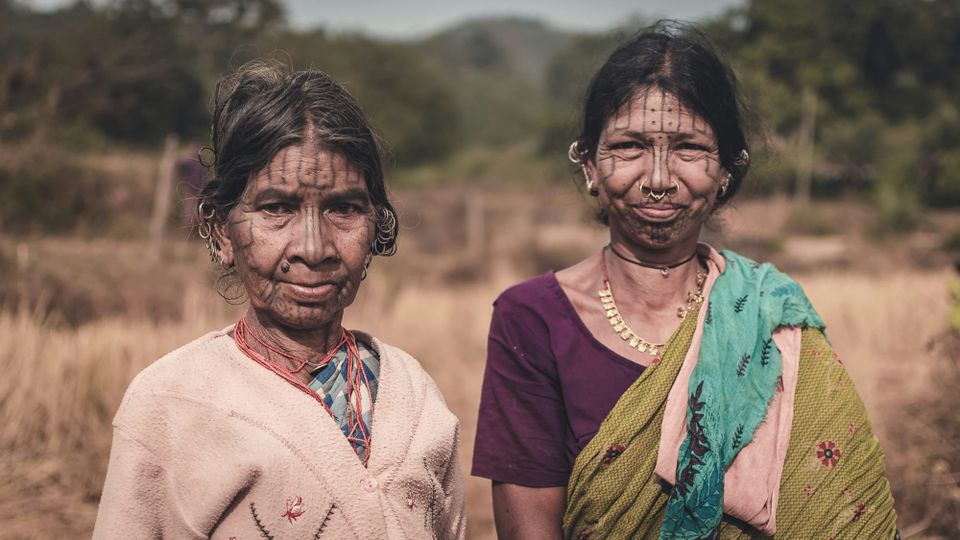
In anthropology there exists an concept of cultural context. Some cultures are low context and others are high context. Low context cultures are direct, communication and therefore knowledge is explicit; doesn't require much discernment. Western society has overtime evolved to be low context. High context societies are the opposite; they require a lot of unwritten cultural cues, rules, situational awareness and knowledge that is disclosed over time as develops through different phases of life. As an example, until you are before a specific chief of a specific tribe you are unlikely to know what the ritual process to enter their court and engage with them is; because it is not documented and intentionally so.
How does this relate to business in the ai era? My bet is this. Business opportunities involving high context cultures are unlikely to be affected by ai; in great part because those societies are low trust. Which means that actors who develop high context awareness and learn to build trust in low trust contexts will be able to partner with these communities to do business. These are places that are typically well endowed with raw material wealth; minerals, forests, significant energy potential, agricultural scale; all typically not on formal title and requiring communal consent and FPIC to execute. These resources will remain important; in fact increasingly so. Critical minerals will be key to the development of ai improvement; forests are critical to carbon sequestration and also produce hardwoods that require decades to grow; agriculture may become automated but certain types will always need scale. That means the opportunity is land development in places in the world where customary land-tenure is the rule, and high-context culture is the substrate--and low trust is the norm. Places where trust is relational, earned slowly, and cannot be substituted by formal documentation alone. That means eventual land-use is not the primary vector; trust and context discernment are; land-use is how that is employed on the basis of the best and highest use of a location.
It is ironic then that the societies at the deepest frontiers, where human development is often thought of as being lowest are the places where human-led businesses are most likely to thrive and not be replaced by ai-led enterprises. There's a logic to the irony though. The places where humanity has remained the most human will be where people get a chance to keep at it.