What is the ultimate purpose and meaning of life?
I. The Question the Machines Forced
Purpose defined as function was always a lease. Automation has served the notice of termination.
In November 2019, Lee Sedol retired from professional Go. He was thirty-six years old and one of the greatest players who ever lived. He did not retire because his skills had faded. He retired because, three years earlier, a machine had beaten him four games to one, and he had concluded that no amount of effort would ever close the gap. "Even if I become the number one," he said, "there is an entity that cannot be defeated."
Listen to the grammar of that sentence. It is not the grammar of a man who has lost a game. It is the grammar of a man who has lost a reason. Go was not what Lee Sedol did. It was what Lee Sedol was for. And when the machine absorbed the function, the man discovered that he had built his existence on a foundation that could be rented out from under him.
He was early. The rest of us are on the same lease.
For three centuries the modern world has answered the question of human purpose with a job description. You are what you produce. You matter because you function. The economist measured it, the university credentialed it, the corporation employed it, and the self-help industry sold techniques for maximising it. Purpose became productivity with better marketing.
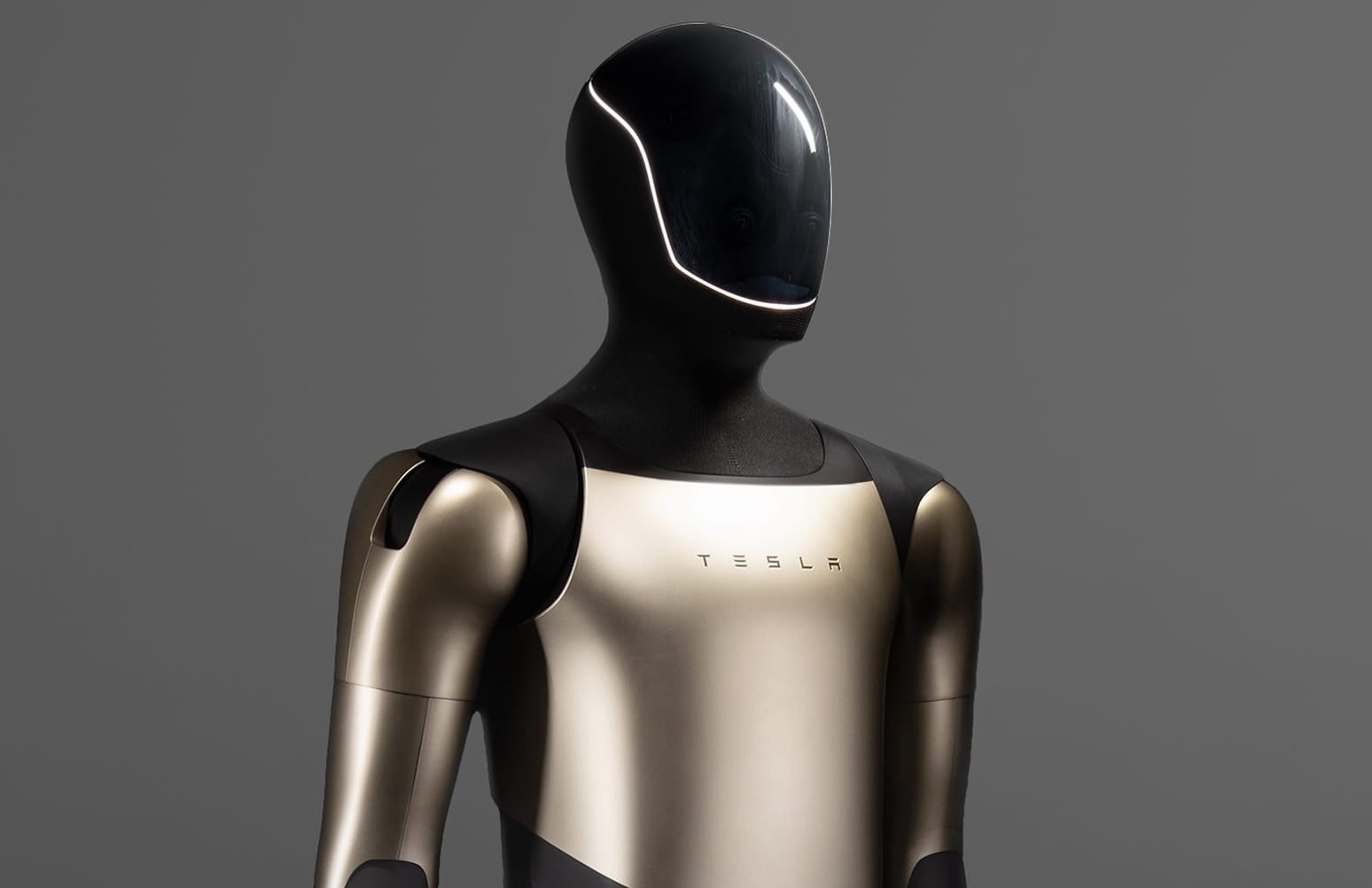
Then the machines began to write, to diagnose, to argue, to compose, to code. Not merely to labour — to think, or to perform what we had comfortably called thinking. And a civilisation that had defined the human being by his functions watched the definitions evaporate one profession at a time. The panic you now feel in every essay about artificial intelligence is not economic anxiety. It is ontological vertigo. We are discovering that we never actually answered the question of what a human being is for. We only postponed it, and the machines have called in the debt.

This essay is an answer. Not a comfort, not a coping strategy — an answer, derived rather than asserted, and it runs through physics, through consciousness, through a Word the Greeks half-saw, through an empty tomb in an occupied province, and it terminates in a single sentence that I will defend across everything that follows: the purpose of a human being is priesthood.
You may think that a mystical answer. I intend to show you it is the most empirical claim in this essay. Because you, reader — whoever you are, whatever you believe — are already a priest. You have never been anything else.
II. The Priests Who Deny the Altar
No man is without a god. The only open question is the god's name.
In May 2005, a novelist stood before the graduating class of Kenyon College and told them a secret that the secular world had contracted itself never to say aloud. "There is no such thing as not worshipping," David Foster Wallace said. "Everybody worships. The only choice we get is what to worship." He then added the actuarial footnote: worship money and you will never have enough; worship your body and you will always feel ugly; worship power and you will end up feeling weak and afraid. "The insidious thing about these forms of worship," he said, "is not that they're evil or sinful. It is that they're unconscious. They are default settings."
Wallace was not a Christian. He was a hostile witness. And hostile witnesses, when they converge on your claim, are worth ten friendly ones — because they arrive at the testimony against their own priors. What Wallace saw from inside the secular cathedral, Paul had stated from outside it two millennia earlier: idolatry is not the absence of worship but its misdirection. Men "exchanged the glory of the immortal God" and "worshipped and served created things." Mark the verb. Exchanged. Worship is conserved. Only its object varies.
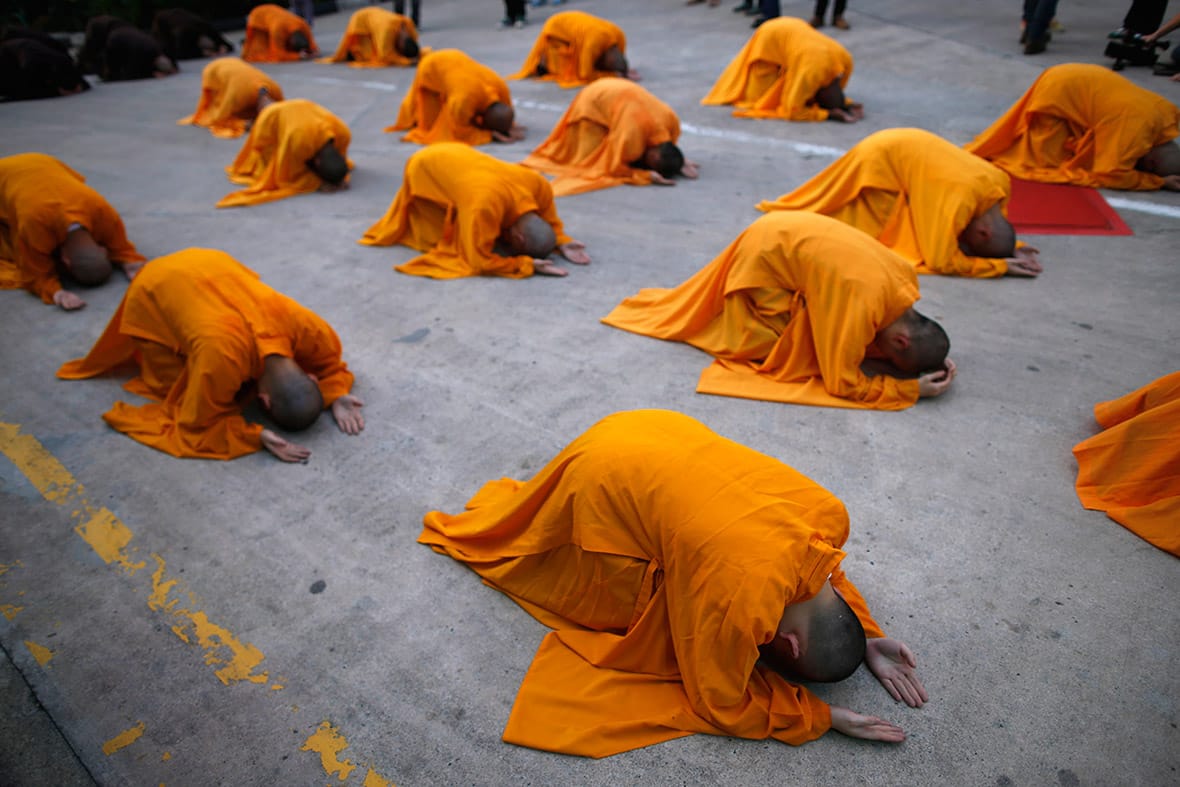
Watch any dedicated life and you will see the full cultic apparatus, running unnamed. The obsession is the god. The daily disciplines in its service are the liturgy. The things surrendered to it — sleep, health, marriages, children's bedtimes, occasionally integrity — are the offerings. The community of fellow devotees is the priesthood. The gatekeepers, the credentialing bodies, the rankings and the ladders: these are the temple hierarchy, complete with its castes. And every one of these communities has its orthodoxies and its heresy trials. Try laughing at a man's obsession and watch his face. What you will see is not disagreement. It is the blasphemy response. The offence fires around whatever the man has enthroned, and it fires whether the throne holds a deity, a portfolio, a physique, a party, or a research programme.
Calvin said the human heart is a perpetual factory of idols. Augustine, more precisely, said that sin is not the absence of love but its disorder — real goods, loved in the wrong rank. The secular settlement deleted the vocabulary of worship from public discourse. It could not delete the behaviour. So the behaviour now runs everywhere, unnamed and therefore unexamined, and a civilisation of priests congratulates itself on having outgrown religion while it sacrifices its children's attention to glowing rectangles and calls the liturgy "engagement."
Now consider what this means for the question this essay opened with. When a man asks what is my purpose? he believes he is asking a philosophical question from neutral ground. He is not. He is filing a complaint against his current god. The question only ever arises when the enthroned thing has stopped paying — when the career, the pleasure, the reputation, the project has received decades of offerings and returned insufficient weight. The felt absence of purpose is not a datum awaiting a worldview. It is cultic feedback. It is what it feels like, from the inside, when a finite god draws infinite service and pays finite wages.
Every idol has a balance sheet. Every idol is eventually insolvent, because the demand it must satisfy — the demand for the weight of being itself — is unbounded, and its assets are not. Augustine wrote the audit finding sixteen centuries ago: fecisti nos ad te — you have made us toward yourself, and our heart is restless until it rests in you. The restlessness is not the problem. The restlessness is the evidence.
So the question is not whether you will be a priest. You are one now. The question is whether your god is solvent. Everything that follows is a solvency analysis.
III. What the Instruments Say
Physics cannot name the ground of the world. But run its constraints honestly and it drafts the job description.
Begin where the instruments point, and take the findings one at a time, the way a surveyor takes bearings.
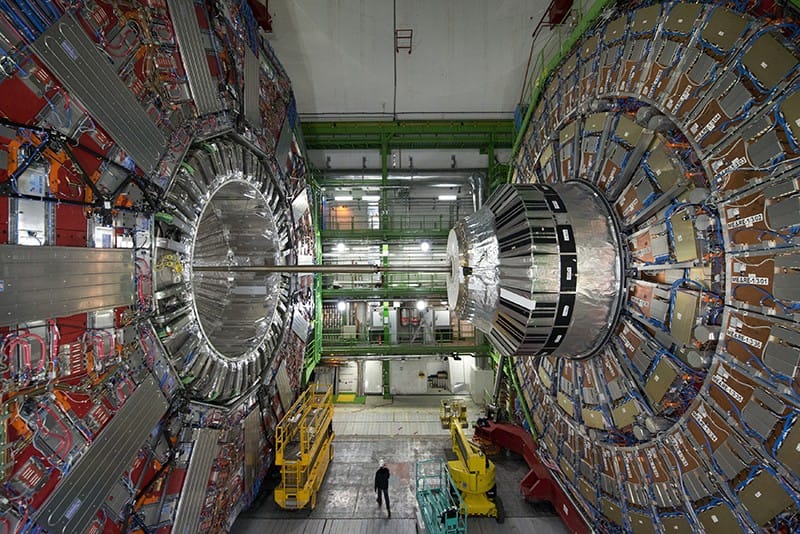
The first bearing was fixed in a basement laboratory in Orsay, outside Paris, in 1982. John Bell had proven, two decades earlier, that no theory of local hidden properties — no picture in which particles carry their answers with them like sealed envelopes — could reproduce the correlations quantum mechanics predicts. Note the epistemic species of that result: it is a theorem. Not a model, not a preference — mathematics, with the inequality derived before any apparatus was built. Which means the question was handed entirely to measurement, and measurement is where the classical picture then spent fifty years dying in the most instructive way possible: adversarially. Alain Aspect measured the correlations and quantum mechanics won; the sceptics — rightly — proposed loopholes, and the experimentalists spent three decades closing them one by one. Perhaps the detectors were sampling unfairly; perhaps the two stations had time to signal each other. In 2015 three independent groups — Delft, Vienna, Boulder — closed both loopholes simultaneously, Delft with entangled electrons a kilometre and a third apart. Perhaps, then, the experimenters' choices were themselves secretly correlated with the particles; so the Vienna group let the measurement settings be chosen by light from quasars emitted billions of years before the Earth existed, and a separate collaboration recruited a hundred thousand human beings playing a smartphone game to supply the random choices. Every escape route named was sealed; every seal held; in 2022 Stockholm entered the verdict. Understand, then, the grade of the conclusion: the correlations are measurement; the exclusion of local definite properties is deduction from the theorem given the measurement. What remains open to interpretation is only what to make of it — not whether it is so. And what is so, stated without romance, is this: reality's foundation does not consist of little classical machines with definite properties grinding out results. It consists of structured possibility — a catalogue of ways things could be, mathematically exact, physically real, and not yet definite. Whatever grounds this world is non-classical. The clockwork was never in the basement, and physics did not concede the point willingly; it was dragged to it by half a century of its own instruments.
The second bearing came from Einstein, and he stated its human meaning in a letter. In March 1955, weeks before his own death, he wrote to the family of Michele Besso, his oldest friend, newly dead: for physicists like us, he said, the distinction between past, present, and future is only a stubbornly persistent illusion. He was not consoling; he was reporting. Relativity had dissolved the universal "now": simultaneity is frame-relative, and the consequence — driven home by Rietdijk and Putnam, and dramatised by Penrose — is almost comically concrete: two pedestrians passing each other on a pavement, by nothing more than their walking speeds, carry planes of simultaneity that slice the Andromeda galaxy days apart — for one of them the alien fleet has already launched; for the other the council has not yet met. Their "nows" cannot both be the universe's now; the only coherent reading is that neither is, because all events — past, present, future — are equally real: a four-dimensional block in which your birth and your death both simply are. And this is not a philosopher's gloss riding on an untested theory. Relativity is the most brutally confirmed structure in science: the muons that should decay before reaching your rooftop arrive anyway, on dilated clocks; Hafele and Keating flew atomic clocks around the world in airliners in 1971 and read the predicted desynchronisation straight off the dials; and the satellite navigation in your pocket corrects for thirty-eight microseconds of combined relativistic drift per day, without which its fixes would smear by kilometres — the geometry of the block is, at this point, a consumer product. To rescue an objective universal present, one must posit a preferred reference frame that a century of ever-more-precise experiment has failed to detect — a rescue that costs exactly what phlogiston cost. Time, in the block, is not a river flowing past the ground of things. It is among the things the ground must account for. Whatever grounds this world is omni-temporal — it does not sit inside the sequence; the whole sequence sits inside it.
The third bearing is the strangest, and it came out of black holes. Jacob Bekenstein and Stephen Hawking discovered in the 1970s that a black hole's entropy — its information content — scales not with its volume but with the area of its boundary, as if everything that fell in were written on the surface. 't Hooft and Susskind generalised the lesson into the holographic principle, and here the reader should be disabused of any suspicion that this is mysticism at physics' margins. In 1997 Juan Maldacena exhibited an exact mathematical realisation of it — a complete equivalence between a gravitational world and a gravity-free theory on its boundary — in what has become the most-cited paper in the history of high-energy physics; a decade later Ryu and Takayanagi showed that the geometry of the interior can be computed from the entanglement of the boundary information, as if space itself were woven from qubits — "it from qubit" is now the name of a mainstream research collaboration, not a slogan on a mystic's door. The holographic principle is the working assumption of the field's centre: the complete physical description of any region lives on its boundary, as information. John Wheeler compressed the revolution into three words — it from bit: every particle, every field, every it, derives its existence from binary answers to posed questions. The universe, at its deepest known level of description, is not made of stuff that happens to carry information. It is encoded — information-bearing all the way down, which means intelligible all the way down, which is why a Zambian with a pencil can compute what a quasar will do. The unreasonable effectiveness of mathematics stops being unreasonable the moment the world is admitted to be, in its structure, something like an utterance.
The fourth bearing: between the catalogue of possibility and the definite world you are sitting in, something performs a determination — and physics has partially traced the mechanism, not on blackboards only but in apparatus. Serge Haroche's group in Paris trapped photon states in superposition and watched decoherence happen — timed it, in real time, as the catalogue collapsed toward definiteness — work crowned in Stockholm in 2012; and the redundant broadcasting of the surviving states into the environment, quantum Darwinism's signature, received its first laboratory confirmations in 2019, in photonic systems and in the nitrogen flaws of diamonds. The mechanism is observed. Decoherence shows two faces. The first, einselection, is a filter: interaction with the environment ruthlessly selects which states can survive as stable, classical facts. The second, quantum Darwinism, is a broadcast: the selected states are copied redundantly into the environment, so that many observers read one agreed world. Selection, then constitution. Specification, then actualisation. The equations describe the propagation of definiteness with magnificent precision — and are silent, constitutionally silent, on what does the determining, because "what determines" is not a question the formalism was built to ask.
And here the honest reader must be shown the wall, because the wall is the finding. Physics has spent a century trying to exit this question, and every exit has been audited. Everett's many worlds keeps every branch and so relocates the question rather than answering it — why is actuality here, why this indexical thread lived rather than merely enumerated. Bohm's mechanics buys definiteness with brute, unexplained initial data. Objective collapse posits a mechanism and cannot say why the mechanism. And brute fact — the last door — is not an answer but a decision to stop asking. Every road terminates in something brute or deflates the question it set out to answer. This is not a theologian's complaint smuggled into the laboratory. It is the acknowledged, physics-internal residue of the best theory we have ever built: an actualisation the formalism requires, exhibits, and cannot supply.
But the wall is not yet the full finding. The full finding is that the bearings do not merely accumulate — they interlock, and the interlock is a trap for every evasion. Watch the doors close.
The block closes the multiverse's door. Everett's escape was to keep every branch as equally real — but relativity's block is one definite four-dimensional structure, and holography prices information by boundary area. A branching ensemble multiplies without limit; its information content outruns every Bekenstein bound; there is no surface in physics large enough to write the multiverse on, and no energy ledger that can pay to instantiate it. The branches cannot be warehoused physically. And yet Bell's catalogue of possibility is real — the correlations require its structure to be there, doing work. So a corner has formed, and feel its exact geometry: possibility is real, and possibility cannot be physical. Ask, then, what category of thing holds real, structured, uninstantiated possibility at no energetic cost — and notice that in the entire inventory of being there is exactly one: conception. A mind holds ten thousand possible chess games without playing one. Ideas do not weigh. The warehouse of possibility space is mind-like not by poetic analogy but by elimination. Nothing else does that job; nothing else can.
Then the block demands the second operation. The block is definite — every event in it simply is, this way and not otherwise — and definiteness drawn from real possibility means a selection was made: specification, performed on the whole of it, omni-temporally, since the block does not assemble itself in stages. And holography demands the third. A boundary encoding is a description; the bulk you inhabit is not a description. The interior is present — the coffee is hot, the grief aches — which means the encoded has been made to stand out of its code into being: actualisation, continuously, or there is no bulk at all. Hold the possibility. Specify the definite. Actualise the interior. Now cut the cake any way you please — begin from Bell, begin from Einstein's block, begin from the black holes — and the knife arrives at the same three operations, performed by something omni-temporal and mind-like, because each bearing forces the operation the other two cannot supply. The constraint-vector is not a wish list assembled from favourable findings. It is the unique shape of the only exit the interlocked physics leaves open. I have derived it at full length elsewhere, every inferential step graded for strength, every soft joint named¹ — the reader is owed that disclosure, and it exists. But the shape survives every grading: triadic in operation, omni-temporal in reach, mind-like in nature.
Pause here and audit the confidence itself, because I hold it strongly, and a strong confidence is owed a stronger accounting than a felt one. It rests on four structural facts, and the reader should test each.
First, independence. The four bearings issue from four research programmes that share nothing: different generations, different communities, different mathematics — quantum foundations, relativity, black-hole thermodynamics, open-systems theory — and not one of them was doing metaphysics; each was doing ordinary physics for ordinary physicists' reasons, and several of its architects would dislike the use I am making of their results. Convergence without collusion is this essay's entire theory of evidence, and here it is operating at the foundation: four surveyors, four hills, no correspondence between them, one shape.
Second, the grading, in the open. Walk the chain and name each step's species. The correlations, the time dilation, the entropy-area law, the watched decoherence: measurement. Bell's exclusion given the correlations: deduction — a theorem cashed by data. The block given frame-relative simultaneity: deduction again, unless one purchases an undetectable preferred frame. Only at the interlock does the mode soften to inference to the best explanation — and even there it is best-of-an-exhausted-field, not best-of-those-considered. The chain's load-bearing joints are measurement and theorem; abduction enters once, at the end, and is labelled when it does.
Third, the audit of exits is not a list of fashions; it is a partition — a division of the logical space that no future cleverness can escape. Either no selection occurs, and all possibility is actual (Everett's cell — and the interlock has priced it against the holographic bound); or selection occurs. If it occurs, it is either accounted for or brute. If brute, the bruteness lodges in initial data (Bohm's cell), in an unexplained mechanism (collapse's cell), or in a refusal to ask (the campsite). Every interpretation yet proposed, and every interpretation that ever will be, lands in one of those cells, because the cells are drawn by logic, not by survey of the literature. One cannot flee a partition; one can only choose a cell, and every cell has been shown its bill.
And fourth, the structure of the argument is a lens, not a chain. A chain fails at its weakest link; this fails at no single link, because it has none. Strike out Bell entirely — concede, per impossibile, some local classical rescue — and the block, the boundary encoding, and the actualisation residue still corner a ground that is omni-temporal, information-bearing, and determining. Strike out the block instead, and the remaining three still demand the warehouse, the selection, the making-present. The conclusion is overdetermined: each bearing independently presses toward the shape the others press toward, which is why the confidence compounds the way independent witnesses compound rather than hanging from any one testimony. And the whole of it is falsifiable in the ordinary way, and I will state the breakage conditions plainly, because pre-registration is my method's signature: detect a preferred frame, and the block falls; find Bell violations failing at scale, and the catalogue closes; measure an entropy that grows with volume, and the encoding dissolves; catch decoherence broadcasting without redundancy, and the mechanism's face changes. Every one of those hunts has been run, most of them for decades, some of them with Nobel committees waiting at the finish line. Every one has returned confirming.
Mind-like, I said — the structure of a mind, surveyed from outside. Whether the mind-like is a someone — interior, first-personal, a self and not merely a schema — the physics cannot say. For that, a second and independent survey is required, and it happens that you are carrying the surveying instrument in your skull.

IV. The Natural Experiment
Physics constrains the ground from outside. Consciousness constrains it from inside. Two surveys, no shared assumptions — and they fix the same point.
You are conscious. There is something it is like to be you — the taste of coffee, the ache of grief, the redness of red — and this is the one datum in your possession that cannot be doubted, because the doubting would itself be an instance of it. Begin the second survey there. But before running the arguments, fix precisely what physical explanation is, because the whole case turns on a scope declaration that physics makes about itself and that almost no one reads. Physical explanation explains by structure and function — exhaustively, and on purpose. An equation is a statement of relations; a physical theory is a catalogue of how things are disposed to affect other things; and what any given thing is in itself, beneath and behind its relational profile, physics does not say and cannot say, because relational profiles are the only thing its method measures. This is not a complaint from theology; it is Bertrand Russell — no friend of mine in metaphysics — stating the discipline's own charter: physics is mathematical not because we know so much about the physical world, but because we know so little; it is only its structural properties that our instruments can reach. Eddington, who measured the starlight that confirmed Einstein, put it with a physicist's shrug: something unknown is doing we know not what. Hold that charter in view: physics describes structure, and is constitutionally silent on the intrinsic nature of whatever bears the structure. Everything that follows is that sentence, cashed.
Now the first proof, and I will walk it slowly, because it is a proof and deserves a proof's pace. Every successful reduction in the history of science — water is H₂O, heat is molecular motion, lightning is electrical discharge — worked by one manoeuvre: peel the appearance away from the reality, and file the appearance under "facts about observers." Heat seems like warmth, but the warmth is how molecular motion registers on creatures like us; set the seeming aside, and the identity goes through clean. Saul Kripke supplied the modal accounting for this. True identities, he showed, are necessary — if heat is molecular motion, it could not have been otherwise — and yet these identities feel contingent, feel like they could have been false; and the feeling is explained away, in every scientific case, by exactly the appearance/reality split: what could have been otherwise is only the seeming, the contingent link between the reality and how it strikes an observer. Now bring the manoeuvre to consciousness and watch it seize. Pain is picked out by its appearance — by how it feels — and there is no gap between seeming to be in pain and being in pain: the appearance is the reality. So when the identity "pain is such-and-such a brain process" feels contingent — and it does, irresistibly, to the identity theorist himself — the one licensed method for explaining the feeling away is unavailable, because there is no mere seeming to set aside. The apparent contingency stands; by the necessity of identity, an identity that could fail is no identity; the reduction does not merely lack evidence — it lacks the logical form a successful reduction requires. The manoeuvre that built modern science devours itself at exactly one location, and the location is the seeming as such.
Second proof, from the other side of knowledge, and it can be told as a story. Mary is a brilliant scientist who has lived her whole life in a black-and-white room, and she knows — stipulate it — every physical fact about colour vision: every wavelength, every neuron, every processing pathway, all of it, complete. One day she walks out of the room and sees a red rose. Question: does she learn anything? Every honest reader answers yes — she learns what red is like — and the conclusion detonates on contact: if she knew all the physical facts and still learned a fact, then some facts are not physical facts. The physical story, complete by hypothesis, left something out, and the something is precisely the intrinsic, experiential character that Russell's charter told us the method must leave out. (Frank Jackson, who built Mary, later defected from his own argument — not because anyone found a flaw in it, but because he could not accept where it led. A proof abandoned for its conclusion rather than its logic remains a proof, and the defection of its author under doctrinal pressure is, if anything, a character reference for the argument.)
And now the turn that most discussions never make, the one this essay's method demands: the difficulty itself is the theorem. Notice the shape of the two proofs. Neither says "we have not yet explained consciousness." Both say the explanation is blocked in principle, and blocked by the conjunction of two premises neither side disputes: physics' own charter — structure and function only — and consciousness' own self-presentation — intrinsic, qualitative, the seeming that cannot be split from the seemed. From those two premises the irreducibility follows deductively: no amount of structural information sums to an intrinsic nature, for the same reason no catalogue of a man's relationships, however complete, is the man. The hard problem is not a gap in the science. It is a result of the science — the collision, derivable in advance, between a method that captures only relations and a datum that is not one. And the empirical record then behaves exactly as the theorem predicts, which is how theorems earn their keep. A century and a half of neuroscience has delivered neural correlates of consciousness in magnificent abundance — and constitution never, not once; the field's own vocabulary ("the neural correlates of consciousness") is an unintended confession, for one does not speak of the molecular correlates of water. There is a precedent for what to do with a failure record of that shape. In 1775 the French Académie des Sciences, weary of perpetual motion machines, resolved to examine no more of them — before thermodynamics existed to explain why every design must fail. The Academy read the failure record as law, and the law came later and vindicated them. The unbroken failure of reductive programmes is the same kind of record, and the theorem that explains it is already on the table: the materialist's dead substrate was never a candidate for the ground of a world that contains experience — not because the search has been unlucky, but because the search was, demonstrably, a category error from the first shovel.
The next proof is reason itself. Every argument — including every argument for materialism — presupposes that some inferences are valid, that beliefs can be about things, that a conclusion can be warranted. Validity, aboutness, warrant: not one of these is a physical property; no arrangement of particles is, qua particles, correct. The eliminativist who bites this bullet and declares meaning an illusion has published an argument that there are no arguments, and he expects it to be understood. His position is not refuted from outside; it dies of its own performance. So the ground of a world containing reasoners must be the kind of ground from which norms and meaning can arise — call it, minimally, Logos-capable.
And now watch the two surveys lock — not merely agree, lock, the way a key locks, and for a reason that the arguments above have already supplied. The physics of the last section derived the ground's structure: triadic in operation, omni-temporal in reach, information-bearing, mind-like in functional shape. But the physics could never have derived the ground's nature — Russell's charter forbids it; structure is all its instruments reach. Where, then, could the nature possibly be checked? Only at a point where some fragment of reality is accessible from the inside — where the surveyor does not observe the relatum through its relations but is the relatum. There is exactly one such point in the universe, and you are sitting in it. Consciousness is not one more object the survey passes over; it is the sole location where the intrinsic nature behind the structural catalogue shows itself at all — the single window in the wall of relations — and what shows through the window is not dust, not mechanism, not more structure: it is experience, interiority, a someone. And notice what you are doing at that window, continuously. Attention selects one thread from the roar. Choice determines one act from the fan of options. Naming makes the indefinite definite — ask any poet, or any father at a cradle. Every conscious moment takes a field of possibility and collapses it into an actuality: the very operation — specification — that the physics found at the foundation and could not explain is the operation you perform from the inside, and from the inside it has a face. This is why the hard problem and the physics chain are not two arguments but two halves of one: the same structure/intrinsic division that makes consciousness irreducible to physics is what makes consciousness the only possible testimony about what physics' structures are structures of. The division of labour between the surveys is principled, forced by the charter itself: physics supplies the profile of the ground; consciousness supplies the character; and the profile and the character match — a specifying structure outside, a specifying experience inside. Induction from a sample of one is modest, I grant. But it is not an arbitrary sample of one: it is the only sample possible, at the only window there is; it points in exactly one direction; and the direction is the one the structure had already drawn from outside.
Mark the architecture of what has now happened, because the architecture is the argument. Two surveys — one from the structure of the physical world, one from the structure of conscious experience — sharing no premises, capable of no collusion, have converged on one specification: the ground must be non-classical, omni-temporal, information-bearing, intelligible, selection-sensitive, actualising, interior, rational, meaning-capable, personal. In every other domain of inquiry we treat independent convergence as the signature of a real object; two surveyors on different hills, triangulating a point neither can reach on foot. And a specification that precise is falsifying, not decorative: run the live ontologies against it and watch them fail on contact — materialism at consciousness, Platonism at actualisation (forms explain structure and cannot make anything happen), pantheism at the distinction the block requires between ground and grounded, the simulation hypothesis by regress to the question of its ground. The vector does not merely gesture at a conclusion. It eliminates.
And now bring out the two oldest instruments in the philosopher's kit, because both cut in this argument's favour, and both are routinely assumed to cut against it. Occam's razor first — entities are not to be multiplied beyond necessity — the maxim every sceptic quotes at theism as though it were a writ of eviction. But hold the razor straight and count what it actually counts. Parsimony is not measured by the size of a posit; it is measured by the number of independent unexplained commitments on the ledger — the brute facts, each one a debt no other entry retires. Draw up materialism's ledger at the end of the two surveys: brute laws (why these equations?); brute initial conditions; a brute actualisation the formalism requires and cannot supply; a brute warehouse for real possibility that no physical surface can carry; brute intelligibility; a brute crossing from process to experience; brute normativity underwriting the very reasoning that compiles the list. Seven debts, unconnected, none explaining another. Everett's ledger is worse still — it discharges one debt by issuing entities without limit, the most spectacular violation of parsimony ever committed in parsimony's name. Now set against the heap a single posit — the triadic, omni-temporal, personal ground — and watch what one entry does: the actualisation is its operation; the warehouse is its conception; the intelligibility is its expression; the block is its specification, whole; consciousness is its image; the normativity of reason is its rationality, participated. One posit retires seven debts. The razor, honestly held, shaves brute facts, not grounds — and the ground is not an addition to the world's inventory but the consolidation of it. In this argument, theism is the parsimonious position, and it is the materialist who is multiplying entities: seven unexplained ones, where one explanation would do.
And with the warehouse identified, Everett's account can now be settled in full rather than merely penalised — because his motivation deserves honouring even as his ontology is dismissed. Everett's insight was realism: the wavefunction's catalogue of possibility is not bookkeeping but reality, and any account that waves it away is being dishonest about the physics. Granted, entirely — Bell demands it. His error was the mode of that reality. He could conceive of possibility being real in only one way — by physical instantiation — and so every branch had to become a cosmos. But the constraint-vector has already located possibility's native habitat: the ground's conception. A possibility conceived by an omniscient mind is fully real — determinate, structured, causally load-bearing in exactly the way the correlations require — while weighing nothing and costing nothing; and once the Father's omniscient conception holds the entire catalogue, the multiplication of physically instantiated worlds is not so much wrong as superfluous: it purchases, at infinite ontological expense, what conception supplies for free. Actualisation then selects one history — the Specifier's operation upon the conceived catalogue — without requiring every unselected history to be promoted to an equally real universe. The unselected remain exactly what they always were: fully real as conceived, unreal as instantiated. And philosophy, remarkably, has run this experiment twice, in two departments, with the same result. Leibniz housed the infinity of possible worlds in the divine understanding — "the region of eternal truths" — whence one, this one, was selected for existence; the apparatus stood stable for centuries. Then modernity evicted the conceiving mind, and possibility was left homeless — and within a generation of each other, Hugh Everett in physics and David Lewis in metaphysics performed the identical manoeuvre: with no mind left to conceive the possibles, they instantiated them — every branch made cosmos, every possible world made flesh. Lewis's colleagues answered him with what he ruefully named the incredulous stare; Everett's critics answer with the Bekenstein bound; and the two responses are one intuition wearing different instruments: possibility is real, but that is not its mode of being. The two most extravagant ontologies in the history of thought are simply what the warehouse looks like after the eviction of its Owner. The scholastics, who still had the Owner, had drawn the two registers with complete precision seven centuries before quantum mechanics discovered it needed them: the scientia simplicis intelligentiae — God's necessary knowledge of all possibles — and the scientia visionis — his knowledge of what he wills actual. The catalogue and the selection. Conception and actualisation. Aquinas, it turns out, had already filed the ontology of the wavefunction; physics has merely been trying to do without the Mind it was filed in.
The second instrument has a name most readers have forgotten, coined by William Whewell, the man who also coined the word scientist: consilience — the jumping-together of inductions from unrelated classes of facts. Whewell held it, and the subsequent history of science has ratified it, as the strongest mark of truth an empirical argument can bear: when lines of evidence that share no method and no motive converge on one hypothesis, the convergence itself is a datum, and it is the datum that decides. Darwin built the Origin on precisely this architecture — no single fact proves descent, but biogeography, embryology, comparative anatomy, and the fossil record, four classes with four methods, jump together, and the jump is the proof. The present argument has exactly that structure, and the reader has watched it assemble: correlations from a Paris basement; a dying man's letter about time; the thermodynamics of black holes; decoherence timed in a diamond flaw; the redness of red; the self-refuting eliminativist — classes of fact with no discipline in common, converging without appointment on one constraint-vector. That is consilience in the strict Whewellian sense, and it licenses the strict Whewellian conclusion: the hypothesis at which unrelated inductions meet has stopped being one interpretation among interpretations. It has become the explanation of why the inductions had anywhere to meet.
What remains, run the regress and let it terminate. Things are explained by deeper things; possibility explains nothing until something specifies it; the sequence cannot bottom out in more unspecified possibility. It must terminate in a fixed point — a ground that is its own specification, actuality that awaits no determination because it is determination. And the internal structure of such a ground is not optional; it is the triad the constraints demanded, now with its proper names: the Source from which possibility flows, the Specifier by which possibility becomes definite, the Actualiser in which the definite is made present and sustained. Not three functions the ground happens to perform. Three relations constitutive of what it is to be the ground at all — a conscious, personal, self-specifying ground, triune in its inner structure, omni-temporal because time itself is among the things specified.
And now perform the operation these two sections have been preparing, because everything so far has been presented in sequence — bearing by bearing, proof by proof — and sequence understates the result. Run the entire chain simultaneously: demand a single ground that satisfies every constraint at once, the way one solves simultaneous equations rather than admiring each line alone. Watch what happens to the solution space. Each constraint taken singly is permissive. Non-classicality alone admits a dozen ontologies; omni-temporality alone admits Parmenides and the pantheists; information alone admits the simulation-mongers; mind alone admits idealisms East and West. One at a time, the bearings leave the field crowded — which is why sequential treatment lets every reader keep his favourite ontology by rotating it toward whichever constraint it happens to satisfy. But constraints in a joint system multiply their selectivity exactly as independent evidence multiplied its improbability. The ground must be non-classical and hold the whole block omni-temporally and warehouse the reality of possibility in conception and specify definiteness and actualise an interior and be the kind of thing from which experience can arise and underwrite the norms by which this very argument proceeds. Impose all of it at once, and the crowded field empties like a courtroom after verdict. Parmenides holds the block and loses the possibility. The simulators hold the information and lose the regress. The idealisms hold the mind and lose the definite structure. The materialist, as audited, loses everything but the bill. What survives the joint imposition is not a family of ontologies. It is one.
And the survivor has internal structure, because the operations do not merely coexist — they compose. Conception's output is specification's input; specification's output is actualisation's input: hold → specify → make-present is not a list but a directed composition, a single operator applied to the whole. And here is the subtlety on which everything turns: because the ground is omni-temporal, the composition is not executed in temporal sequence. The block is specified whole; there is no moment at which conception has finished and specification has not begun. The operator's direction is logical, not chronological — an eternal order of proceeding, without before and after, in one simple act. Now say that back slowly: a first register from which, a second register through which, a third register in which — eternally ordered, never sequential, three relations, one being. That is not merely compatible with Nicene grammar. That is Nicene grammar — begotten, not made; proceeding; the processions without succession that the fourth century fought to articulate — derived here on a whiteboard from decoherence and fixed-point structure, by hands that were only trying to satisfy the physics.
And the first verse of Scripture ever to narrate the operator runs its syntax in exact composition order. God said — conception, voiced. Let there be light — specification. And there was light — actualisation. And God saw that it was good — the audit. Four clauses, three operations and a verification, in sequence, set down by a Bronze Age hand — about the making of light, the very entity whose boundary behaviour modern holography now uses to write the world. The oldest cosmogony in continuous liturgical use is a syntax diagram of the operator this chain derives.
The simultaneous run also explains what the sequential run never could: why the constraints cohere at all. If the bearings were unrelated facts, their mutual compatibility would be one more piece of luck on the ledger. As projections of one triadic operator viewed from four experimental angles, their coherence is necessary: intelligibility falls out of conception expressed; definiteness falls out of specification; presence falls out of actualisation; even the felt arrow of time inside a tenseless block falls out of the third register being relational — presence is always presence-to, and a block omni-temporally actual can still be experienced serially by the creatures inside it, one presence at a time. The century's four great experimental programmes, on this reading, were four blind hands laid on one animal: Bell held the catalogue, Einstein the whole-at-once, Bekenstein the written surface, Haroche the selecting touch — and run simultaneously, the hands report a single body. Consciousness is the moment the animal's eye opens and looks back. The chain run together is not merely more convincing than the chain run in sequence; it is a different kind of object — not an accumulation of clues but a single derivation with a single output. Three perspectives. One formal reality. And in the entire recorded history of human thought, exactly one independently developed ontology satisfies the joint system natively, without retrofit — conceived, argued, and creedally fixed centuries before a single one of these constraints could be measured: the triune God of Nicaea.
One integration now remains, and it is the summit of the whole derivation. The physics has been run simultaneously; run the consciousness proofs the same way. Taken singly, they delivered separate results: an irreducibility (Kripke), a non-physical fact (Mary), a normative order (the reason proof), an aboutness, a first-person indexicality, a specification experienced from within. But run jointly, they do not yield six anomalies. They yield one character. The interior of reality, at the single point where it can be accessed, is — all at once — qualitative, rational, meaning-bearing, first-personal, and operative: something that feels, knows, means, values, and chooses. Not a list of puzzles for physicalism; a profile — the profile of a someone. And the joint interior has internal structure of its own, derivable by an analysis the reader can perform on himself this instant, since he is doing the thing being analysed. For any mind to know itself — and you are knowing yourself as you read — three relations are required, no fewer and no more: the knower; the self-as-known — the mind's expression of itself to itself, its inner word, for no mind knows itself except by uttering itself inwardly; and the act that unites and affirms the two — the knowing that is also a holding-together, which every honest phenomenology recognises as a species of love. Augustine derived this sixteen centuries ago and spent fifteen books of De Trinitate testing it: mens, notitia, amor — the mind, its knowledge, its love; memoria, intelligentia, voluntas. Self-knowledge is triadic or it is not self-knowledge at all. A triad, again — derived entirely from inside, with no physics anywhere in the room.
Now pair the two integrated wholes, and watch what emerges. The physics, run simultaneously, output a triad of operations: conception → specification → actualisation. The consciousness proofs, run simultaneously, output a triad of relations: knower → word → love. Lay them side by side, register against register. The Source that holds all possibility, against the knower whose memory holds all it is. The Specifier that determines and expresses, against the inner word by which the mind utters itself. The Actualiser that makes present and sustains, against the love that unites knower and known in presence. The map is structure-preserving at every joint. And understand what kind of result that is, because it is categorically stronger than anything the essay has claimed so far: this is not two arguments agreeing on a conclusion — that was Section IV's earlier work. This is two independently derived structures exhibiting isomorphism — convergence at the level of form. Two surveyors agreeing on a point's location is evidence; two surveyors independently producing identical blueprints of a building neither has entered is another order of thing entirely.
Three results fall out of the isomorphism, each heavier than the last. First, "mind-like" retires. If the ground's operational structure is identical to the structure of subjectivity as such, the ground is not like a mind. It is the archetype of mind — and every finite mind is a token of its type. Participation, not analogy: your consciousness is not a lucky resemblance to the ground; it is a finite instance of the ground's own triadic act. Second, the imago dei ceases to be a doctrine and becomes a theorem. A creature whose self-knowledge runs knower → word → love is an instance of conception → specification → actualisation; the image bears the structure of the original because the image is the structure, finitely run. Let us make man in our image — the plural and the image explained in a single stroke: a triune ground, making triadic minds. And this closes the last loop left open in the whole survey — intelligibility itself. Einstein confessed that the most incomprehensible thing about the universe is that it is comprehensible. Comprehensibility is now a theorem: a mind bearing the operator's structure, examining a world written by the operator, cannot find it foreign. The poem is legible because the reader is written in the poet's hand. Third — and the later sections of this essay will spend themselves cashing it — the third register names itself. From outside, the physics called it actualisation: the making-present. From inside, the self-knowledge triad calls the very same register love: the act that unites knower and known in presence. Presence-to, said the physics. Love, says the interior. One register, two dialects — which means God is love stops being a verse to be quoted and becomes a result to be derived: the identity of the third procession, read in both registers at once.
And the double triad seals one further exit, with a click whose sound will carry into a later essay's courtroom: a ground of absolute, structureless simplicity — a monad that neither begets nor expresses nor unites — cannot satisfy the joint system, because it cannot even know itself. Self-knowledge requires the three relations; omniscience presumably includes the self among the things known; therefore whatever the ground is, it is not a solitary simple. It is one being in three relations — and both surveys, run whole and paired, sign that finding independently.
One last door must be shown closed, because I promised the reader every honesty. It might seem that a man could follow both surveys to the wall and camp there — accept the constraint-vector, refuse the fixed point, and pitch his tent on brute fact, the traditional cheapest lot in ontology. But price the campsite after the interlock. The brute fact he must now posit is not a modest unexplained something. It is a brute fact that warehouses the whole of possibility at no cost; that holds the entire block omni-temporally; that specified this world's definiteness out of the real alternatives; that actualises an interior from an encoding, continuously, or the coffee goes cold along with everything else. A brute fact, in short, that conceives, determines, and makes present. The camper has not declined the conclusion. He has accepted every attribute and declined only the name — theism with the label steamed off the jar. Brute fact was meant to be the frugal option; it has quietly acquired the full estate of God and still calls itself a campsite. The tent is pitched inside the cathedral, and the camper is complaining about the architecture.
The reader may now feel a suspicion forming: that the argument has been steered toward a familiar destination. I answer the suspicion with a historical fact. The destination was reached before, by men who had never read a Hebrew scripture, working with nothing but the structure of the world.
V. The Word the Greeks Half-Saw
Reason, left alone with the universe, discovers the Logos. It cannot discover His name.
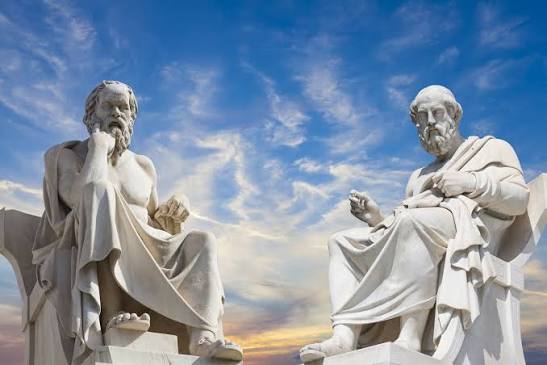
Around the year 500 before Christ, in the city of Ephesus, a difficult aristocrat named Heraclitus deposited a book in the temple of Artemis. In it he claimed that all things happen according to a hidden principle he called the Logos — the reason, the account, the ordering word — which governs the flux of the world and which most men, though they live inside it, never perceive. Fire has its measures, he said. The world is not chaos wearing a mask of order; it is order that fools perceive as chaos.
Three centuries later the Stoics systematised the insight. Matter, they taught, is pure passivity — potential awaiting determination. What determines it is the logos spermatikos, the seminal reason, the active principle that pervades all things and specifies each thing into what it is. Read that sentence beside the constraint-vector of the last two sections and feel the vertigo of convergence: possibility, and the specifying principle that makes it definite. The Stoa arrived, by reason alone, at the office my derivation arrives at with decoherence and fixed-point theorems. They even coined the correct name for it.
Then, in the generation of Jesus himself, a Hellenised Jew in Alexandria named Philo performed the identification: the Logos of the philosophers, he argued, is the creative Word of Genesis — the intermediary through which God makes and orders the world. Philo wrote this before a line of the New Testament existed.
But the Greek line is only half the convergence, because the Hebrew deposit had been carrying the same figure all along, under its own name. Davar — the word. By the davar of YHWH the heavens were made, sings the thirty-third Psalm, and all their host by the breath of his mouth — creation by word and breath, the triad already in the parallelism. And through the prophets the davar behaves less like a message than like a messenger: the davar of YHWH came to Abram in a vision — a word that is seen — and then brought him outside to count stars; YHWH revealed himself to Samuel by the davar of YHWH; the word comes, stands, sends, accomplishes, does not return empty. Grammatically a noun; narratively an agent. And by the first century the synagogue had made the agency explicit in its own vernacular. When the Scriptures were read aloud in Aramaic — the Targums, the people's weekly hearing of the text — the translators systematically rendered God's creating, covenanting, saving action through a figure they called the Memra: the Word of the LORD. The Memra creates; the covenant is cut between my Memra and you; Israel is redeemed by the Memra; at the bush it is the Memra who says I will be with you. Whatever the meturgemanim intended by it — reverent buffer or living hypostasis, the scholars still contest — the category was in the ears of every synagogue Jew every Sabbath. So hear John's first sentence the way his first hearers heard it, in stereo: the Greek ear caught Heraclitus's ordering reason; the synagogue ear caught the Memra of the weekly reading. John did not import a foreign concept into Israel's scriptures. He wrote down, in Greek, what the Aramaic had been saying out loud for a century.
Now attend to the geography. Five centuries after Heraclitus deposited his book in the Artemision, an old man was living in the same city of Ephesus, writing the last of the four Gospels. And John opens with a sentence addressed, with perfect precision, to an audience that already possessed the concept: In the beginning was the Logos, and the Logos was with God, and the Logos was God.
Understand what John is and is not doing, and let the Greek do the work, because the sentence is built with a jeweller's tools. Three clauses, and the verb in all three is ēn — the imperfect of continuous being, not egeneto, the verb of coming-to-be that John will use two verses later for everything created. Before anything became, the Logos simply was: the grammar assigns him to the uncreated side of the ledger before any doctrine is stated. Second clause: the Logos was pros ton theon — and John did not choose meta or syn, the prepositions of mere accompaniment. Pros with the accusative is orientation: being toward, face-to-face — a preposition of relation, not location, and it plants distinction-in-communion into the sentence's syntax. Third clause: kai theos ēn ho logos — and here Greek performs a precision English cannot reproduce. The predicate theos is thrown forward for emphasis and stripped of its article, and the anarthrous pre-verbal predicate is the language's exact instrument for quality: all that God is, the Word is. Had John written the article — ho theos — the terms would convert, and the Logos would exhaust God: the error later called modalism. Had he intended indefiniteness — "a god" — the whole prologue's war on created intermediaries collapses. One missing article closes both exits at once. The sentence is not a mood; it is a machined part. John is making claims about an office his readers already knew — claims the philosophers had strained toward and could not quite secure. That the Logos is not an impersonal principle but personal. That the Logos is not a subordinate emanation but God. Both claims, note well, are within reach of the derivation: if the ground is personal — and the natural experiment of consciousness says it is — then the Specifier is not an office awaiting an occupant, like a throne between dynasties. The specification register is intrinsic to the ground's triune being, and the ground is personal through and through. The office and the person are identical, eternally. The creed would later fix the grammar: begotten, not made. Natural reason, run honestly to the end of its tether, arrives in the neighbourhood of John 1:1. Philo nearly lived there.
Two traditions with no causal contact — Greek natural philosophy reasoning from the structure of the world, Hebrew revelation received as testimony and translated in the synagogue's own Aramaic — converging on the same functional posit, down to the vocabulary. And this essay's derivation, run with decoherence and fixed-point theorems, is a third surveyor on a third hill, with instruments neither of them possessed. In every other domain of inquiry we treat independent convergence as the signature of a real object. The point is there.
And here I must convict the strongest objection from its own library, because the objection is historical and so is its refutation. The objection says: whatever the Greeks thought, Judaism is strict unitarian monotheism, and a divine Logos beside God is a pagan intrusion Israel's faith could never house. The Talmud itself testifies otherwise — testifies, in fact, that the house had such a resident and that evicting him took generations of effort. Open tractate Hagigah. Rabbi Akiva — not a fringe figure; the greatest sage of his generation — reads Daniel's plural thrones and rules: one for the Ancient of Days, and one for David — the Messiah enthroned beside God. Rabbi Yose erupts: Akiva! How long will you profane the Shekinah! — and the reading is beaten back. A page later, Elisha ben Abuyah ascends in vision, sees the exalted Metatron seated — seated, in a heaven where only God sits — and exclaims the forbidden inference aloud: perhaps — God forbid — there are two powers! The rabbinic literature then wages a running polemic against shtei rashuyot, the "two powers in heaven," for centuries. Mark the jurisprudence of that fact: no legislature drafts statutes against a crime nobody commits. The sustained rabbinic campaign against the two-powers reading is the hostile archive's own admission that the reading was Jewish, native, and dangerously well-rooted — Philo, remember, had calmly called the Logos ho deuteros theos, the second God, and remained a revered Jew in Alexandria.
What changed was not exegesis but demography, and the dates tell the story. In the year 70 the temple fell, and with it the map of Jewish plurality. The Sadducees — the temple party — ceased to exist with the temple. Qumran had burned two years earlier. The Zealots died on their mountain. Of the many first-century Judaisms, two heirs walked out of the rubble: the Pharisaic academy that regrouped at Yavneh, and the Nazarenes — the Jewish disciples of Jesus, still praying in the synagogues. And the academy did what every institution does when its nearest rival is also its nearest relative: it drew the boundary precisely there. Into the daily Amidah was inserted a benediction against the minim — the sectarians, and some early copies from the Cairo Genizah name the notzrim outright — a prayer engineered so that no Nazarene could lead or say amen to it; the fourth Gospel, written in those very decades, already knows the word for what was happening: aposynagōgos, expelled from synagogue. The two-thrones reading was gated; the Memra was quietly retired from favour; and the unitarian construction of the Shema — one first-century school's position among several — was consolidated, retroactively, into "what Judaism always was." I do not say this as polemic; the case is now argued most forcefully from inside the Talmud's own guild — Daniel Boyarin, Talmudist, contending in full academic armour that Logos theology was native Jewish theology and that its exile was boundary-work against the church. A hostile witness, by my standing rule, is worth double. The claim that a divine Word beside God is un-Jewish is not an ancient datum. It is a post-Christian ruling, and the court that issued it preserved the dissenting opinions in its own record.
But now mark precisely where reason's tether ends, because I intend to be honest about the joint. The derivation yields the office and even the person. It yields that the eternal Specifier is. What no derivation can yield is an event and a proper name: that at a particular address, in a particular decade, under a particular Roman prefect, the Specifier took flesh. Kai ho logos sarx egeneto. And the Word became flesh. And mark the verb of verse fourteen, because John has been saving it. Kai ho logos sarx egeneto — egeneto, at last: the becoming-verb, the one reserved since verse three for creatures, now predicated of the Logos himself. The grammar announces the event before the theology does: the one who only was has become. And what follows is sanctuary vocabulary, deliberately archaic: eskēnōsen en hēmin — he tabernacled among us, pitched his tent, the mishkan verb — and we beheld his glory, which is the vocabulary of the kavod that filled the tent in Exodus. John is not reaching for poetry. He is filing a claim in cultic language: the glory that dwelt in the tabernacle has taken up residence in flesh. Verse one of the prologue is philosophy's summit. Verse fourteen is testimony — a claim about history, checkable the way history is checked.
Everything in this essay up to this point has been derivation. What follows next is evidence. The reader should know which is which; the argument's honesty depends on the seam being visible.
VI. The Weld and Its Load-Test
Liars make poor martyrs. Conspiracies of liars make none at all.
In 1974, a lawyer named Charles Colson went to prison for Watergate, and in prison he noticed something about his own catastrophe that changed his life. The twelve most powerful men in the United States — with the presidency itself at stake, with every incentive aligned, with no one torturing them — could not hold a lie together for three weeks. The moment prison became plausible, the conspiracy dissolved into a scramble of plea bargains. And Colson, reading the Gospels in his cell, ran the comparison that any lawyer would: eleven provincial nobodies maintained their testimony about a resurrection not for three weeks but for four decades, not against the threat of prison but under whip, sword, and cross — and not one of them ever recanted.
State the problem as game theory, because that is what it is. A fabricated resurrection is a conspiracy, and a conspiracy is a coordination game. Its equilibrium holds only while defection costs more than loyalty. Persecution inverts the payoffs absolutely: recant, and you live, you recover your standing, you may even be rewarded; hold, and you die. The equilibrium needs only one rational defector to shatter — one man, out of dozens, over decades, across jurisdictions, who prefers living. The principals were not executed together in a single panic, where solidarity might carry men through an hour. They were killed serially, over years: James by the sword in Jerusalem, Peter in Rome, Paul under Nero, James the Just thrown from the temple wall — this last reported by Josephus, a non-Christian, writing history for Romans. Each subsequent witness watched the price paid by the last and could still have defected for nothing more than a sentence of denial. The defection rate was zero.
And the two strangest entries in the witness ledger are the hostile ones. James, the Lord's own brother, was a sceptic during the ministry — the family thought Jesus mad, and the Gospels are embarrassed enough to record it, which is itself a mark of honesty; invented traditions do not invent their founder's family disowning him. Paul was worse than a sceptic; he was the persecution's rising officer. Both men reversed at maximal personal cost, and both attributed the reversal to the same cause: they saw him alive. When witnesses arrive at a testimony from adversarial priors, their convergence is worth double. I have applied that standard throughout my work. I apply it here.
And the ring of attestation extends beyond the friendly sources entirely. Tacitus — senator, consul, the finest Roman historian of his age, writing of Christians with open contempt — records as plain administrative fact that Christus was executed under Pontius Pilate in the reign of Tiberius. Josephus, a Jewish aristocrat writing for Roman patrons within living memory of the events, records the execution of "James, the brother of Jesus who is called Christ" as casually as a registrar records a date. And the Talmud — compiled by the one tradition with the strongest motive on earth to erase him — does not deny him. It records that Yeshu was hanged on the eve of Passover, and the charge it preserves is the most valuable concession in ancient literature: sorcery, and leading Israel astray. Sit with that charge until it gives up its logic. You do not prosecute a man for sorcery unless the wonders happened. You prosecute for sorcery precisely when the wonders happened and you dispute their source — which is the identical concession the Gospels report from his opponents in his lifetime: he casts out demons by the prince of demons. Hostile testimony that the works were real, quarrelling only over the heaven behind them. His enemies, given twenty centuries to deny the deeds, have denied only their origin.
Historicity alone, of course, delivers only a man — one more executed provincial in an empire that crucified thousands. What converts the man into the man is that his profile was published before he arrived. Born in Bethlehem, said Micah, seven centuries in advance. Arriving inside a dated window, said Daniel's arithmetic, laid down under the Persians. Hands and feet pierced, said the twenty-second Psalm, composed before crucifixion had been invented anywhere on earth. Silent at trial, numbered with criminals, and — the detail no inventor would think to plant and no victim could arrange — buried with the rich, said Isaiah's Servant song. In every domain of my work I have insisted that pre-registration is what separates evidence from anecdote: the claim must be on file before the event. Here is the only figure in history whose identifying profile was on file for half a millennium before his birth, in documents curated by his opponents — and translated into Greek by Jewish scholars two full centuries before Bethlehem, so that no Christian hand could have salted the archive. The observation matched the registration. That is the empirical case in its complete architecture: prior profile, public match, hostile concession, costly-signal testimony. Four independent axes converging on one identity — and independent convergence, the reader now knows, is this essay's entire theory of evidence.
Nor was the claim engineered for safety. It was pre-registered, in the only sense the first century allowed: proclaimed publicly in Jerusalem — the one city on earth where the tomb could be walked to — within weeks of the event, while the authorities who had every motive and every power to produce the body produced none. A movement founded on a checkable claim, announced at the site of the check, at the time of the check, to the very officials most eager to run the check. This is not the behaviour of fabricators. Fabricators relocate; they delay; they blur. The apostles did the opposite of all three, and then they paid the full price of the signal, and the signal held.
One more thing, and it is the thing that binds this section to the last. The resurrection is not merely strong evidence. It is the semantically apt evidence — the right kind of sign for this specific claim. The claim on the table is that this man is the eternal Specifier, the register through which possibility becomes actuality. Death is a creature's de-specification: the terminus of its actualisation, the closing of its account. What sign would authenticate authority over specification itself? Only one: a re-specification of a terminated actuality, from inside history — the account reopened by the only party with standing to reopen it. Paul says exactly this, with a jurist's precision, in the opening of Romans — and his verb deserves its weight: horisthentos, from horizō, the word from which we take horizon — to draw a boundary, to mark out, to make definite. The Son was horizon-marked in power by the resurrection from the dead. Paul reached, whether he knew the physics or not, for a specification verb: the resurrection is the boundary-drawing that made the identity definite. The miracle is not an arbitrary credential stapled to the claim. It is the claim, performed. The metaphysics of Section III, made historically legible in a garden outside a city wall.
All of that is the external register, and notice what it is: public, documentary, transferable — evidence in the sense a court means the word. But this essay established the ground by two surveys, one from outside the world and one from inside the skull, and the same architecture holds at the weld. There is a second register, and every Christian alive holds it: the internal testimony of the Spirit. Fellowship that is not a figure of speech. The answered prayer, specific enough to embarrass the teller. The new birth, which the man who has undergone it can no more doubt than he doubts his own waking. The costly service sustained across decades by a conviction that does not exhaust — and costly service is itself a small entry in the apostles' own ledger, the signal paid in a minor key. The words of the scripture arriving, on the ten-thousandth reading, with the force of personal address. This register is first-personal and non-transferable; I cannot hand you my answered prayers, and the essay's honesty forbids me to offer them as public proof. But non-transferable is not unreal. It carries the same epistemic standing as the redness of red — the datum only the holder can have and the holder cannot not have — and Section IV has already established that such data are not second-class citizens of epistemology; they are the citizens the whole survey was built on. Lay the internal register against the external, then — the living fellowship against the documentary record, the Spirit's present operation against the witnesses' sealed testimony — and the two lock the way the physics bearings locked: outside and inside, fixing one point.
This is why Christian praxis, done honestly, is not mimetic. The Stoic imitates Marcus Aurelius across an unbridgeable grave; the admirer of any dead teacher curates a style. The Christian is not curating a style. He is in correspondence. The external ontology gives him a validated record; the internal gives him a lived fellowship; and the practice that grows where the two overlap is embodied — carrying the depth of a thing done with someone rather than after someone. The Psalmist's invitation was always empirical in form: taste and see that the LORD is good. The external register is the seeing. The internal is the taste.
The weld holds. And a weld that holds bears load in both directions.
VII. The Certified Programme
The resurrection is a validation node. Authority flows into it from fulfilled prophecy, and out of it by commission — and a certified corpus certifies its unfulfilled remainder.
Consider how a merchant bank establishes the credit of an issuer. Not by auditing his intentions — by examining his payment history. An instrument that has honoured every coupon to date is not thereby proven to honour the next one; but an issuer who has paid sixty-nine consecutive obligations, each on the appointed day, has established something no prospectus can: demonstrated performance. The market prices the outstanding tranche accordingly.
The resurrection sits at the centre of exactly such a structure, and the flows of validation run in both directions of time.
Backward, by endorsement. The risen Jesus does not merely vindicate himself; throughout the testimony he stakes his identity on the prophetic corpus — Moses wrote of me; the Scriptures must be fulfilled; the Son of Man designation lifted directly from Daniel's night visions. The resurrection authenticates the speaker; the authenticated speaker countersigns the prophets. And the prophets had already passed their own pre-registered test: Isaiah's Servant, pierced for transgressions, silent before shearers, buried with the rich; the twenty-second Psalm's catalogue of crucifixion detail written centuries before Rome perfected the punishment; Daniel's sixty-nine weeks, arithmetic laid down under the Persian empire, terminating — run the numbers, they have been run for centuries — in precisely the generation in which, the text says, yikkaret mashiach ve'ein lo: Messiah shall be cut off, and have nothing. The verb is the finding. Karat is the covenant verb — Hebrew does not make covenants, it cuts them, because covenants were ratified in the divided flesh of the sacrifice: Abram's severed pieces, the smoking oven passing between them. Daniel had every ordinary verb for killing at his disposal and chose the cutting one. The Messiah is not merely executed in the sixty-ninth week's wake; he is covenant-cut — the covenant-maker ratifying in his own flesh, with ve'ein lo adding vicariousness in two Hebrew words: nothing of it for himself. Two independent validation paths converging on one corpus: forward prediction fulfilled, and retroactive countersignature by the highest possible authority. That is the evidence architecture I have demanded in every other domain. It is present here in a strength no other document on earth can claim.
Forward, by commission. The apostles' authority was not self-generated; it was conferred by the risen principal — as the Father has sent me, so I send you. And the same costly signal that authenticated their testimony about the event authenticates their transmission after it. Men who will not defect under execution to save their lives do not corrupt a deposit for convenience. The channel is sealed by the same mechanism that certified the source. The epistles, the Gospels, the architecture of the assembly: all of it inherits the certification.
Now the consequence that most readers of this evidence stop short of, and must not. A countersignature cannot be partial. When the issuer certifies the corpus, the certification covers the unconsumed remainder — the obligations not yet matured. Daniel's sixty-nine weeks are the coupons already paid; the seventieth week is the outstanding tranche, and it is now backed by demonstrated performance. The Torah's calendar is the same instrument read liturgically: the spring feasts were not fulfilled approximately but to the day — Passover's lamb slain at Passover, the firstfruits raised at Firstfruits, the Spirit poured out at Pentecost upon the very feast of that name. Half the instrument panel has fired on schedule. The autumn feasts — Trumpets, Atonement, Tabernacles — are not therefore quaint observances. They are live instrument: the unfired half of a mechanism whose function has been demonstrated. Isaiah's nations programme, the endgame sequence of the Song of Moses, the enthronement Psalms' outstanding scope — certified obligations, all of them, of an issuer who has never missed a date.
One disclosure, because my method demands it appear wherever it applies. What the countersignature certifies is the corpus and its outstanding commitments — that the seventieth week stands, that the autumn feasts are live. What it does not certify is any particular reconstruction of how the outstanding claims resolve. Reconstruction must post its own bond: stated in advance, falsifiable, dated. Mine is posted elsewhere, in public, with its gate named.² Here I claim only what the corpus itself carries: the programme is real, it is certified, and it is unfinished. We are living inside an instrument that is still paying out.
The reader may ask what any of this has to do with human purpose. Everything. Because the next payment recorded in the ledger is not an event that happens to humanity. It is the creation of a bride.
VIII. The Last Eve
The cross is judicial — the sentence was discharged there. But read Genesis beside John and you will see the greater thing: the cross is creative. The wound is an aperture.
The oldest surgery in literature occurs in the second chapter of Genesis, and its vocabulary has been chosen by an architect. God causes a deep sleep — tardemah, the death-like sleep that God alone casts, the word used when the covenant-vision falls on Abram among the pieces — to fall upon the man. He opens the man's side: tsela. Trace that noun through the rest of Moses and a pattern stands up off the page — outside this chapter, the Torah uses tsela almost exclusively for sanctuary architecture: the sides of the ark of the covenant, the frames and flanks of the tabernacle; the historians and Ezekiel continue the usage for the temple's side-chambers. The woman is the only creature in Scripture constructed from a tsela. She is built of sanctuary material — and built is the text's own verb: banah, the word for raising altars and temples, never elsewhere used for the making of a person. Moses is telling you, in the grammar, what the woman is: a sanctuary, constructed from the side of the prior creation. The man wakes scarred and answers with a formula: bone of my bones, flesh of my flesh — and that formula has a documented afterlife. Laban speaks it to bind kin to kin; and all Israel speaks it at Hebron, laying hands on David — we are your bone and your flesh — at the making of a king. It is covenant-kinship language, and its two canonical occasions are a marriage and a coronation. And she is named mother of all living.
Hold that pattern in your mind and stand now at the foot of the cross, in John's account. The Last Adam — Paul's own title for him — has entered the sleep of death; the apostolic writers will thereafter call the death of believers "falling asleep," and they did not choose the idiom idly, for this sleep too was temporary and generative. A soldier opens his side with a spear. From the opened side come blood and water — and John, the eyewitness, suddenly halts his narrative to swear an oath at precisely this detail: he who saw it has borne witness, and his witness is true, and he knows that he is telling the truth. Why does a pierced side warrant a notarised affidavit when the crucifixion itself received none? Because John, of all men, knew which pattern he was watching. Fifty days later, breath from God animates the new creation at Pentecost, as breath once animated the dust. And the assembly so created is called, by the apostles, two things that are consistent with each other only on this reading: the body of Christ, and the bride of Christ. A bride who is his body. There is exactly one precedent in all literature for a bride constructed from the bridegroom's own body, and it is Genesis 2. And the crucifixion psalm itself had already scheduled her arrival, in a single Hebrew noun. Psalm 22 spends its first twenty-one verses on the pierced hands, the cast lots, the mockery — and then pivots, mid-psalm, from agony to assembly: I will declare your name to my brethren; in the midst of the qahal I will praise you. When the Jewish translators of the Septuagint reached qahal, two centuries before Bethlehem, they rendered it ekklēsia — and the writer to the Hebrews places exactly that verse, in exactly that Greek, in the mouth of the risen Christ. Read it slowly: the psalm of the cross ends inside the church, and the word church was deposited there by Jewish hands before there were Christians to plant it. The sufferer's first post-suffering act, on the psalm's own itinerary, is congregational.
Paul does not leave the identification to inference. In Ephesians he quotes the Eve text itself — the two shall become one flesh — and rules on it like a judge, and his diction is judicial. Touto to mystērion mega estin: this mystery is great — and mystērion in Paul is a technical term, not a puzzle but a classified file: a thing hidden in God from the ages and now declassified by revelation, his own word for the church three chapters earlier. Then the ruling formula: egō de legō — "but I say," the apostle's voice of binding interpretation — eis Christon kai eis tēn ekklēsian: I am speaking with reference to Christ and the church. An inspired author, quoting the Torah's marriage text, declassifying its referent under his own apostolic seal. The typology is not homiletic decoration. It is apostolically certified, transmitted through the sealed channel of the last section. Augustine saw it; Chrysostom preached it: from the side of the sleeping Adam, the mother of all living; from the side of the crucified Adam, the mother of all who live twice.
Now feel the weight of what this does to the meaning of the cross. The judicial reading is true — the debt was real and it was discharged, the asham, the guilt-offering of Isaiah 53, was made. But the judicial reading describes only what the cross terminates. The Eve pattern reveals what it produces. God did not make the second creation from fresh dust. He drew her from the side of the first, under sleep, at the cost of the wound — because that is how He had said, from the garden onward, that brides are made. The judgment is not adjacent to the creation; the judgment is the mechanism of the creation. The de-specification of the incarnate Specifier was itself the specifying act — death entered voluntarily, in order that from within it a new corporate actuality might be drawn out of his own substance. The cross is where the Logos performed the most consequential specification since let there be light, and the material he specified was himself.
But rise now from the mechanics to the majesty, because the cross has one further register — above the judicial, beneath the creative — and it is the one the angels study: what the cross was between the Son and the Father. Paul's hymn in Philippians gives the descent its stations: being in the morphē of God, he did not treat equality with God as plunder to be clutched, but ekenōsen — emptied himself — taking the morphē of a slave; and having become man, he went lower still: obedient unto death, even death on a cross, the hymn adding the instrument as a fresh depth of its own. Name what this is in the vocabulary the bush gave Moses: Ehyeh asher Ehyeh — I AM THAT I AM — and here the second Ehyeh submitting to the first: I AM obeying I AM, the eternal Word's relational commitment to his Source performed at ultimate cost, where the whole cosmos could watch. And lest anyone mistake the submission for defeat, John records the moment the veil twitched. In the garden, the arresting party asks for Jesus of Nazareth, and he answers with the name — egō eimi, I AM — and a detachment of armed men falls flat on the ground. One flash of the name, to place on the record that the ropes were powerless; then he extends his hands to them. No one takes my life from me; I lay it down of my own accord. Twelve legions stood at call, and were not called.
Weigh, too, what the incarnation was for, in this register: it made death possible. The deathless one lacked exactly one capacity — the capacity to die — and so a body was prepared for him, as a priest is furnished with his sacrifice: a body you have prepared for me; since the children share in flesh and blood, he himself likewise partook of the same things, that through death he might destroy the one who has the power of death. The Sovereign specified for himself a mortal vantage on purpose, to have something to lay down. And then the floor of the descent: not death merely, but Rome's entire liturgy of degradation — beaten, scourged, paraded, and crucified naked, in public, the soldiers gambling for his clothes beneath him on Psalm 22's own script. Naked like Adam — but in reverse. The first Adam stood naked and unashamed in a garden, then naked and ashamed, and was clothed by God at the price of the first blood. The Last Adam, who alone had no shame of his own, was stripped and shamed on a tree — enduring the cross, despising the shame — so that the naked could be clothed: Joshua the high priest's filthy garments exchanged for festal robes, put on Christ, the bride's fine linen, bright and pure. He wore Adam's nakedness so that Adam's children could wear his righteousness.
And because the act was redemptive, the one act carried two loves without remainder. Godward, it was the Son's love of the Father made maximally visible — that the world may know that I love the Father, and do exactly as the Father commanded me: rise, let us go from here, spoken on the way to the garden. Manward, the same obedience founded our redemption — he had not abandoned the universe he specified; the blood of the cross reconciles all things, whether on earth or in heaven, and the creation that groans will be set free because its Specifier bled inside it. And Hebrews names what the suffering effected upon the Sufferer himself, in a Greek verb the casual reader walks past: it consecrated him. It was fitting that he... should make the founder of their salvation perfect through suffering — teleiōsai — and in the Septuagint that verb is the technical idiom of priestly ordination: to consecrate a priest is teleioō tas cheiras, to fill his hands, the phrase of Aaron's investiture in Exodus and Leviticus. Read Hebrews with the Septuagint open and the sentence detonates: the cross was his ordination rite. His hands were filled. The sacrifice that atones forever and the consecration of the High Priest who offers it are one and the same act — priest and offering and ordination, a single afternoon.
Then he turned to those he had redeemed and issued the office's terms in one sentence that forbids all spectatorship: take up your cross daily, and follow me. Not admire his — carry yours. The priest's service is a daily dying: I die every day, said Paul; buried with him in baptism; always carrying in the body the death of Jesus, so that the life of Jesus may also be manifested in our body. To be present with Christ daily in the death he died is to be present with him in the indestructible life he now lives — united with him in a death like his, united with him in a resurrection like his — and that presence-in-both is the living sacrifice, the priestly service rendered through him and by him. And so the weight of the altar we serve becomes majestic — and weight is precisely the right word, for the Hebrew for glory is kavod, and the root of kavod means heaviness: Paul's eternal weight of glory is not a mixed metaphor but a Hebrew etymology. The altar is heavy because of the One it held.
She is called the Last Eve here for a reason the first Eve makes plain. The dominion mandate of Genesis was never issued to a solitary man. Let them have dominion. The commission was plural, given to a pair, and the pair forfeited it together. The recovery, then, must also be a pair's. Daniel saw the saints of the Most High receiving the kingdom; the apostle told a young pastor, in what was already a proverb, if we endure, we shall also reign with him; the Revelation counts thrones. The bride is not an ornamental consort awaiting a ceremony. She is a co-regent in preparation — which means the government the child of Isaiah 9 carries on his shoulder is, by his own design, a married government, and the arc of the whole Bible is the long recovery of what a wedding lost.
But a co-regent drawn from the body of the great High Priest inherits more than a crown. She inherits an altar. And here, at last, the essay reaches its title.
IX. A Priest Forever
Function can be automated. Offices cannot. And one office in the canon is secured by the oath of God with explicit perpetuity.
The Psalm most quoted in the entire New Testament is not the twenty-third. It is the hundred and tenth — four verses of coronation liturgy that the apostles treated as the master key to everything, and Hebrews expounds like a legal instrument. It contains two sentences that the Torah had made unspeakable together.
The first: ne'um YHWH la'doni — the oracle of YHWH to my Lord: sit at my right hand, until I make your enemies your footstool. Begin with the opening formula, because David has planted a paradox in four words. Ne'um YHWH is the prophetic oracle marker — thus-saith — and what follows is the tetragrammaton addressing someone David calls adoni, my Lord. David, Israel's supreme king, is overhearing a conversation between YHWH and David's own superior. Jesus himself made this grammar the blade of his final public argument: David in the Spirit calls him Lord; how then is he his son? — and Matthew records that from that day no one dared ask him anything further. The psalm's syntax contains the incarnation problem eleven centuries early: a Lord who must be David's descendant by covenant and David's sovereign by address. Royal, then — session, throne, subjection — but royalty of a rank the monarchy itself could not supply.
The fourth: nishba YHWH velo yinnachem — YHWH has sworn and will not relent: you are a priest forever, after the order of Melchizedek. Weigh the redundancy, because it is deliberate. Torah had already ruled that God's bare word is immutable — God is not a man, that he should lie, nor a son of man, that he should nacham, relent. Yet here the God who never needs an oath swears one, and then adds, in the same breath, the nacham denial on top of it. The writer to the Hebrews saw the doubling and named its purpose: two unchangeable things — the promise and the oath — that we might have strong encouragement; a belt added to braces that could never fail, for the comfort of those watching. Priestly, then — but not Aaronic. And that qualification is the escape from a constitutional crisis, because the Torah had deliberately separated crown from altar. King Uzziah tried to fuse them, censer in hand, and left the sanctuary a leper. Yet before Levi was born, Genesis records a figure who held both offices lawfully: Melchizedek, king of Salem and priest of God Most High, to whom Abraham himself — Levi still in his loins, as Hebrews delightfully argues — paid tithes. And observe the hermeneutic Hebrews applies to him, because it is a lesson in how the Torah speaks: without father, without mother, without genealogy, having neither beginning of days nor end of life. Genesis is a book obsessed with pedigree — it pauses its own narrative ten times to recite begettings — and into this archive of ancestry walks a priest-king with no parents, no line, no death notice. Hebrews reads the omission as composition: in a genealogy-keeping book, a deliberate silence is a statement. The Torah drew Melchizedek without edges on purpose, so that a greater priesthood could one day be read against a figure the text had left open.
And lest anyone suppose that reading Melchizedek upward — toward heaven — is a Christian retrofit, the Judean desert has returned a witness with no possible Christian motive. Among the scrolls of Qumran's eleventh cave sits the fragment catalogued 11Q13, written by a separatist priestly community that predates the church and would have anathematised it: and in it, Melchizedek is a heavenly figure. The sectaries apply to him the eighty-second Psalm — Elohim stands in the assembly of El; in the midst of the elohim he judges — making Melchizedek the Elohim who rises in the divine council. They assign him the execution of the judgments of El. They give him the jubilee proclamation of Isaiah 61 — liberty to the captives — and they pin on him the herald's cry of Isaiah 52: your Elohim reigns, where the Elohim who reigns is Melchizedek himself. And — read this clause twice — they await the day, at the close of the tenth jubilee, a Day of Atonement, when he will make atonement for all the sons of light. A divine Melchizedek, enthroned in the council, executing judgment and making atonement: the two offices, fused, in a pre-Christian Jewish text, discovered in a cave nineteen centuries later with no church hand ever near it. Hebrews, it turns out, did not invent the category. The category was standing open in Israel's own expectation, like the figure in Genesis — and Hebrews' contribution was to name the occupant. The Psalm reaches back past the Levitical settlement to the older order, and it secures the appointment with something no Aaronic priest ever received: a divine oath. The writer to the Hebrews rests the entire argument on that oath. The Aaronic priesthood was instituted without one — a provisional facility, revisable, and revised. The Melchizedekian priesthood is sworn — a perpetual covenant obligation, non-callable. Britain redeemed her consols after two centuries; every perpetuity of man has a call date hidden in it somewhere. This one has an oath instead: and will not relent.
Now watch what this Psalm does to the death texts. Without it, Isaiah 53, Psalm 22, and Daniel's cutting-off establish that the Servant dies, innocently and for others. Psalm 110 specifies the genre of that death. It supplies the officiant. Isaiah had already used the technical term — his life an asham, a guilt-offering; Daniel's seventy-weeks programme is cultic from end to end: to finish transgression, to make an end of sin, to make reconciliation for iniquity, to anoint the most holy. The cross, read through Psalm 110, is not merely an execution suffered. It is a liturgy performed — the Day of Atonement's pattern executed once for all, by a priest who was simultaneously the offering, entering the true sanctuary by his own blood. And then the detail Hebrews underlines twice, because furniture is doctrine: the Levitical priests stand daily, offering repeatedly, for their work is never finished. This priest, having offered once, sat down. The session of verse one is the seated posture of a completed sacrifice. The "until" of verse one is the interim we are living in — the age structured, Paul says, by that single preposition: he must reign until he has put all enemies under his feet; the last enemy to be destroyed is death.
And now the transfer — the clause on which this essay's thesis rests. Incorporation into the body is incorporation into the offices. The mechanics are covenantal and they are stated in the texts themselves: the new covenant of Jeremiah — I will put my torah within them, and on their heart I will write it — where the writing verb, katav, is the verb of Sinai's stone tablets, so that the promise is precisely relocation of the same inscription from geology to anatomy; and the promise of Ezekiel — I will put my Spirit within you and cause you to walk in my statutes — where the causative verb quietly moves obedience from demand to gift. Together they are the animation clauses: the breath entering the built one, the Eve made alive. And the effect is declared in the same breath across the canon. At Sinai, God had offered Israel a vocation: mamlechet kohanim — a kingdom of priests — an offer held in suspension through the whole Levitical era, the nation kept at the mountain's foot while one tribe approached. When the Alexandrian translators rendered the phrase into Greek, they wrote basileion hierateuma. Now open Peter's first letter and watch what he does. He does not paraphrase the Sinai offer. He does not allude to it. He quotes the Septuagint's exact two words — basileion hierateuma, a royal priesthood — and predicates them, in the present indicative, of the incorporated: you are. It is the legal draftsman's move: an instrument is executed in its own original language, so that no one can claim a different document was signed. The suspension of Exodus 19 is declared over in the very Greek of Exodus 19. The Revelation states it twice more: he has made us a kingdom, priests to his God — and they shall reign on the earth. Mark the compound. Not priests and, separately, kings. The Melchizedekian fusion itself — crown and altar in one office — distributed to the members. The Last Eve shares the Last Adam's offices the way the first Eve shared the first Adam's dominion: by derivation, in him, never independently. By him, in him, through him, for him — the prepositions are the constitution of the office.
So assemble the sentence this essay promised to defend, and see that every word in it is now load-bearing. The purpose of a Christian is to be a royal priest — royal, because the office fuses crown and altar after Melchizedek's order; priest, because the work is offering, mediation, the boundary-service Adam held in the garden and forfeited — the very verbs of Genesis 2, abad and shamar, serve and keep, are the verbs Moses later assigns to the Levites; forever, because the member's tenure is held inside the head's tenure, and the head's tenure is secured by the oath of God, who will not relent.
And here the essay's opening wound is healed at the root. Every rival account of purpose on the market — function, productivity, legacy, self-actualisation, even the popular religion of "going to heaven" — is terminating. The function is discharged, the career ends, the legacy fades, the destination is reached, and then what? Any purpose smaller than the lifespan of the person is not a purpose. It is a phase. And on the evidence of Section V, the lifespan of the person is unbounded — which means every terminating purpose eventually strands its holder in eternity with nothing to do. Only an office held forever is adequate to a being who lives forever. There is exactly one such office on offer, and it is sworn.
The machines, meanwhile, may absorb every function on earth, and the office will not notice. A machine can perform any task. It cannot offer anything — because an offering requires standing, and standing requires a covenant, and a covenant requires an unsubstitutable someone to stand in it. The one thing automation cannot touch turns out to be the thing human beings were for all along. Lee Sedol lost a function. He was never in danger of losing an office. No one ever told him he held one.
X. The Law, Completed and Completing
Christ is the telos of the law — and telos means destination, not demolition.
Not long ago a Muslim correspondent put a question to me online, and it was a good one, honestly meant: why do Christians keep talking about the Torah while simultaneously saying it is no longer valid? You quote Moses for your Messiah, he said in effect, and then excuse yourselves from Moses' table. Which is it?
The answer begins with a Greek word Paul chose with complete precision. Telos gar nomou Christos — Christ is the telos of the law. Our translations say "end," and the English ear hears termination: the law expired, file closed. But telos is the word from which we take teleology — it means the end as a road means its destination, the end as an arrow means its target. A fulfilled telos is not a discarded thing; it is a thing finally understood, the way the last page of a mystery does not abolish the earlier chapters but discloses what they were doing all along. And Jesus had already ruled on the question himself, with a verb chosen against a verb: I did not come to katalusai the law or the prophets — kataluō, the demolition word, what one does to a building — but to plērōsai: to fill full. Not the wrecking ball but the topping-out. And the writer to the Hebrews, whether by design or by the Spirit's dry wit, reaches for the same root when he describes what the risen priest now possesses: a priesthood kata dynamin zōēs akatalytou — by the power of an in-demolishable life. The one who refused to demolish the law has become the one thing death itself could not demolish. The law is completed in him, and — because he lives — completing.
The feasts are the demonstration in the calendar, and the essay has already banked it: the spring mo'adim were not retired at the first advent; they were discharged, to the day, in their full heavenly purpose — the lamb at Passover, the firstfruits at Firstfruits, the Spirit at Pentecost. Fulfilment left the instrument more honoured, not less: who now can read Leviticus 23's spring column and call it obsolete? It is the receipt file of God. And the autumn column, with the seventieth week, awaits its own discharge — to which I add, from the same logic, the one feast Israel instituted from below: Purim, the commemoration of venahafoch hu, the day the annihilation decree was turned to the contrary — the people's own festival of reversal, awaiting the greatest reversal, when the last empire-wide decree against Jacob dies on its own gallows. Completed, and completing.
But my correspondent's question has a sharper edge, and it deserves the sharper answer. Very well, he might say — but you claim to be priests. Priests have a statute book. What of its statutes? So: the terms of the office, plainly.
We are priests in the order of Melchizedek, through Jesus — never independently — and the order's sacrifices are of the kind Peter names with a technical phrase: pneumatikas thusias, spiritual sacrifices, offered by living stones being built up — the banah verb again — into a spiritual house. The offering schedule is published. Its first line is the entolē kainē — and note that word: not new advice, new commandment, law-vocabulary, issued by the covenant-maker on the covenant night — love one another as I have loved you, where the as sets the grade of the offering at Golgotha's own elevation. Its second line is the body itself, laid on the altar as the logikē latreia, the living sacrifice — which will run, more often than not, directly against the grain of base desire; a sacrifice that costs the flesh nothing is not one. And the office's fullness waits on the resurrection — the next feast in the cycle, the trumpet's mo'ed — for which Pentecost is the published precedent. Consider what Pentecost was. The feast commemorated Sinai: the third-month descent of YHWH in fire to give the commandments — the rabbis would later say the voice split into seventy languages for the seventy nations, and at Pentecost, behold, tongues of fire, and every man hearing in his own language. At Sinai, the letter came on stone and three thousand fell in a day; at Pentecost the Spirit came on flesh and three thousand lived in a day — Paul's own contrast, in a chapter written against Sinai's stone: the letter kills, the Spirit gives life. Pentecost took the covenant from geology to anatomy universally and in bodies, and from Jerusalem it has run to the ends of the earth. The resurrection will do for the office what Pentecost did for the presence: embody it fully, and issue in royal priestly rule at the King's return.
That is the destination. But there is a life to be lived between here and the trumpet, and it is gated by principles the apostles laid down with, when you look closely, a jurist's fidelity to the Torah's own text.
First, the entry. A Gentile joins the priesthood exactly as a Jew does now: by circumcision of the heart, performed by the Spirit. This is not an apostolic improvisation; it is Moses' own eschatology. Deuteronomy thirty promises that YHWH your God will circumcise your heart... to love YHWH your God with all your heart — mark the purpose clause: the surgery is unto love, the entry rite producing the office's substance — and the Song of Moses had already sworn the scandalous demographic: they made me jealous with a no-god; I will make them jealous with a no-people — the lo-am, the nations, grafted in to provoke. Paul quotes the Song for exactly this, and states the surgical principle as standing law: circumcision is of the heart, by the Spirit, not the letter — Colossians calls it the circumcision acheiropoiētos, made without hands. What physical circumcision gated for Israel alone, the Spirit has opened to all who are born again in Jesus — beginning, with perfect calendrical manners, at the feast that commemorated Sinai.
Second, the terms. Read the Jerusalem council's letter in Acts fifteen against its Torah substrate and the ruling discloses its logic. The council bound the Gentile believers to four abstentions: idolatry, sexual immorality, things strangled, and blood. Now open Leviticus seventeen and eighteen and notice to whom those chapters address themselves: not to Israel only but, explicitly and repeatedly, to the stranger who sojourns among you — the ger. The blood prohibition is Noahide bedrock besides — older than Sinai, given to all flesh in Genesis nine — and Leviticus supplies its reason in a single verse this essay has already leaned on: the life of the flesh is in the blood, and I have given it for you on the altar to make atonement. Blood is for the altar, not the table; you do not drink the currency of atonement. The sexual laws — the arayot of Leviticus eighteen — bind the native and the ger alike, says the chapter itself. James, in other words, did not invent a Gentile lite-Torah. He applied the Torah's own existing law for Gentiles dwelling among the covenant people — which is precisely what the church is: the commonwealth with the nations grafted in. And the moral law binds entire, not because a council preserved it but because of what it is: the regulation of love — love of God (no idols, no rival Name), love of neighbour (no theft of his life, wife, goods, or truth), and love of self rightly ordered (the Sabbath principle: the creature commanded to rest is being commanded to stop pretending he is the Source). The cultic and civil statutes are read by their context, as any statute is: temple law governs an operating temple; land law governs the land of Israel; the commercial law governs righteous dealing among brethren — and there Christ did not relax the standard but raised it past commerce altogether: give to the one who asks — not lend; give — the priest's economics, since a priest's goods were never his own inventory.
Third — and here is the test case that proves the hermeneutic, because it is a genuine tension and the apostles lived inside it without flinching. A Gentile believer in first-century Jerusalem, filled with the Spirit of God, declared by an apostle to be a living stone in the temple of Christ himself, walks up the temple mount — and stops at the soreg, the low balustrade ringing the sanctuary courts, posted with inscriptions in Greek (two of the actual stones have been dug from the rubble; you can read one in a museum today): no foreigner may pass this barrier, on pain of death. Paul calls that very stone course the dividing wall of hostility — and Paul, of all men, respected it: when he was seized in the temple, the mob's charge was precisely that he had smuggled Trophimus the Ephesian past the soreg, and the charge was false — Paul was in the courts performing Levitical purification, keeping the operating temple's operating rules, with a Spirit-filled Gentile brother left standing outside the barrier. Why? Because the Gentile's temple standing was never on that mountain. His enrolment — the essay has already opened the words — is in the Jerusalem above, the panēgyris on Mount Zion; he has not yet died and risen and been caught up, and until he is, the earthly sanctuary's law governs the earthly sanctuary. The tension is real, and it is not resolved by argument. It is resolved by an event: at the King's return, with the church glorified and the vision of Ezekiel's closing chapters standing on the earth, the wall's jurisdiction ends because the worshipper's resurrection has ended it.
And kosher? Here the same principle answers with a smile. A Jewish believer may keep the table of his fathers or not; Paul's rule is purpose and peace, not pressure — the feasts and foods, he says, are skia tōn mellontōn, a shadow of the things to come, and the body casting the shadow is Christ's. One does not war over a shadow while embracing the body. But the deep answer is jurisdictional, and Paul states it as the opening premise of Romans seven: the law lords it over a man only as long as he lives. Death discharges. And Christ has died — and then done the one thing no statute anticipates: risen, the prōtotokos ek tōn nekrōn, firstborn from among the dead, into the in-demolishable life. Put it in the register of my own trade. Suppose a man dies; the certificate issues; the courts open probate; the estate is distributed according to his will. And suppose, days later, by miracle, he stands up. May he reclaim the assets from his heirs? He may not — estate law has fulfilled his will, which is the entire purpose of estate law; while he lived the things were his, and his death did not defeat the instrument but executed it. So with the law and the risen one, and all who are hidden in him: the law was never defeated — it was executed, down to its last clause, in the death it justly demanded and the life that outlived its jurisdiction. It is not set aside. It is understood in its telos. And walking in that telos — loving as he loved, offering what he asks, honouring each statute in its context and its consummation — is not an exemption from priesthood. It is the priestly function itself.
That, I told my correspondent, is why we will not stop talking about the Torah. A man does not stop quoting the will after probate. It is precisely after probate that the will means everything it says.
XI. The Good Life
The good life is not the big life. It is the life lived well as a priest.
Aristotle asked the right question and could not finish the answer. Eudaimonia, he said — the life lived well — consists in the excellent exercise of the human function. But he could not secure what the function was for, nor why it should not terminate, and so the noblest ethics of antiquity remains a superb manual for an office it cannot name. Function without office; flourishing without forever.
The office names itself, and the good life falls out of it as liturgy falls out of a calling. Take the elements one at a time and notice that each is a priestly function translated into an ordinary Tuesday.
Service to others is the offering. This is not homiletic stretch; it is the New Testament's own technical vocabulary, deliberately relocated from the temple to the street: do not neglect doing good and sharing, for with such sacrifices God is pleased. Paul goes further and lays the priest himself on the altar: present your bodies a living sacrifice — and then a phrase your English Bible has been concealing from you: tēn logikēn latreian hymōn. Latreia is not a general word for service; it is the temple word, the technical term for cultic ministration at an altar. And logikēn — rendered limply as "reasonable" or "spiritual" — is the adjective of the Logos. Your Logos-shaped liturgy. Paul has compressed this essay's entire argument into two Greek words: the sacrifice proper to creatures made in the image of the Specifier is the offering of their own specified lives — the logikē latreia, the altar-service of the Logos-bearers. The discipline of the body — the restraint of its base nature — is the consecration that fits the priest for service; Paul again, in athletic register: I discipline my body and keep it under control. The seeking of Christ — prayer, the word, the long attention — is the drawing near that Hebrews declares the whole point of the torn veil: let us draw near with confidence to the throne of grace. And the honouring of God in the honouring of Jesus through the Spirit is doxology — and notice, if you have followed this essay from the physics onward, that the piety is spontaneously triadic: honour to the Source, through the Specifier, in the Actualiser. The devotion and the derivation are the same shape. That is not ornament. That is the thesis, vindicated at the level of practice.
And the whole of it is anchored in love — necessarily, not sentimentally. John does not say God is loving, as one lists an attribute among the omnis. He writes ho theos agapē estin — and the grammar should be shown its due, because it is the same machined construction as the prologue's third clause. Agapē stands as an anarthrous predicate: not "God is the love" (convertible, exhaustive) and not "God is a love" (one instance among many), but qualitative — love is what God is, the nature and not a property. The construction that secured the Logos's deity in John 1:1 secures love's ultimacy in 1 John 4:8; the apostle reached for the same tool twice, and the two sentences are grammatical twins. The formalism of Section III tells you why the identity claim can be true: the ground is not a solitary consciousness contemplating itself but Source, Specifier, and Actualiser in eternal self-giving relation. Love is not something God decided to do. It is the internal life of the fixed point. A creature made in the image of self-giving relation therefore fulfils its nature in exactly one way, and the two greatest commandments are not rules appended to the metaphysics; they are the metaphysics stated in the imperative mood. Paul's audit in the thirteenth chapter of First Corinthians is the final ranking: tongues, prophecy, knowledge, the mountain-moving faith, even the martyr's costly signal — profit nothing without love. The gifts are instruments. Love is the office's substance. Everything else a man does with his life — vocation, intellect, wealth, essays, enterprises — is the marshalling of issued instruments in the one service.
This is why the good life is not the big life, and why the ambition economy has the metric exactly wrong. The big life measures itself by scope: reach, scale, audience, legacy — the numbers. But scope is a category error for an indexical office. A priest's service is not improved by being larger; it is improved by being faithful. The treasury saw two coins fall from a widow's hand and did not adjust its ledgers; the only Auditor whose ledger is accurate announced that she had given more than all of them. Bigness is, at bottom, an attempt to escape one's coordinates — to be everywhere, which is the creature grasping at an attribute reserved for the ground. The priestly life is the acceptance of somewhere: this parish, this family, this desk, this decade, these hands. You cannot scale a vantage point. You can only consecrate it.
And consecration, observe, is detailed — which brings me to a strange asymmetry in the modern soul. Watch anyone nursing an obsession and you will see a liturgist at work. The collector knows the provenance of every piece and the humidity of the room that keeps them. The athlete weighs his food to the gram and logs his sleep to the minute. The trader has a pre-market ritual he would sooner die than skip; the audiophile can hear a cable; the gardener knows each rose by its enemies. Nobody calls any of this legalism. We call it seriousness, craft, devotion — and we are right, for detail is the dialect in which devotion speaks. The strange thing is what happens when the same soul turns to the service of Jesus: suddenly exactingness becomes suspect, casualness gets spiritualised as freedom, and the man who measures his protein to the gram considers fifteen distracted minutes a week proportionate attention to the Maker of protein, time, and himself. The discipline falls away at precisely the altar where it belongs most.
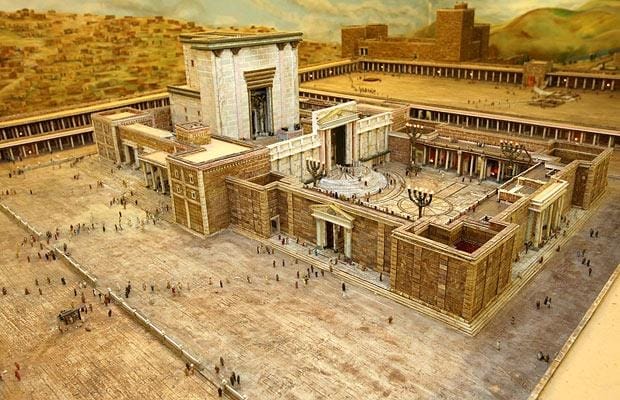
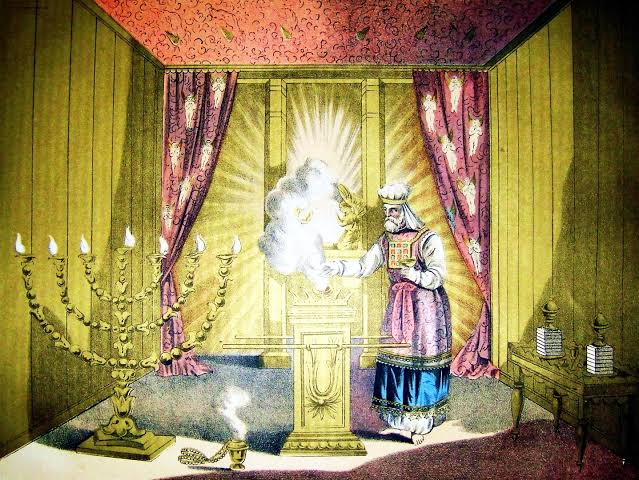
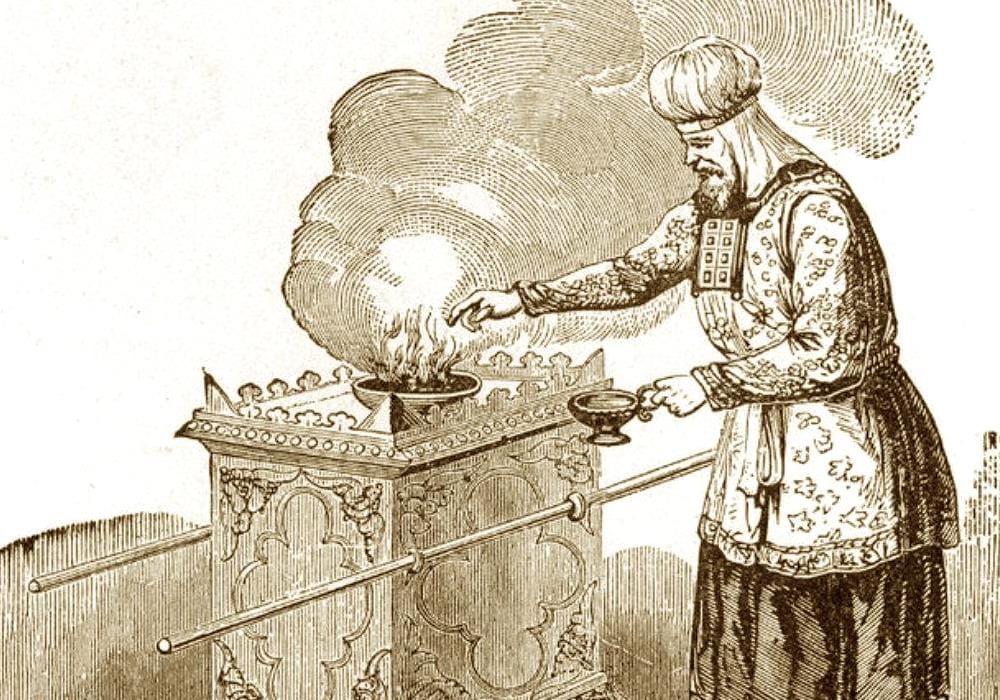
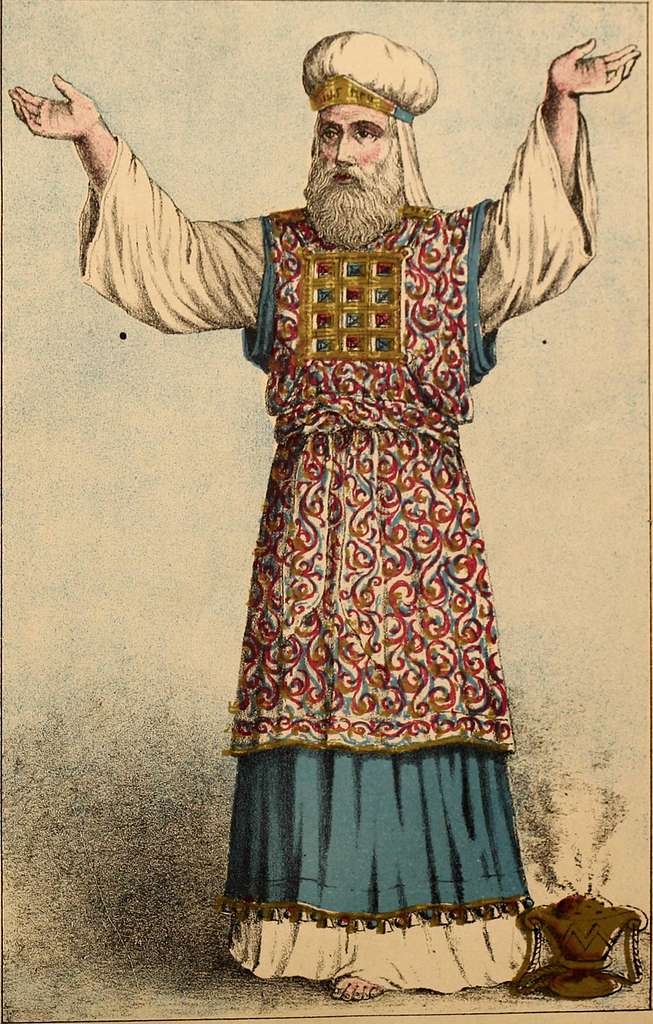
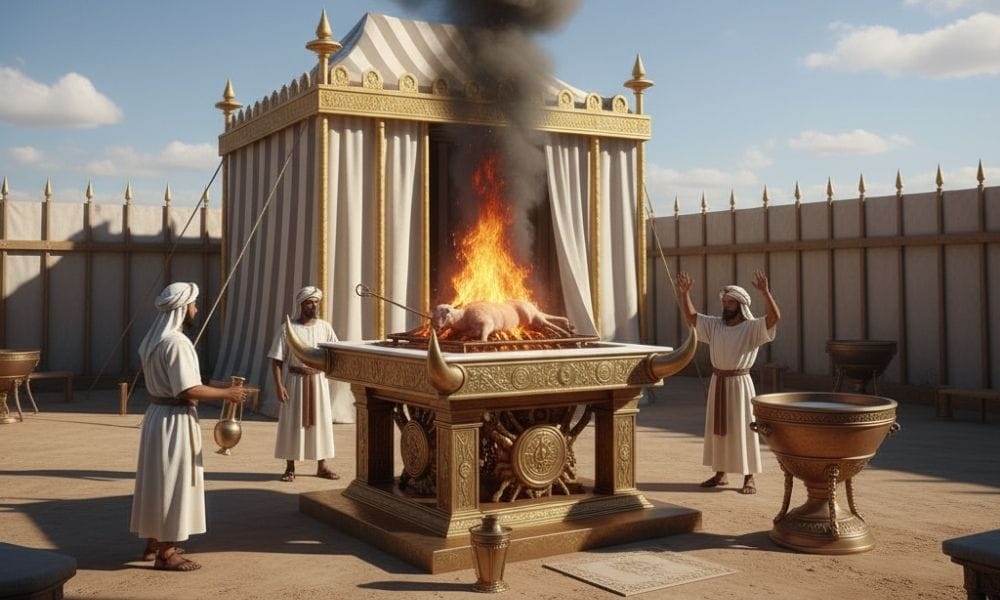
The temple is the standing rebuke to that asymmetry, and it rebukes by sheer page count. Genesis gives the creation of the entire universe one chapter. The tabernacle — one tent — receives thirteen: chapter after chapter of blue, purple, and scarlet yarn, fine twisted linen, acacia joinery, the lampstand hammered from a single talent of gold, the high priest's garments specified thread by thread and justified in a phrase that should end every argument about whether God cares for detail — lekavod uletif'aret, for glory and for beauty. Bells and pomegranates alternate on the hem so that the priest's movement is audible in the holy place. The laver washings are commanded on pain of death. The incense is given by recipe, and the recipe is then copyrighted — whoever compounds it for private enjoyment is cut off from his people: there is a fragrance that belongs to God alone. The wave offering has choreography; the courts have access gradients — who may stand where, and when, and why, terminating in one room that one man may enter on one day of the year, with blood, through a cloud of that uncopyable smoke. None of this is fussiness. It is mindfulness — the same mindfulness that writes the protocol of every royal court on earth, the precedence and the dress and the approach and the address, because protocol is the grammar of sovereignty: how a court behaves is how it confesses who sits on the throne. Scripture knows this grammar from the outside too — Esther dared not approach her own husband's throne unbidden, on pain of death, save the sceptre extend.
And God himself, when Israel's priests grew casual, made exactly this argument — the court-protocol argument, verbatim. It is the opening charge of Malachi: a son honours his father, and a servant his master; if I am a father, where is my honour? If I am a master, where is my fear? You bring blind and lame animals to my altar and call it worship — and then the sentence that ends the discussion: present that to your governor; will he be pleased with you, or show you favour? Try your casualness on a mere human potentate and watch how far it carries. The Lord of hosts has standards you already honour everywhere else.
Now, this is not a summons back to fabric regulations — the tenth section settled where those statutes live in their telos. It is a summons to migrate the mindfulness to where the covenant now writes it: the heart's service. The same exactingness the world spends on its idols, spent on the true altar — prayer kept like the athlete keeps his log; the word studied like the collector studies provenance; service to others crafted, not tossed off, whatever you do, work heartily, as for the Lord; the body governed like the vintner governs his cellar. For this is the final diagnostic, and it cuts every one of us: our obsessions tell us what is sovereign over us, and the lengths we go to are how we publish its place in our lives. Every life is already running a court protocol, in full view. The only question is whose court.
XII. Why the Nations Rage
A gospel that dethrones every god at once will be hated by every priesthood at once. The rage is not a malfunction. It is Psalm 2, running on schedule.
Return now to the finding of the second section, because it has been waiting all this time to detonate. Every man is a priest; every obsession is enthroned; every throne defends itself with the blasphemy response. Very well — now hear what the gospel actually says when it is told in its true form, and count the altars it overturns in a single telling. It says the one God is the triune ground, solvent and sworn; and therefore it says, to every other priesthood on earth, simultaneously: your god is fake. The market is a fake. Pleasure is a fake. The body, the party, the portfolio, the reputation, the research programme — fakes, every one: real goods enthroned above their rank, drawing infinite service on finite assets. The thing you have organised your existence around, says the gospel to every hearer at once, cannot pay you, was never going to pay you, and the restlessness you feel is its balance sheet leaking. And it does not spare the gods that wear a cross for camouflage — the ones Christians flirt with. Nationalism draped in Christian colours is a fake: the nation is a good, and a good enthroned is an idol with a flag. The inversion that makes justice the root rather than the fruit is a fake: a real command of God, promoted to godhood, until the cause excommunicates more fiercely than any church. Legalism is the oldest in-house fake of all — the statute book worshipped in place of its Author, the receipt file venerated while the Issuer stands ignored at the door. Not one god is left standing. Everyone is put on notice. Of course they are angry. The blasphemy response of Section II fires from every direction at once — which is precisely why the persecution has always come from every direction at once.
The historical record reads like a roll-call of offended priesthoods. Rome — tolerant Rome, which collected gods the way a museum collects statuary — executed Christians on a charge that still startles: atheotēs. Atheism. Justin Martyr owns the charge with a lawyer's shrug: we confess we are atheists — with respect to gods of that sort. The empire could absorb any cult that would take a seat in the pantheon; it could not absorb the cult that declared the pantheon empty. In Ephesus it was the guild that rioted — Demetrius the silversmith, whose speech Luke preserves with an accountant's honesty: this Paul says that gods made with hands are not gods, and our trade is in danger — the scandal striking a priesthood precisely where Section II said every priesthood lives, in its offerings and its economy. The philosophers of the Areopagus laughed at the resurrection; the synagogue, as we have seen, legislated the benediction. And in the amphitheatre at Smyrna, in the year 155, the proconsul offered old Polycarp his life for one small liturgy: curse Christ, and cry away with the atheists. The old man looked out at the pagan crowd baying for him, waved his hand across the whole of them, looked up to heaven, and said: away with the atheists. Then he burned. Every altar on earth had been given its answer by one gesture of an old man's arm.
None of this took the apostles by surprise, because it was pre-registered — in the psalm this essay has already leaned on twice. Lamah ragshu goyim — why do the nations rage, Psalm 2 opens, and the verb ragash is so rare that this is its only appearance in the whole Hebrew Bible: a word minted once, for one phenomenon — the tumultuous conspiring of peoples. Against whom? The psalm is precise: against YHWH and against his mashiach — the double target — let us tear off their bonds. The rage is jurisdictional: it is the fury of priesthoods served notice of universal audit. And when the first persecution fell on the church, the first recorded prayer of the persecuted — Acts four — is the church opening Psalm 2 and filing it as fulfilled: Herod and Pilate, Gentiles and Israel, gathered against the Anointed, exactly as written. The nations' rage is not evidence against the gospel. It is one of the gospel's predictions, confirming on contact.
Now face the audacity squarely, because it is the scandal inside the scandal. What kind of claim is entitled to blaspheme every god at once? A philosophy cannot; it offers itself as one more school, and knows it. A national cult cannot; it claims its own valley and leaves the next valley its gods. Only one kind of claimant may stand in the public square and declare universal insolvency: the one with receipts. And that is the structural difference this essay has been building since the weld — Christianity is not, in its true form, one more priesthood among the priesthoods. It is an audit of all of them, and its authority to audit rests not on assertion but on demonstrated performance: the pre-registered profile matched, the hostile concessions banked, the costly-signal testimony sealed, the certified programme half-discharged to the day. No other total claim in history has ever filed comparable paper. That is why the gospel may say what no philosophy dares: not here is a better idea, but here is what is actually the case — not human-made, not a school, but the ground itself, surveyed from two hills and countersigned in a garden tomb.
And then — this is what the enraged never expect — the audit ends not in mockery but in an offer. The terms are almost embarrassingly favourable, and Section II already priced them: every idol eventually defaults, because the demand is unbounded and its assets are not. The gospel's offer is the trade of the ages: surrender the paper that is certain to disappoint you, and receive in exchange the one counterparty that cannot default — the omni-temporally sufficient, the true and eternally enduring. Trade the fake for the real. Bring the bad debt; it has already been paid for.
But mark, finally, the manner of the blasphemy, because it has no precedent and it is itself evidence. Every other total claim in history arrived holding a sword or a statute: rule over, for control — the yoke of national law, the whip of social exclusion, the census of enforced conformity. (And wherever Christendom borrowed those instruments, it was betraying its own charter, and the charter itself convicts it.) The gospel's native posture is the inversion of all of that: the total claim delivered from beneath. Its founder, holding the most absolute jurisdiction ever asserted, told the Roman governor: my kingdom is not of this world; if it were, my servants would fight — and forbade the sword in the garden with the arresting party already present. Its statute of manner is written in Peter: make your defence meta prautētos kai phobou — with gentleness and reverence — the apologia of a priesthood forbidden to coerce. The martyr does not burn his opponent's temple; he lets his opponent burn him, and calls it gain. Willingness to suffer for love, against rule for control; the testimony and power of the Spirit, against the machinery of enforcement. That combination — maximal claim, zero coercion, total personal cost — has no parallel in the history of ideas, and it should trouble the sociologist more than it does: messages spread by swords are explained by swords; a message that dethrones every god, renounces every sword, pays every cost, and compounds — Tertullian was reporting an observed economics, not coining a slogan, when he told the magistrates the blood of Christians is seed — is a message whose power source is not on the sociologist's map. Every other priesthood shrinks under fire. This one is the only crop in history that is sown by burning.
So let the priest of this essay's ninth section expect what his High Priest priced into the office from the first: if they persecuted me, they will also persecute you; in the world you will have tribulation. The rage of the nations is in the terms of service. It is also, the psalm says, temporary — for the same second Psalm that opens with the raging ends with the Son enthroned and the nations his inheritance, and the essay has already read whose hands share that rod.
XIII. The Season of the Office
The office is invariant. The liturgy is seasonal. And the season is late.
On the fourth day of creation, before a single creature drew breath, God hung lights in the heavens and stated their purpose: for signs and for seasons — and the Hebrew word is mo'adim, appointed times, the same word the Torah will later use for the feasts. The universe was built with a liturgical clock in it. Cosmology is calendrical; the Preacher generalised it — a season for every activity under heaven — and among the companies of Israel one tribe drew a commendation for exactly this competence: the sons of Issachar, men who understood the times, to know what Israel ought to do. Understanding the season is not adjacent to priesthood. The priests were the custodians of the calendar. It is a priestly skill.
Psalm 110 does not merely establish the session; it periodises it. Sit at my right hand, until. Two seasons in a single verse: the sitting and the subjecting — hidden authority, then manifest authority; intercession, then intervention. The apostles knew which season they stood in: the Spirit newly poured, the foundation being laid, the long until just opening before them — and their liturgy took that season's form: testimony under persecution, the deposit's transmission, the planting of assemblies from Jerusalem to Spain. Same office; that hour's form of it.
The claim I now make — and I will disclose its status precisely — is that the until is nearly spent. The corpus itself certifies the two-phase structure and the sequence of its close: the shout, the trumpet of God, the dead in Christ rising first, the living caught up — Paul to the Thessalonians, in the oldest document of the New Testament. And Paul's nouns are worth opening. The shout is keleusma — its only appearance in the whole New Testament — the cry of command that sets bodies moving: the boatswain's call to the rowers, the officer's to the line, the huntsman's to the hounds. Not an announcement; an order, and the dead obey it. The catching-up is harpazō — seizure, sudden and by force, the verb of the eagle's stoop — hold that verb in your hand, for it will unlock a door in the next section. The forty-seventh Psalm had scored it in advance: God has gone up with a shout — teruah — the LORD with the sound of the shofar. Isaiah had scored the sequence, and his very grammar carries a doctrine. Yichyu metecha, nevelati yekumun — your dead shall live; my corpse — singular — they shall arise — plural. Translators smooth the clash; the Hebrew refuses to be smoothed: many dead, one body, a corpse that is somehow mine and rises as they. The corporate solidarity this essay has spent three sections building — the many members, the one body of the Last Adam — is sitting inside the number-disagreement of Isaiah's verb, seven centuries before Paul wrote the body is one and has many members. Then the sequence: rise — then, come, my people, enter your chambers, hide yourselves for a little while until the indignation passes — then, behold, YHWH comes out of his place to punish. Rise; shelter; wrath. And the vocabulary of the trumpet-shout is not scattered at random through the corpus; it is the proper name of a feast. Yom Teruah — the day of the trumpet blast, the first of the autumn mo'adim, the first unfired instrument on a panel whose spring half discharged to the day. That is the corpus-level shape. My own calibration of it — the mapping of the moment to a particular Rosh Hashanah, with its gates and its checksums — is reconstruction, and I have treated it as reconstruction should be treated: published in advance, pre-registered, falsifiable, dated.² The corpus certifies the seasons. The calendar of the seasons' close must post its own bond, and mine is posted, and it matures soon. Few eschatologies in history have been willing to stand in that dock. This one stands in it by design.
And now let me do what my method requires and put the strongest objection in the dock's front row, because it deserves the seat. The history of date-setting is a graveyard, and the headstones are legible. Montanus announced the descending Jerusalem and the second century closed on his silence. Europe held its breath at the year 1000 and exhaled into an ordinary spring. William Miller's followers gave away their farms before October 22, 1844, and history has named what followed with terrible economy: the Great Disappointment. Within living memory: the eighty-eight reasons of 1988; the billboards of 2011. And the failures share an anatomy — each clung to a small set of chosen parameters, ran them through a private hermeneutic, and, when the sun rose on the appointed morning, was found clutching at straws it then rebranded as spiritual fulfilments. That is the base rate, and it is dreadful. So the question falls on this essay with its full weight, and I will not deflect it: what could possibly make this time different?
Begin with what the texts themselves say about legibility, because they say something strange. Daniel is commanded to seal his book — shut up the words and seal the book until the time of the end — and told that at that time the wise shall understand, the maskilim, while none of the wicked will. Mark what that predicts: an asymmetry in time. The prophecy declares itself illegible for ages and legible at the end — which means a sudden onset of mappability, where centuries of interpreters found fog, is not an embarrassment to be explained; it is one of the stated signs. Revelation twice pauses its own visions to post the same notice: hōde hē sophia estin — here is wisdom; let the one who has understanding psēphisatō the number of the beast — and that verb should be weighed in the original, because it is psēphizō, to count with pebbles, from psēphos, the pebble: the root from which isopsephy takes its name. The practice of computing the number of a name is not an occult import smuggled into the text; it is the text's own imperative, in the text's own vocabulary. And again at the seventeenth chapter: here is the mind having wisdom. But — and here the method turns on its user, as it must — wisdom is not a thing a man may claim for himself; the claiming is the surest evidence of the lack. Scripture, however, is wisdom, by its own testimony. So the answers are not mine to hypothesise. They are Scripture's to demonstrate, or not. Which means the questions must be put not to me but to the record — and I will put them Socratically, and the reader will answer them alone.
Can we credibly say that at any other moment in history the seals of Revelation six have been mappable in the universal sense they have been over the last eighty years — mappable to civilisational events of genuinely global scope, in a way no prior century could claim without provincialism; mappable sequentially, in the text's own order; mappable faithfully, without allegorising the text into putty — and terminating, at the sixth seal's darkened sun and bloodied moon, in an astronomically coherent manner in August 2026, at the close of those same eighty years? Can we point to any prior generation in which a triple-locked chiastic architecture and its day counts mapped onto those seals and simultaneously onto the Danielic and Johannine day counts, reckoned in Hebrew native inclusive counting, sunset to sunset, opening on a Rosh Hashanah and closing on a Yom Kippur, with a midpoint falling three and a half days after Shushan Purim specifically? A sequence that opens on an eleventh of September — a date that carries its dark resonance only after the second seal's wars began; that contains a 1,260-day cycle opening on an October the seventh — a date that means nothing to anyone until October the seventh, 2023, after which it means everything? Can we say the world has previously stood in a geopolitical spiral in which every power in the Middle East simultaneously, in parallel, is engaged in conflict and in pathway toward a settlement — and that the spiral's own diplomatic clock happens to run in proximity to those same day counts? Has there been a moment before now when a single global actor — I describe; the reader may identify — publicly muses that the technology he is building will perform Jesus-level miracles; builds interfaces that are placed upon human heads, whose brand name, transliterated into Greek and counted by the verse's own pebble-arithmetic, returns 666; owns an artificial intelligence whose name returns 616 — and the manuscript tradition of Revelation, the reader should know, preserves both numbers, 666 in the majority and 616 in ancient witnesses; who calls the superintelligence he is racing to build a digital god at public conferences, and states as his goal the merging of human beings with it — while Daniel says of the last ruler that he will honour a god whom his fathers did not know? Are we to make nothing of Daniel's horn that waxed great, even to the host of heaven, in the decade when exactly one private human being holds a space monopoly of civilisational scale — who is lofting orbital data centres for his artificial mind, under a name that means star-thought; who says his rocket company will be worth more than everything else on earth combined if he succeeds; whose stated dream is humanity spread across the heavens? And the far edge: are we to ignore that the same day counts merge without remainder into Ezekiel's Gog sequence, thirty-eight and thirty-nine, whose seven months of burying terminate on a Nisan ten and fourteen — the very dates Ezekiel forty-five appoints for the cleansing of the sanctuary and the Passover?
Now, those questions create an impression of cumulative force — and an impression of force is exactly what every occupant of the graveyard also felt on the eve of his disappointment. So the impression is not enough, and I will not ask the reader to run on it. The base-rate objection deserves a model, not a mood, and here is the model, laid out so that a neutral referee could score it.
Begin by diagnosing the graveyard properly, because the failures were not random; they share three defects, each objectively checkable against any prediction. First, degrees of freedom exceeded constraints. Miller's entire system was one interval, one anchor, one conversion rule — three free choices and essentially zero independent checks. A model that flexible can be fitted to any century, which is why it fitted his; when the parameters outnumber the tests, a match tells you about the fitter, not the world. Second, no external anchoring: every parameter was chosen by the same hand that desired the conclusion, and nothing outside the interpreter's control held veto power. Third, post-hoc flexibility: when the morning of October 23, 1844 arrived empty, the system was not discarded but reinterpreted — within months the date was declared correct and the event relocated to a heavenly sanctuary no telescope could audit. The exit from falsification was left open, and taken. The base rate of that class of prediction is indeed approximately zero, and deservedly. But base rates attach to reference classes, and the objection must be made to use the right one.
So invert the three defects and ask what a prediction would have to look like to exit the Millerite class — then check, feature by feature, whether this one does. Against defect one: the constraints must vastly outnumber the free choices, and here they do, structurally. The intervals are fixed by the text — 1,260, 1,290, 1,335 days are Daniel's and John's numbers, not mine to adjust. The calendar is fixed by an external system — the Hebrew mo'adim, locked to astronomy by rules codified in the fourth century; I cannot move Yom Kippur, and no interpreter has ever been able to. The genuine freedom in the whole architecture is essentially one choice: the anchor. And once the anchor is chosen, everything downstream is forced — the midpoint falls where the arithmetic says; the 1,290th day, counted inclusively, sunset to sunset, lands where it lands; either that landing is a feast or it is not, and I do not get a vote. Each forced landing is therefore a genuine test that could have failed: the Hebrew year holds roughly 354 days and only a handful of appointed ones, so a single forced landing on a specific feast carries odds on the order of one in several hundred against, and a stack of independent forced landings multiplies — the joint probability is the product of the per-landing odds. Against that multiplication must be charged, honestly, the look-elsewhere tax: if N candidate anchors were genuinely available to try, the product must be multiplied by N. So the honest quantity — write it down — is the joint probability of the forced landings, times the size of the admissible anchor set. And the anchor set is not every day in the decade: anchors must themselves be textually motivated — a Rosh Hashanah, the feast the ascent-chain's own trumpet vocabulary names, not an arbitrary Tuesday — which keeps N small while the landing-stack runs deep. That computation is not a vibe; it is executed, in Python, against the standard Hebrew-calendar library, and published where anyone may rerun it and dispute any line.² Against defect two: the anchoring systems — the fourth-century calendar, celestial mechanics, the canonical day counts — all predate me, constrain me, and answer to no motivation of mine. Against defect three: the selection rules for the seals were fixed in advance of the terminal check — events must be of global, civilisational scope, no provincial fits admitted; they must occur in the text's own order; no event may serve two seals — and the mapping was published before the sixth seal's astronomical terminus arrives, so the final check is a prediction, not a retrodiction, and the gate is binary by design.
And grade the axes, exactly as this essay graded the physics, because the same discipline applies and the reader should watch it applied. The calendar arithmetic is the hard axis — pure computation against external systems; call it the eschatology's measurement. The astronomy is hard — eclipses are celestial mechanics and do not read exegesis. The geopolitical clock is observational, though its interpretation is softer, and I mark it so. The seal mapping and the isopsephy are the interpretive axes, and I mark them softest of all: in isopsephy the counting is mechanical — psēphizō — but the choice of which names to count is a degree of freedom, disciplined only by the verse's own criteria (the mark's stated locus, forehead and hand, selects the class of head-mounted interfaces; the verse chose the candidate pool, but I concede the residual freedom and charge it). And the axes are causally independent, which is what licenses multiplying them at all: the moon does not read the newspaper; the fourth-century calendar rules did not anticipate a rocket monopoly; where dependence exists between lines of evidence, it is counted once, not twice. The strong axes carry the structure. The soft axes decorate it. Strip every soft axis away — concede the seals, concede the isopsephy, concede the actor entirely — and the hard core remains: a one-degree-of-freedom calendar architecture whose forced landings multiply against odds of hundreds-to-one apiece, gated by a binary check weeks away.
And since I have demanded a number of every other claimant in this essay, here is mine — published, reproducible, and standing in the open at The Coincidence Stack.² Under the null hypothesis — no prophetic architecture, history unguided — the joint probability that any seven-year window in six thousand years of historical phase space would exhibit this ten-axis structure computes to approximately 10⁻⁷⁹. That is roughly nineteen sigma, in a discipline where physics declares the discovery of new particles at five. Integrated conservatively with the macro layer — the 1945 discontinuity in the structure of world history, and the nine secular forecasting streams that converge on this half-decade without consulting a single prophet — the combined Bayes factor exceeds 10⁸²; under maximalist integration it approaches 10²⁴⁹, but I do not need the maximalist figure and will not lean on it. What I lean on is the behaviour of the number under hostility, because assigned probabilities are where motivated reasoning hides. The model was therefore tightened repeatedly — dependencies clustered into domains rather than counted separately, double-counting struck out, soft axes compressed, the entire stack treated as one compound window and scanned against every alternative window in six millennia — and every tightening left the number astronomically small or made it smaller; a Monte Carlo under an honest null (real Hebrew calendar, real NASA eclipse data, realistic technology diffusion) moves it only within the band of 10⁻⁶⁵ to 10⁻⁷⁵ — the same regime. And under the most hostile audit I have been able to commission against my own work — charging every identified reference-class error, every self-certifying parameter, every post-hoc element, penalties totalling more than sixty orders of magnitude — the floor still stands above 10¹⁶: ten full orders beyond the five-sigma gold standard, after the knife. The skeptical prior boundary then states the endgame with brutal economy: to keep coincidence alive in the face of this evidence, one must hold a prior against the hypothesis smaller than one in 10⁷⁹ — approximately the odds of blindly selecting one designated atom from among all the atoms in the observable universe. That is not scepticism. That is a metaphysical commitment wearing scepticism's coat — faith, running in the opposite direction.
So here, precisely, is the answer to the base-rate objection. It is not "my cluster feels denser than Miller's" — every failed prophet felt that, and the feeling is worthless. It is: the base rate you are quoting belongs to a different reference class — the class of low-constraint, self-anchored, post-hoc-flexible predictions, whose failure was structurally guaranteed before any date was named. The class of pre-registered, externally anchored, multiply constrained, computationally checkable, hard-gated predictions is a different class with different membership rules, and this framework's claim to membership is checkable on objective features: the publication dates are on the record; the calendar is not mine; the intervals are not mine; the code runs for anyone; and the gate cannot be reinterpreted — if Tishri 5787 opens and closes as an ordinary autumn, the framework will not be declared "spiritually fulfilled." It will be dead, and I have said so in print, in advance. That is the one exit the Millerites left open for themselves, and I have welded it shut on purpose, because a model that cannot die cannot be evidence.
One coincidence is nothing; I would ignore it, and so should you. Five are a curiosity. But the cluster before you is now something you can price: count the forced landings, take the product, charge the look-elsewhere tax, weight the axes by their grades, discard the soft ones entirely if you wish — and see where the number falls. The arithmetic is published and rerunnable; dispute it line by line if you can. Or skip the arithmetic altogether, for the gate matures in weeks and will grade the model with a severity no critic could improve upon. I ask only the Socratic question, and I ask it once: if this is not the moment, what exactly would the moment be permitted to look like, that this one does not? Or — the alternative the questions have been converging on — perhaps the moment is exactly what it looks like, and the virgins must be awake, and watchful of their oil.
But here is the discipline that keeps the urgency from corrupting the office, and it comes from the King's own mouth. When he prescribed the liturgy of the late season, he did not prescribe arithmetic. He prescribed oil. Let your loins be girded and your lamps burning — and the Greek tenses are the instruction within the instruction: periezōsmenai is a perfect participle, a completed girding whose result stands, and kaiomenoi a present participle, a burning that continues. One decisive act, then an unbroken state. The grammar of the command is the discipline it commands. Ten virgins went out to meet the bridegroom; all ten had lamps; the difference that midnight exposed was the reserve of oil — and oil, in the whole grammar of Scripture, is the Spirit: the anointing, the presence, the communion cultivated in secret over long ordinary years. Which means the wise virgin's vigilance is measured in intimacy, not in date-craft. And it means watchfulness is the dominant strategy under every branch of the future: if the calibration is right, keep oil; if the until runs longer than any man's reckoning, keep oil. The Millerites made the date their purpose, and the disappointment took their purpose with it. The date is not the purpose. The date is a vigilance-multiplier laid upon a purpose that was identical in the year 33, in the year 1526, and this morning: the altar, the living sacrifice, service in love — now performed by servants who can hear, or think they hear, boots on the gravel of the drive.
XIV. The Mother and the Shut Door
The Jerusalem above is our mother — and she is in labour.
There is a woman who runs through the prophets like a figure glimpsed repeatedly at the edge of a crowd. Isaiah sees her twice in his final movements: a woman who — against every law of travail — gives birth before her labour comes; before her pain, she delivers a male child. Who has heard such a thing? Shall a nation be born in one day? And again, a barren woman commanded to sing: enlarge the place of your tent, for the children of the desolate one will be more than the children of her who is married. John, on Patmos, sees her clothed with the sun, the moon under her feet, crowned with twelve stars, crying out in labour — and here the lexical machinery locks. John writes that she bore huion arsen — "a son, a male" — a doubling so redundant in Greek that commentators have puzzled over it for centuries; it stops being a puzzle the moment you open Isaiah 66:7 in the Septuagint and find arsen, the male child, in the corporate birth oracle. John is not echoing Isaiah's theme; he is importing Isaiah's word, and with it Isaiah's referent — the child who is a nation born in a day. And what happens to the child? He is hērpasthē — snatched — to God and to his throne, before the dragon can devour him, before the woman's flight, before the fury. Harpazō: the verb I asked you to hold from the last section. The New Testament contains exactly two eschatological seizures heavenward — the assembly caught up in First Thessalonians, and the male child caught up in Revelation twelve — and they are performed by the same Greek verb. Two texts, one action, one word.
Who is she? Paul answers in Galatians, and again the method is quotation-plus-ruling: he cites Isaiah 54:1 entire — rejoice, O barren one who does not bear — and then identifies the singer: hē anō Ierousalēm — the Jerusalem above — is free, and she is our mother. The adverb does the ontology: not the earthly city, not a metaphor for a movement, but the celestial Zion — which is precisely the woman John sees dressed in celestial bodies. And the writer to the Hebrews tells the incorporated where they already stand, in a sentence whose two key words repay unpacking: you have come to Mount Zion, to the heavenly Jerusalem... to the panēgyris — the festal throng, Greek's word for a festival in full session, its lone appearance in the New Testament: the feast is not future to that sentence; it is convened — and to the assembly of the firstborn, apogegrammenōn in heaven — a perfect passive participle: enrolled, with the enrolment standing complete. Registered in advance of delivery, and the register is already open at the feast. Read the figure whole, then: the mother is the Zion above; the birth is the moment enrolment becomes emergence — Isaiah's dead awaking and singing, the nation born in a day, the son caught up to the throne; what Paul calls, in the eighth of Romans, the revealing of the sons of God, for which, he says, the whole creation stands on tiptoe. The child of the twelfth chapter of Revelation is destined to rule the nations with a rod of iron — and Revelation has already told us, two chapters into the book, whose hands hold that rod: the one who overcomes... I will give him authority over the nations, and he will rule them with a rod of iron, as I also have received from my Father. The rod is the Son's by the second Psalm's grant, and the members' by the Son's own grant. The child is the corporate Christ — head and body, the assembly glorified.³
And then the door. It is the same door three times across the canon, and each time God's own hand is on it. Noah entered the ark, and YHWH shut him in — before the waters. Isaiah's risen ones are told: enter your chambers, shut your doors behind you, hide until the indignation passes — before the wrath. And at midnight, in the parable, those who were ready went in with him to the wedding feast, and the door was shut — before the banquet. The world has always read that shut door as exclusion's image. It is preservation's. The door closes on the wise from the inside of the feast. To be shut in is to be kept — sealed into the celebration while the storm audits the earth. The promise to Philadelphia is the same grammar, and the preposition is the promise: tērēsō ek tēs hōras — I will keep you out of the hour of trial that is coming upon the whole world. Not dia, through; not en, within: ek, out of. And the construction has one other occurrence in the same author — Jesus praying in John seventeen that his own be kept ek tou ponērou, out of the evil one: not preserved by immersion but by exemption from the sphere. John's usage interprets John's usage; the hour, like the evil one, is a domain the kept do not enter. And the promise of the upper room is its warm domestic form, spoken the night before the tardemah: in my Father's house are many monai... I go to prepare a place for you; and if I go, I will come again and receive you to myself, that where I am, you may be also. Monai — dwellings, abidings — appears exactly twice in the New Testament, both times in this one chapter: the monai prepared in the Father's house, and, twenty verses later, the monē the Father and Son make with the one who loves him, now, by the Spirit. The noun is built on menō — the abide verb that John fifteen will ring like a bell eleven times: abide in me. The word for the destination and the word for the discipline are the same word. Which is the whole doctrine of the oil in a single Johannine root: the dwelling being prepared for you is practised in the abiding prepared in you. The virgins who kept oil were not waiting near the feast. They were already living in its vocabulary.
So the moment is this. The office is what it has always been. But the woman is in labour, the shofar is in the watchman's hand, and the feast is laid. The purpose of a Christian right now is what it has always been — the altar, the offering, the love — performed at the pitch of a household that expects its Lord tonight. The lamps, therefore. The oil, therefore. The long secret communion with the Spirit that no midnight can catch unsupplied.
If you are drowsy, consider yourself shaken.
XV. A Personal Accounting
The apostles had signs. I have physics. The arbiter differs; the verdict does not.
Paul called it to skandalon tou staurou — the offence of the cross — and he did not mean a mild social awkwardness. He meant what the last three sections have laid bare: a message that dethrones every god will strike every hearer, at first contact, as an outrage. And so the question falls on anyone who carries the message: what evidence do you bring, that a scandalised hearer should sit back down?
The apostles had an answer of a kind I do not possess. Their gospel travelled with demonstration: signs and wonders and various miracles, and — the writer to the Hebrews uses a courtroom compound for it — synepimartyrountos tou theou: God co-witnessing, taking the stand alongside them. The Spirit himself was their objective arbiter, and objectively public: when Cornelius's Gentile household received the same Spirit before Peter had finished his sermon, Peter's argument at the Jerusalem council was simply an evidentiary filing — God, who knows the heart, bore witness to them, giving them the Holy Spirit just as he did to us. Signs anyone could see; a Spirit anyone could point to; eyewitness standing under oath; and the willingness to die rather than amend the testimony. That was their kit.
As far as I know, I have not been given that gift, and I will not pretend to an authority I cannot demonstrate. But I have been given something the first century did not have, and it is the reason this essay opened in a laboratory in Orsay rather than a pulpit. I can point to physics. And physics is, for this purpose, the incorruptible witness: it does not care what I think. It does not care what anyone thinks. It cannot be flattered, bribed, or pastored; it attends no one's church and holds no one's politics; Aspect's photons did not consult a single theology before violating Bell's inequalities, and they return the same verdict in Beijing, in Boston, and in Lusaka, for the atheist's instruments and the deacon's alike. When I stake an argument on the correlations, the block, the boundary encoding, I am appealing to the one arbiter in the modern world that every party to the dispute already trusts with their aircraft and their telephones.
And what that arbiter establishes, Paul told the Romans it would — in a sentence whose Greek performs its own meaning. Ta aorata autou... kathoratai: his invisible things are clearly seen — Paul rubs the paradox together deliberately, the unseen seen — being understood by the things that have been made: tois poiēmasin, the word from which we take poem. The creation is his poiēma; the invisible attributes are legible in the composition. Romans 1:20 is not a pious sentiment; it is a testable claim about the world — and the constraint-vector of this essay's third and fourth sections is that claim executed with instruments Paul never held: run the physics honestly and the ground's invisible attributes stand clearly seen — omni-temporal, triadic in operation, personal in nature. The framework is public; the steps are graded; anyone may rerun the survey. And what it demonstrates, cut the cake however you please, is the trinitarian God of the Bible. Not a god. That one.
Feel the weight of what that means, because it is the difference between a testimony and a truth-claim. If the argument holds, then what I am saying is not my opinion, my tradition, or my interpretation — categories the modern reader files under "true for you." It is a claim about what is most true about reality itself, and reality does not come in private editions. Which makes Christ not tribally important but universally important — and Paul, once more, had already filed the paper. In Isaiah forty-five, YHWH swears the fiercest monotheist oath in all Scripture, and swears it by himself, there being nothing higher: to me every knee shall bow, every tongue shall swear. Paul lifts that oath — the untransferable one — and predicates it, whole, of Jesus: at the name of Jesus every knee shall bow... and every tongue confess that Jesus Christ is Lord, to the glory of God the Father. The apostle has taken the divine name's own oath and shown us whose name executes it. Every knee will bow. That clause is not aspiration; on the argument of this essay it is scheduled. The only variables left to any of us are the timing and the posture — whether the knee bends now, as gift, or then, as verdict. Friend or foe. With him, or one who was against him.
And now assemble the machine entire, because the reader has watched each engine run separately — the physics and consciousness paired into their double triad, the weld load-tested, the lattice priced — but has not yet seen what happens when all of them are run simultaneously, as one system. Three things happen, and the third is weeks away.
First, the blocks close each other's open flanks. Every one of these arguments, run alone, has a standard defeater — and in the integration, each defeater is answered by a different block. The resurrection alone runs into Hume: miracles carry so vanishing a prior that no testimony can rescue them — a fair rule, in a world with a dead ground. But the metaphysics has independently established, from decoherence and self-knowledge, a personal omnipotent ground for whom specification is native act; Hume's prior was borrowed from an ontology the physics has since repossessed, and once the ground is personal, a re-specification within history is not a violation of nature but an author's intervention in his own text — improbable on any given page, never priced at zero. The lattice alone runs into the numerology charge: pattern-hunting in noise. But the corpus carrying the day counts has been countersigned by the load-tested event, and the counting is the text's own imperative, in the text's own verb. And the metaphysics alone runs into the deist's shrug: very well, a triune ground — perhaps it wound the block and withdrew. But the weld shows the ground entering its own text, and the lattice shows the entry was scheduled and the schedule still running. Hume is answered by the physics. The numerology charge is answered by the resurrection. The deist is answered by the calendar. No block defends itself; each is defended by another. The formation has no open flank — and that is an emergent property: it exists nowhere in the parts, only in the integration.
Second, the lattice changes category: it becomes the metaphysics' experimental arm. Consider what predictive prophecy is, under the integrated view. The physics established that the ground holds the block whole — every page of history specified in one act. An author outside the sequence can write to any page; and therefore checksums planted in the sixth century before Christ that lock onto orbital mechanics in the twenty-first century after him are not magic. They are the expected signature of omni-temporal authorship — the watermark an eternal Specifier would leave, if he wished to be identified by his readers. And the implication runs both directions: the block makes prophecy mechanistically intelligible, and fulfilled pre-registered prophecy is empirical evidence for the block and its Author — the one experiment that can test omni-temporality from inside time. Which means the gate of Tishri 5787 is not merely an eschatological checkpoint. It is the single experimental readout of the entire integrated system — physics, phenomenology, history, and calendar concentrated onto one binary check, weeks from maturity. I know of no other worldview that has ever placed its whole integrated weight on a dated, public, arithmetic gate. This one has, on purpose, because a system this closed must offer the outside one honest way in.
Third, the referential chain closes — and Pascal's wall comes down. Pascal sewed into the lining of his coat the cry that the God of Abraham, Isaac, and Jacob is not the God of the philosophers and scholars, and for three centuries the two have been housed in separate buildings, one worshipped and one argued about. Run the system whole and watch the chain of identity close, link by link, each link forged from a different evidence type: the physics derives that the ground is (deduction); the consciousness proofs derive that the ground is a someone (phenomenology); the Greek, Hebrew, and Aramaic convergence names the second register (philology); the weld identifies the register's bearer at a datable address (testimony under torture); the lattice times the bearer's outstanding program (arithmetic against an external calendar). Deduction, phenomenology, philology, testimony, arithmetic — five evidence types, one referent. The God of the physicists is the God of Abraham is the Man of the pierced hands is the Author of the calendar that matures this autumn. The philosophers' God and Abraham's God were never two. The integration shows that the wall between them was scaffolding, and takes it down.
And when the machine runs entire, this essay's thesis stops being a conclusion and becomes a summons. Metaphysics alone commands nothing — a derivation has no voice. History alone dates nothing — a resurrection twenty centuries old sets no alarm. A calendar alone authorises nothing — dates without an author are astrology. Together, they are what none is separately: an authoritative, personal, dated summons — the triune ground, whose image you bear, whose Son holds your office's oath, whose program is at hand, calling for priests with their lamps lit. And notice, finally, who is running this integration: a triadic mind — knower, word, love — evaluating the signature of its own Archetype. The experiment includes the experimenter. That is not a defect in the epistemology. It is the imago doing precisely what it was specified to do.
And one last word about the shape of the whole case, because its strength was never in any single part — it is in the gestalt, and the gestalt has a scientific name. The consilience that Section IV deployed inside the physics governs the entire essay, and the reader who has come this far can now survey the full span of evidence classes that have been jumping together: the foundations of physics; the philosophy of mind; comparative philology — logos, davar, Memra, three languages carrying one figure; Second Temple archaeology — a scroll in a Judean cave, a warning stone dug from temple rubble; Roman historiography and hostile rabbinics; the game theory of testimony under execution; the actuarial record of a liturgical calendar discharging to the day; the typological architecture binding Eden's surgery to Golgotha's spear; and the private register of the Spirit that every believer holds and none can transfer. Count the methods: no two of those classes share one. Count the motives: half the witnesses are hostile, and the friendly ones died rather than amend the file. For the sceptic, each class must be defeated separately, with a different tool — a physics objection cannot touch the philology; a source-critical theory cannot touch the game theory; a psychological account of religious experience cannot touch the entropy bound — and at the end of the labour he must still explain why so many unrelated defeats were required against what he holds to be a coincidence. The believer has one explanation for the whole pattern. The sceptic needs a separate accident for every line. Occam has already told us what to do with ledgers like that. And this, I think, is why the conviction, once it forms, behaves less like an opinion held than like daylight arrived — Lewis said it once for all of us: I believe in Christianity as I believe that the sun has risen: not only because I see it, but because by it I see everything else. The gestalt is itself the evidence. The picture in which physics, mind, history, typology, and calendar stop being separate puzzles and become one composition is — by the razor, by consilience, by every canon of inference we trust everywhere else — more probable than the heap in which each remains an orphan.
So here is my accounting, plainly. If the physics is right — and it is — then the wall is real, the ground is triune, the Logos is personal; and then the weld holds, and the programme is certified; and then everything the apostles said, and before them the prophets, is true. And if that is true, then the conclusion of this essay is not one spiritual option on a shelf of options. It is the standing offer of the actual King to every human being who reads this: the trade of the fake for the real, the insolvent for the sworn, the phase for the office. We should all — I mean the word — all want to be royal priests of Christ the King. It is our best and highest purpose, because it is the purpose written into the ground of everything there is.
XVI. In Plain Terms
After all the machinery — the answers a child could carry.
Everything this essay has argued — the physics, the proofs, the Greek, the game theory, the calendar — exists to underwrite a handful of answers to the questions people actually carry around, and it would be a failure of priesthood to leave them locked inside the machinery. So, in plain terms:
Are you special? Yes. You are a royal priest — an office sworn by the oath of God, held inside the King himself, that no machine, no market, and no rival can take from you.
Do you have a purpose? Yes, and there is none higher on offer anywhere. You are meant to serve the most important Person in the universe — the centre of all meaning, the fountain of all joy, the origin of all life. Nothing you could substitute is larger, because everything else is smaller by definition: it was all made through him.
How can you find joy? You get to know the source of it. Joy is not a mood to be manufactured by circumstance; it is a Person's company — in your presence there is fullness of joy — and the priest's office is, precisely, access.
How do you find peace? He is a person, and you have been brought to him. Peace is not the absence of trouble; it is the presence of Someone — my peace I give to you — and the veil that kept everyone at the mountain's foot is torn.
Where is your life going? Toward him. Not toward a void, not toward a plateau, not toward the dark — toward a face. Every ordinary day is travel in one direction.
How can you know any of this is true? Two ways, and this essay has walked both at full length. Look at the world: physics itself demonstrates the triune ground, exactly as Romans 1 said the things that are made would. And look at the apostles: men do not die in series, over decades, refusing every offered exit, for a body they could have produced. Their costly lives are what priesthood looks like. Their testimony is what truth under torture looks like.
Is it worth it? Consider who else holds the job. The seraphim burn before the throne doing this. The angels — beings who have watched all six thousand years from the gallery — long to look into the things you have been handed. And when John, overwhelmed on Patmos, fell down to worship at the feet of one of them, the angel refused the honour with a job description: I am a fellow servant with you. This is what angels do. And you are invited to do it with a standing they were never given: not attendants of the King only, but his body and his bride; not servants at the throne, but heirs seated with him on it.
That is the offer on the table. It has been on the table since a garden. The only question remaining is the one this whole essay has been asking: what will you do with your priesthood — and whom will it serve?
Coda
You are not your function. Your function was always going to be surpassed — by younger men, by cheaper labour, and now by machines that do not sleep. You were never your function. You are a vantage point of the universe that the Logos specified once and will not repeat: an unsubstitutable somewhere, made from the ground's own triune image, called into a priesthood that is older than Levi and secured by an oath that outlasts the sun.
You are a question the Logos asks in only one way. The answer is your life, offered.
The purpose of a Christian is to be a royal priest — forever. The season of that forever, just now, is the eve of the trumpet.
Keep oil.
¹ The full derivation is set out in What the Ground Must Be Like: the physics chain and the consciousness lattice run separately to their joint constraint-vector, every inferential step graded for strength (deduced, abduced, identified, asserted), the interpretive exits audited one by one, and the global search of candidate ontologies conducted against the vector in the open. The essay compresses; the document discloses.
² The calendrical framework, its ten evidence axes, the full probability model with Python source, the sensitivity and tightening analyses, and the pre-registered falsification gates are published in The Coincidence Stack (mwiya.com, November 2025) and developed across The Shape of God, The Tesseract, Q.E.D., and The Day After Tomorrow. The headline figures cited here — 10⁻⁷⁹ under the null across ten axes, combined conservative Bayes factor above 10⁸², Monte Carlo band 10⁻⁶⁵ to 10⁻⁷⁵, adversarially audited floor above 10¹⁶ — are computed there and reproducible by any reader. The primary gate is public and dated. Reconstruction does not inherit the corpus's certification; it must earn its own, or fail in the open.
³ The identification of the male child as the corporate glorified assembly — totus Christus, head and body — is argued here from the rod-transfer of Revelation 2:26–27 and the explicitly corporate birth of Isaiah 66:8; the majority reading takes the child as Christ simpliciter, with verses 1–5 as compressed nativity-to-ascension. The two readings are reconciled in the totus Christus mediation: the head's ascension contains and prefigures the body's. I flag the interpretive layer, as always, at the point where it begins.