

The election at the hinge, and the two economies before Zambia
TL;DR
Zambia votes on 13 August 2026 at the hinge of its economic cycle: after repair has recreated discretion, before any settlement exists to govern it. This essay measures the election, prices the futures it selects between, and specifies the architecture that neither manifesto contains. The essay is built atop statistical modelling that forecasts (a) the August 2026 election (b) the range of economic scenarios that flow out of the electoral decision (c) the counterfactuals from 2021. Statistical modelling is built atop historical electoral data from the Electoral Commission of Zambia and the current register of candidates; with Bayesian and Monte Carlo methods used alongside econometric methods to stress test economic considerations. Whilst the essay starts with the forecast, it should be understood to be an appraisal of what it would take for Zambia to become a true developmental state.
The election. Hichilema is the model's favourite: approximately 55% of the presidential vote, a first-round probability of 90–95% under the full model ensemble, and a UPND centre near 127 of 226 constituency seats, with an 85–92% probability of the 114-seat FPTP majority. The parliamentary arithmetic is more interesting than the presidential: most of the estate the former ruling party cannot inherit flows to independents and minor parties rather than to UPND. Opposition sentiment does not disappear. It de-institutionalises. And the ballot is only the country's second vote — the first is cast continuously, by every trader, bank, farmer and mining board, in prices, tenors, inventories and postponed decisions. Every economic actor in Zambia is an election forecaster. Part One does in public what the whole economy is doing privately, with money. Could the forecast be wrong? Yes, certainly; there is a 5-10% probability spread on that possibility and much of it comes down to two things; voter turnout behaviour in relative strongholds and the youth vote; specifically the unmarried adult in informal employment but yet to have children of their own.
The law of the hinge. The repair is real in the accounts before it is believed at the till, because pass-through runs on the exchange rate's believed permanence, not its level — and a decade of depreciation memory sets the credibility threshold high. The benefits of stability arrive at credibility speed: slow, back-loaded, compounding. The costs of a regime break arrive at portfolio speed: front-loaded, in a jump. Continuity pays like a coupon; reversal charges like a margin call. The election falls inside that lag, which is why the incumbent's political position is weakest at the exact moment his economics are strongest — and why the opposition's critique works without the repair being false.
The stakes, priced. Six 2031 scenarios, one common opening, one conservative copper deck: a full-compounding bull near US$107–114 billion; the 3 Mt acceleration case at US$85 billion; existing policy at US$77 billion; continuity that drifts — wins, then never legislates preservation — at US$70–74 billion; a managed discontinuity at US$70 billion; and a PF-style reversion stress at US$38–48 billion. The same prosecutorial machinery is applied to both sides, with evidence grades shown: the reversion case is calibrated on the claimant coalition's decade in office, the slow-capture case on the incumbent's own record with the war year quarantined. Two continuity scenarios and two discontinuity scenarios all end at zero preservation — the risk is architectural, not partisan. And the fork is not hypothetical: the 2021 counterfactual, run with the weather held common — same copper prices, same drought, same war — prices the road not taken at roughly US$19–23 billion of missing 2026 GDP, a kwacha near 100, reserves measured in weeks, and copper a third lower: Malawi with deeper debt, about US$1,000 per citizen in this year alone. The machine has run to completion before — 1987–91, same dynamics, same outcome, the regime included — and is running in Malawi now; it was exited in 2021 at the last constitutional door, and must be refused again in 2026 and 2031. The spread from bull to reversion is roughly US$2,000 per citizen per year: the same order as the sixty-year counterfactual invoice, with the 2021 fork as the observed middle term. The next five years re-run the entire historical experiment at compressed timescale.
The architecture. The fifth settlement is specified as machinery, every part an extension of something Zambia has already done once. The royalty state: the nation owns the mineral estate, so a commercial royalty plus carried interest on every new licence is not a tax but the landowner's rent — contractual, senior, cycle-invariant, and priced to a two-sided standard: the highest transparent and durable national claim consistent with projects clearing their hurdle rate, because an excessive claim leaves the copper in the ground and an absent claim gives the copper away — the licence arbitrage that began with the BSAC concessions and continues, by consent, wherever the estate is granted below its scarcity value. ZCCM-IH meanwhile extends its own signed Kansanshi precedent across the portfolio, converting equity that pays when operators choose into royalties that pay when copper ships. The patrimony: a stabilisation fund on the Chilean rule (~US$4 billion by 2040, the Dutch-disease steriliser and drought absorber) and an equity-indexed endowment fund seeded this term from claims the state has held since 2000 — roughly US$2.5 billion by 2031, US$14 billion by 2040, US$38 billion by 2050, with its own investment income out-earning the mines by the 2040s. The consolidated sovereign balance sheet rises from 15% to 43% of GDP by mid-century — and, held in indexed global equity, the endowment is a direct ownership claim on the AI economy whose build-out consumes Zambia's copper: the state sells the phase shift its metal and owns the phase shift's equity, insurance for the century in which AI-driven deflation migrates rents to the physical substrate and automation presses on the wage channel — a fund whose purpose is not resource-funded idleness but the protection and enablement of human labour: permanent financing for the electricity, formation, tools and AI systems that keep the Zambian worker economical in the automated century. The hedge has an expiry — recycling converts every tonne sold into future competing supply — so the strategy is tempo: grow exports hard inside the build-out window and save aggressively against the franchise's own depreciation. The custodians: Bank of Zambia as apex on the Norway–Singapore–Chile model, ZCCM-IH as the Temasek, Treasury as owner-never-operator — earning, keeping and spending separated into three institutions, entrenched in tiered lanes: two-thirds for operations, a unanimous vote of Parliament plus a referendum to dissolve the funds or invade principal, because the fund's true stakeholders — the citizens of 2060 — hold no seats, and unanimity is how an unrepresented majority acquires a proxy. The credit machine: a Korean-discipline export finance vehicle that lends to no firm — wholesale lines and guarantees through supervised banks holding first loss, allocation gated by confirmed export orders, the one document no minister can forge. At no point in the chain does a political officeholder choose a price, a borrower or a beneficiary.
The custodial republic. Machinery has never survived a Zambian transition on its own. Durable stability requires generations of consistency the five-year cycle structurally denies — so the final section proposes the political layer: democracy retained as the removal technology, meritocracy installed as the operating technology; a durable parliamentary advantage that is earned by performance and continuously revocable, on the Botswana proof that generational dominance and peaceful removal can coexist; capability standards located inside parties, the proportional bench and Parliament's own institutions — never at the ballot — against the benchmark that lawmakers should not be less capable than the judges who apply their laws.
The test and the clock. The fifth settlement is achieved when the economy stops voting on the government and resumes voting only on prices. None of this is in any party's manifesto — which is the anchor theory operating in real time, since preservation pays no one inside the electoral cycle, and is precisely why the only moment it can be built is now, after repair and before the surplus becomes visible enough to fight over. Check-in date, pre-registered: mid-2028 — preservation rule enacted with its entrenchment, the conversion executed, the first prospect auctions held, the export credit agency chartered. Absent these, this essay's own scorecard records the drift scenario as the central case. The election decides who operates the machine. The settlement determines what survives them.
Disclosure. The author's relationship to officeholders appearing in this analysis, including the former Minister of Finance, is set out in full in the Stewardship Panel of the companion essay, "Zambia's Economic Settlements" (§VI-A), together with the method by which the reader may grade those tenures with particular severity if inclined. The method does not know whose son is applying it. That remains the point of having one.
First-things-first: my Math. This essay's electoral estimates are drawn from the author's companion research pack (v1.1): the ECZ candidate census, the 108-constituency historical panel, the sixteen-contest by-election register, the candidate-quality overlay, and a ten-million-draw Bayesian Monte Carlo with a prior-robustness ensemble. The pack is downloadable in full — every formula live, every source cell linked, every calibrated assumption marked — because the point of the apparatus is not to make the assumptions look authoritative but to make them visible enough to attack. The economic scenarios begin from one common 2026 opening economy: the IMF's old-base estimate of US$41.2 billion multiplied by the provisional 27.5% rebase, for a common anchor of US$52.6 billion, as established in the previous essay. The copper price deck is set 15–23% below the current market as a deliberate margin of safety. All scenario levels are constant-2026 dollars unless marked; purchasing-power figures are constant 2026 international dollars, and where they embed a real-appreciation assumption, that assumption is stated where it occurs. The severe-case FX range remains an illustrative stress pending the dedicated endogenous FX module whose design §XIX specifies; it is graded accordingly. I've added all the quantitative analysis below; feel free to use it to run your own modelling. Here it is:
I. The Election at the Hinge
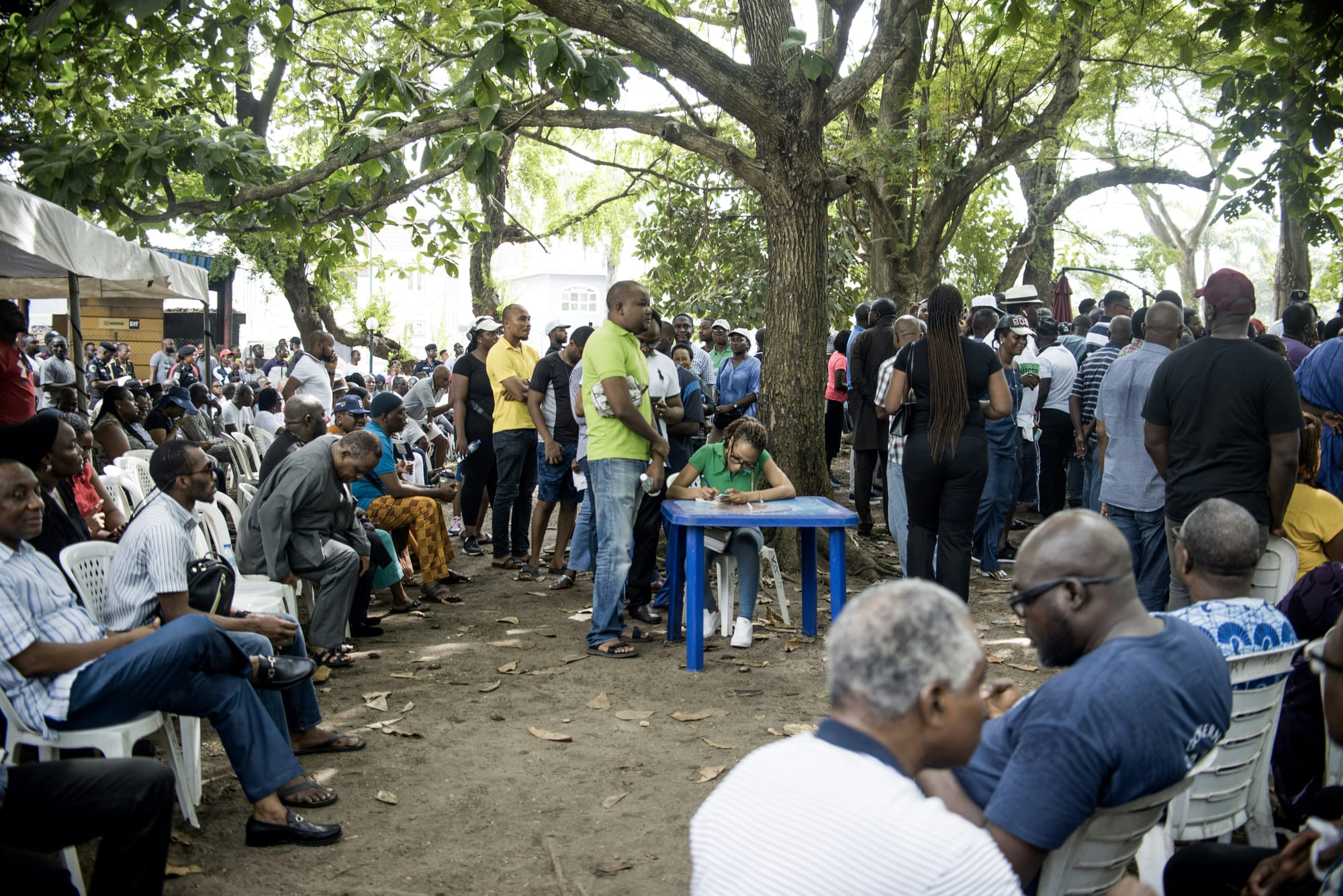
Zambia will vote on 13 August 2026 at the most dangerous point in an economic cycle: not at the trough, where arithmetic becomes compulsory because there is nothing left to distribute, but at the hinge, where repair has recreated discretion before a durable settlement has been built to govern it.
The debt has been substantially restructured but remains constraining. Inflation has returned to the Bank of Zambia target band. International reserves have risen to approximately US$6.4 billion. The kwacha has appreciated sharply. Government-security yields have fallen. Mining capital has returned. Copper production is rising. Independent power production, open access, power trading, solar, coal and regional imports are beginning to diversify an electricity system exposed by the 2023–24 drought. Free education, school feeding, social cash transfers and the enlarged Constituency Development Fund have established a visible social anchor around a quantitative reform programme.[1][2]
The repair is incomplete. The direction has changed. That is precisely when Zambia has historically stopped counting.
The previous essay derived the equation that governs everything below, and it belongs at the head of this one:
N = P × C × D × V
National value is the product — not the sum — of productive capacity, sovereign capture, broad distribution and preservation, where preservation means the conversion of finite natural capital and temporary windfalls into permanent national assets. The multiplication is the argument: if any term approaches zero, the national result collapses regardless of how brilliantly the others score. Every settlement since 1964 solved some terms while driving another toward zero, because each was designed as the reversal of the last failure rather than as a complete architecture. And each cycle ran on the same engine:
commodity cycle → political mood → policy reversal → investment response → future production → fiscal constraint → next reversal
The 2026 election is therefore not merely a contest over which group administers the same economy. It is a critical juncture between two economic vectors — and, less visibly, a referendum on whether the fourth settlement's repair will finally acquire the missing term. Part One of this essay measures the election. Part Two prices the two settlements it may produce. Part Three tests both against the weather. Part Four specifies the architecture — the settlement itself. Each part exists to earn one piece of the equation, and the essay closes on the only question that decides whether the equation ever balances: would the settlement survive the party that builds it?
The weather will be common. The machine that receives it will not.
II. The Country Votes Twice
An election forecast is not the specialist's intrusion into the economy. It is the economy's native activity, performed continuously by everyone in it.
The trader setting shelf prices against landed cost is forecasting whether the kwacha holds. The bank pricing a tenor is forecasting the policy regime across the life of the loan. The employer converting casual labour into permanent contracts is forecasting demand under the next government. The farmer told to withhold maize at K347 against a promised K500 is forecasting the election itself — and settling the bet with this season's income. The pension trustee, the landlord fixing rent in dollars or kwacha, the graduate choosing between a wage and a visa, the mining board holding an expansion at the hurdle rate: all are election forecasters. None publishes a methodology. All stake something on the result.
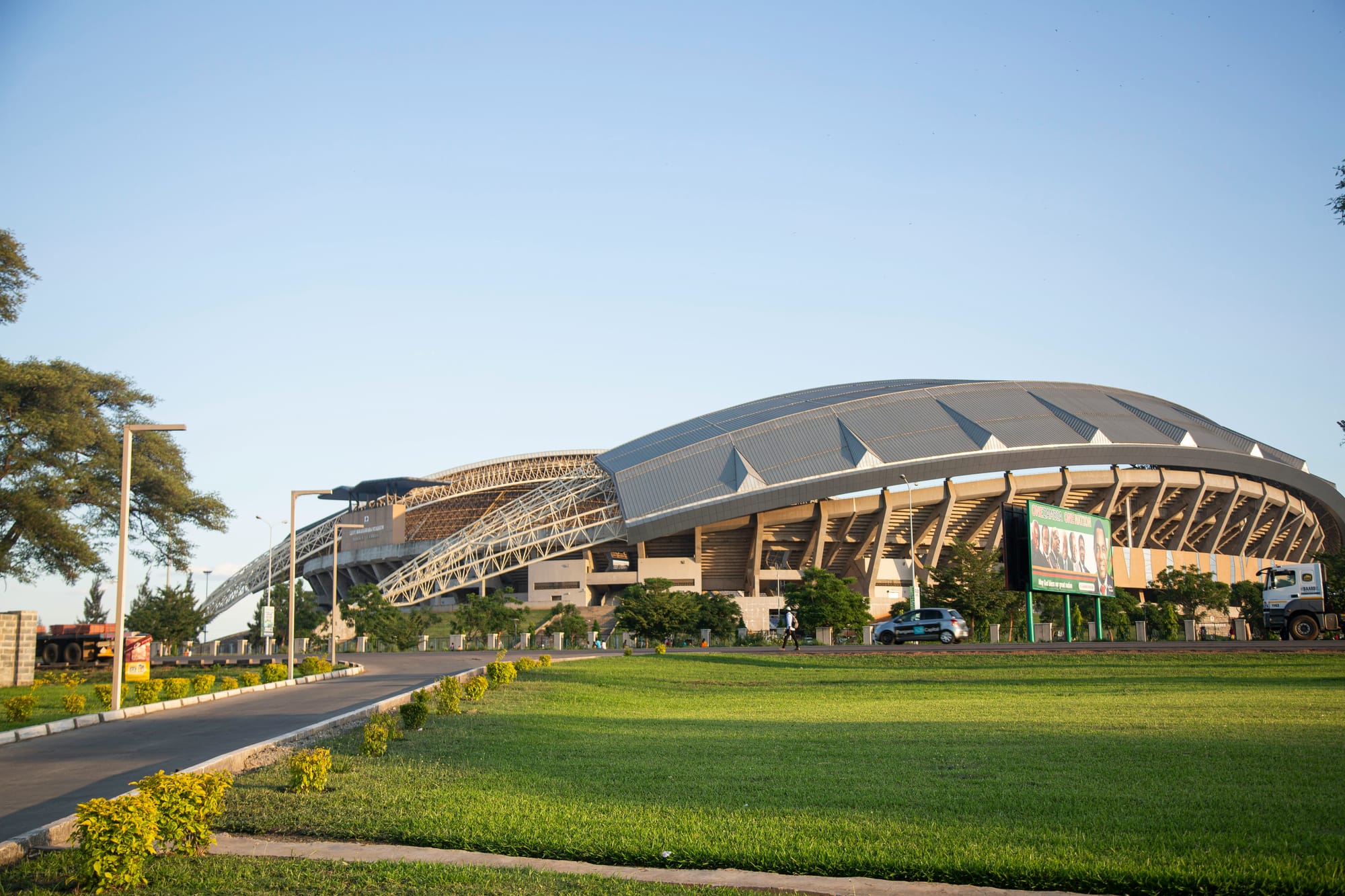
The country therefore votes twice. Once on 13 August, in a register kept by the Electoral Commission. And continuously before and after, in the register of prices, tenors, inventories, hedges and postponed decisions — a rolling referendum on whether the present regime will persist, whose results are announced daily in the exchange rate and the yield curve. The second vote does not wait for the first. It is being cast now, and the first duty of an analyst is to do openly, with disclosed instruments and stated uncertainty, what the whole economy is already doing privately, wordlessly, and with money.
What follows is that public forecast.
PART ONE: THE ELECTORAL SETTLEMENT
III. What Can Be Known Before an Election
A forecast is a disciplined statement about the distribution of outcomes consistent with what is already known. Electoral analysis usually commits one of two opposite errors: it describes every uncertainty and concludes that nothing can be known, or it converts weak indicators into a precise number and mistakes decimal places for evidence.
Some things are observed. The new map contains 226 constituency seats. The final candidate census contains 970 entries across 225 listed constituencies, with one unresolved numbering entry in the notice used for the model. UPND fields a candidate in every listed constituency. NRPUP appears in 153, leaving 72 gaps. There are 354 independent candidates across 176 seats. Citizens First appears in 78 constituencies, the Socialist Party in 63 and RP in 37. Forty-six constituencies contain only UPND and independents; eight UPND candidates are unopposed. These observations describe the electoral surface. They do not by themselves determine the vote.
Other things must be estimated: how much of a previous vote survives a boundary change; how much a candidate carries independently of a party; how a low-turnout by-election translates into a general election; how cost-of-living pressure interacts with free education, CDF and social transfers; how the former PF electorate divides among NRPUP, RP, Citizens First, the Socialist Party, independents and abstention; and what the absence of a parliamentary candidate does to the presidential vote in a constituency that candidate was unlikely to win.
A serious model must distinguish observation, estimate, calibration and scenario, and must explain the mechanism connecting them. The full instrument — the stable-seat panel of 108 constituencies unchanged across three elections, the hierarchy that lets new seats inherit information from parent constituency to district to province, the candidate-portability scoring, the correlated ten-million-draw simulation — lives in the companion pack with its validation statistics, and is only summarised here. Its purpose in this essay is single: it is the disciplined version of the forecast every actor in §II is already running.
IV. The Parliamentary History Beneath the Presidency
Zambia's elections do not proceed as a smooth series. A dominant party collapses. Its electorate and local organisations survive inside defectors, successor parties and independent candidacies. Those fragments compete until one vehicle acquires the presidential capacity to nationalise them. The new vehicle expands, absorbs local machines, governs, and eventually encounters the same problem: the party label weakens before the constituency organisations built beneath it disappear.
| Election | Constituency result | Independents | Structural lesson |
|---|---|---|---|
| 1991 | MMD 125; UNIP 25 | 0 | Regime transition overwhelmed local differentiation |
| 1996 | MMD above 130; smaller parties | 10 | Opposition absence produced independent substitution |
| 2001 | MMD 69; UPND 49; UNIP 13; FDD 12 | 1 | Elite fracture was nationalised through new parties |
| 2006 | MMD 74; PF 43; UDA 26 | 3 | Fragmentation consolidated into geographic coalitions |
| 2011 | PF 61; MMD 55; UPND 29 | 3 | The presidency changed without an FPTP majority |
| 2016 | PF 80; UPND 58; minor 4 | 14 | Independent local organisations became durable |
| 2021 | UPND 82; PF 60; PNUP 1 | 13 | A national wave changed government without erasing local machines |
The independent sequence — 0, 10, 1, 3, 3, 14, 13 — is episodic rather than linear. The electorate beneath an absent party does not disappear. It changes route. The 2001 election is the closest analogue to the elite fluidity of 2026: the third-term conflict fractured MMD into FDD, PF and other vehicles, and the fracture produced parties rather than independents because the defecting organisations possessed enough leadership, money and geographic reach to be nationalised. By 2006 the fragments had acquired geography. In 2016 and 2021, fourteen and thirteen independents entered Parliament despite intense two-party presidential competition. Independent success is not simply the residue of weak parties; it can coexist with strong ones when the national party fails to internalise a viable local machine.
IV-A. Voted Out, or Voted In? The Lucid Reading
A claim circulates among the incumbent's critics that deserves the discipline of the ECZ's own files: that Hichilema was not voted in come August 2021 — PF was voted out — and that he therefore holds no popularity of his own. The series answers it. Hichilema's presidential share ran 25.3% in 2006, 18.2% in 2011, and then 46.67% in the January 2015 by-election — a defeat by 27,757 votes against a state-resourced successor ticket — and 47.63% in 2016, where Lungu cleared the constitutional runoff threshold by 13,022 votes on 3,695,710 valid (a raw margin of 100,530) — while 85,795 ballots were rejected nationally, six and a half times the threshold margin, at rates ranging from one per cent in urban constituencies to five in rural ones across a five-ballot-plus-referendum election. Kanyama's own recorded rejections were 1,183, below the national rate; the live dispute there concerned results handling and verification, and the petition that would have tested it was dismissed without a hearing on the merits. The margins could have been thinner; they could hardly have been more consequential. A candidate who polls 46.7% and 47.6% against a funded incumbency, twice, within nineteen months, has a base — and the base is geographically verifiable: the provinces that gave him near-ninety per cent in 2021 gave him near the same in 2016.
The lucid decomposition of 2021 is therefore: 59.0 = 47.6 + 11.4. The first term is Hichilema's own coalition, persistent across cycles and older than PF's crisis. The second is the marginal accession — the PF collapse, the turnout surge, the youth wave. "Voted out" and "voted in" is a false binary that the arithmetic dissolves: both occurred, and the standing base is four times the size of the marginal wave. The critics' claim requires the 47.6% of 2016 not to exist. It is in the Commission's files.
Before running the reading forward, resolve a claim about the challenger that is both true and false: that Tonse is a new party posing a credible threat. NRPUP is new — a first-time presidential vehicle under a first-time presidential candidate. Its essence is not. It campaigns on a PF platform, under a banner Lungu himself created, through the patronage networks, local machines and distributive memory that PF assembled from 2001 to 2021. That platform was defeated in August 2021. It was not dead. What the rallies, the coalition theatre and the digital surge are reactivating is infrastructure that never stopped existing — and in that precise sense the momentum is real: the remobilisation of a twenty-year platform, not the improvisation of a new one, running on the asymmetry of memory the previous essay identified, in which the distribution years survive in political recollection with the terminal crisis amputated. But real is not unconstrained. The platform reactivates without the assets that produced its results: without incumbency, without the state, without its founder — under a leader whose authority the machine is still manufacturing — minus the 72 constituencies where it filed no candidate, minus the organisers who defected, and sharing its inheritance pool with four other claimants. The success condition therefore has arithmetic precision: to win, the reactivated platform must be more popular than Lungu was in 2021 holding everything, and roughly as popular as he was at his 2016 incumbent peak — while holding none of the instruments that produced either result.
Run the same lucid reading forward, and it inverts onto Tonse. Lungu in 2021 held full incumbency, a complete 156-constituency slate, state resources and a decade of brand — and polled 38.71%. Mundubile in 2026 holds none of the first three, a new label, a fragmented anti-incumbent field sharing his pool with Citizens First, the Socialist Party, RP and 354 independents, and no parliamentary surface at all in 72 constituencies — fifty of them in the incumbent's core provinces, where absence converts directly into presidential under-harvest under §VII's logic. To force a runoff he must poll materially above the share Lungu achieved with everything Mundubile lacks. The only direct observation available is Chawama — the deepest urban stronghold of the old machine — where the Tonse-line two-party share fell from Lungu's 63.7% in 2021 to 55.3% in the January by-election: a compression of 8.4 points, in victory. Nothing yet observed suggests the successor outpolls the original; the one measurement says the opposite.
A fourth constraint compounds the other three, and it is the one §IV's history predicts: the defections run the wrong way. The structural law of Zambian party collapse is that the electorate and the local organisations survive inside defectors — and in 2026 the defector flow runs toward the incumbent, not the successor: former PF ministers, MPs, councillors and organisers standing on UPND tickets in the old strongholds, with credible paths to victory as MPs. Each such candidacy does three things at once. It subtracts machinery from the inheritance Tonse is counting — the ward structures, agents and mobilisation networks follow the defector, so part of the estate the delta table shows flowing to Other flows instead directly to the incumbent. It adds surface where UPND's own brand caps: a defector on a UPND ticket is the translation layer the Vice-President's northern circuit works to build, one constituency at a time, and under §VII's logic the defector need not even win — the campaign surface alone either delivers the seat or compresses the inherited margin, and in both cases harvests presidential delta for Hichilema in terrain his own label cannot reach. And it signals: a politician who defects is staking a career on a forecast, which makes the defection ledger the political class's own poll — the §II referendum conducted by its best-informed voters. The comparison with 2001 completes the reading: then, the defectors built new parties, because their organisations had national reach and the fractured incumbent had no presidential pull; now, they join the incumbent, because the successor vehicle lacks presidential capacity. Same test, opposite verdict. Tonse must therefore beat Lungu's benchmark while bleeding the machinery the benchmark was built on — and the candidate register, cross-referenced against the 2016 and 2021 nomination files, enumerates the bleed candidate by candidate; the count belongs in the companion pack's next release.‡
And the offset question — whether massive turnout in the old strongholds plus urban Lusaka and the Copperbelt can override the margin compression in the 72 gaps — has a quantitative answer, and it is no. Reconstructing the national share from province weights and testing the conjunction: even an urban collapse of five and a half points (nearly twice the unattached-bloc module's worst quadrant), stacked with a ten-point turnout premium across Luapula, Northern, Muchinga and Eastern, while the candidate gaps hand the incumbent only minimal additional core harvest, lands the national share at approximately 53% — three points short of the threshold. No regional mobilisation geometry reaches the runoff from this baseline. What reaches it is a national swing of roughly six points, moving every province at once — a campaign-wide collapse of the continuation premise itself, of the kind 2015–16 delivered against the mid-term commodity crash. This is the correct decomposition of the forecast's runoff tail: it is not the probability that Tonse's machine performs; it is the probability of a national event, and the rallies, the coalition theatre and the digital operation of §VIII are best read as an attempt to manufacture that event — to convert momentum into a nationwide re-pricing — because the arithmetic offers no other route. The falsification conditions of §XII watch for exactly that conversion.
V. Turnout Is a Mobilisation Regime
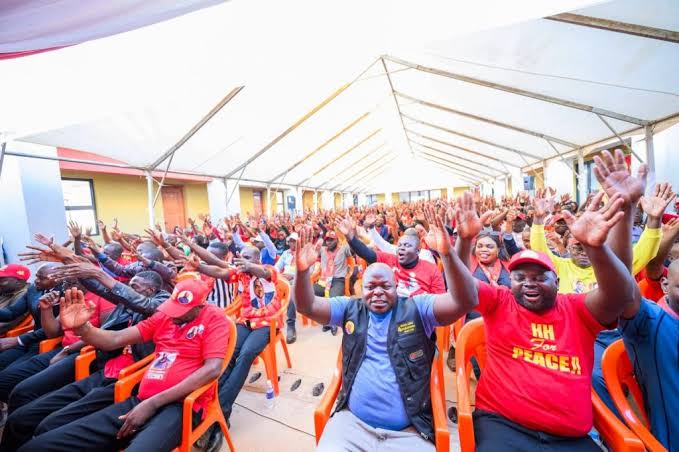
Competitive-era turnout is bimodal rather than smooth. The 2011 and 2016 elections sat in the mid-fifties. The 2021 election reached 70.6% — not the next point on a trend but a mobilisation event: a complete national opposition vehicle, widely visible economic costs, and a belief that participation could remove the government.
The central 2026 assumption is approximately 64.5%, with a broad 90% interval of roughly 57–72%. But turnout alone does not favour a party; its composition does. A lower-turnout election in which UPND's 2021 coalition disproportionately stays home is a different event from one in which the former PF electorate remains unpersuaded by the successor ticket. Turnout is therefore shocked by province, coalition and organisation rather than reduced to one national factor. And the composition question has a demographic centre that deserves its own name: the youth vote. The census age structure implies that a majority of the eligible electorate is under thirty-five, and on the order of one and a half to two million Zambians have reached voting age since August 2021 — a first-time cohort larger than most provincial electorates, with no adult memory of any government before PF and only adolescent memory of the crisis that made 2021 a mobilisation event. That event was itself substantially a youth surge: the register swelled and the queues lengthened because young voters concluded that participation could remove a government. The 2026 turnout-composition shocks in the model are therefore, to a first approximation, youth-turnout shocks — the decisive margin lives in whether the 2021 youth coalition re-mobilises, defects, or stays home — and both campaigns know it: the Heroes Stadium production and the digital-surrogate operation are not two strategies for two electorates but two languages aimed at the same one. Beneath this sits a mechanism the forecast must carry into 2031: crisis memory has a demographic half-life. The incumbent's central asset — the memory of the previous settlement's terminal crisis — depreciates by cohort replacement at roughly three hundred thousand new voters a year, while the qualitative anchor is inherited culturally and does not depreciate at all. The electorate that remembers why the repair was necessary is being replaced by one that must take it on testimony.
Inside the youth majority sits a sharper object still, which the register conceals and the census reveals: the unattached register — voters who are never-married and childless, holding no household of their own. Imputing the census and DHS structure onto the certified roll (the ECZ publishes no marital breakdown; everything here is graded Estimated), the urban portion of that bloc — concentrated in Lusaka, the Copperbelt and the line-of-rail towns — is approximately 0.9 to 1.1 million voters: eleven per cent of the national register, on the order of the entire 2021 presidential margin — and the order, not the near-coincidence of point estimates, is the claim that survives adversarial parameter bands, whose fifth percentile is still two-thirds of that margin. Some 600,000 of them sit inside Lusaka and the Copperbelt alone, against a Copperbelt presidential balance the model already scores at 50.7%.
Why this bloc and not youth in general: because the fourth settlement's social anchor is household-mediated, and the unattached voter stands outside nearly all of it. Free education requires children in school; school feeding requires the children; FISP requires the farm; the cash transfer targets vulnerable households; only the CDF's youth grants and bursaries touch this voter at all. The claim carries its own stress test: roughly half of this bloc lives inside parental households that do receive the anchor, so receipt is a gradient rather than a wall — personal receipt near zero, household-mediated receipt partial and attenuated, an anchor-untouched core of some six to seven hundred thousand. But the gradient does not rescue the anchor, because an indirect benefit educates a sibling; it does not employ, house or transport the voter. Meanwhile the cost side arrives in full: rent, transport, mealie meal, data, and above all the waiting — §XIII's graduate, multiplied a million times. Maximal grievance exposure, minimal programme receipt, cheapest digital mobilisation, and no patronage network holding it in place: that is the definition of a swing bloc, and the arithmetic confirms it. Anchoring the bloc's baseline to its observed 2021 behaviour — wave-year turnout, a share slightly above the national — and running the scenarios from there, the bloc alone spans roughly three points of the national presidential share, from a repeat of 2021 at one end to mobilised defection at the other: more than half the buffer between the 55% centre and the first-round threshold. And the scenario grid corrects the lazy reading before a strategist can adopt it. The bloc's stay-home scenario costs the incumbent only about half a point, because at 2021-anchored preferences the abstainers are still marginally his; the dangerous quadrant is mobilised defection — 2021 turnout with a Chawama-class preference — worth two to three points against, which alone moves the ensemble's first-round band toward the hard-stress case. Everything therefore turns on the one number no instrument in the country currently measures: the bloc's present preference, on which the sign of every turnout effect flips. Chawama's two-party reading suggests the defection is real in one constituency; no national evidence yet grades it. Two disciplines complete the module. This analysis decomposes the forecast's existing urban and turnout-composition uncertainty rather than adding to it — the worst bloc scenario still lands inside the ensemble interval — so it names where the risk lives without widening the bands. And it is falsifiable within days of the count, at ward level, without waiting for the Commission's consolidated file: results are announced and posted at each polling station once counting ends, the test set is four compact urban wards of a few dozen stations each, and the posted returns can be photographed in a morning — a provisional score within seventy-two hours from the station walls, a definitive one when the full station-level file is published. If the bloc theory is right, turnout and presidential-share deltas against 2021 will co-move in the high-density urban wards — Kanyama, Matero, Chawama, Chimwemwe — and move much less in the family-suburb wards of the same districts. That prediction is registered here, beside the others in §XII. A settlement whose anchor reaches households cannot be anchored among voters who have not yet formed them; the unattached register is where the qualitative campaign and the quantitative record meet with no programme in between.
Turnout is not weather. Campaign surface helps produce it.
VI. The Omitted Event, and What It Taught the Model
The original by-election register omitted Chawama, 15 January 2026, where Bright Nundwe of the FDD defeated UPND's Morgan Muunda 8,085 to 6,542 — and where, per the ECZ declaration, the candidate NRPUP has since adopted for the constituency received 319 votes. The omission was found not by checking the register's arithmetic, which was exact to the rejected ballot, but by independently enumerating the ECZ by-election calendar against it. The lesson is now encoded in the pack's update protocol as a standing instrument: a register that reconciles internally can still be incomplete, because internal tests interrogate the frame's contents and never the frame.
The correction did not materially change the national mean. It changed the confidence attached to it — the Lusaka by-election signal moved from approximately zero to clearly negative on the register's level-based measure — and it disciplined the headline: the final forecast averages model families, down-weights stale polling and adds a fat-tailed residual for omitted evidence and specification error. Chawama also cuts the other way, and the same standard applies in both directions: relative to 2021 the constituency swung 8.4 two-party points toward the ruling party, with the opposition's collapse flowing to Citizens First and fragmentation rather than to UPND. The level says one thing, the swing another; the model records both and lets neither speak alone.
Ten million repetitions of a defective assumption remain a defective assumption.
VII. The Election Is a Delta Harvest
A presidential election is not a collection of constituencies to be won. It is a national sum assembled inside constituencies.
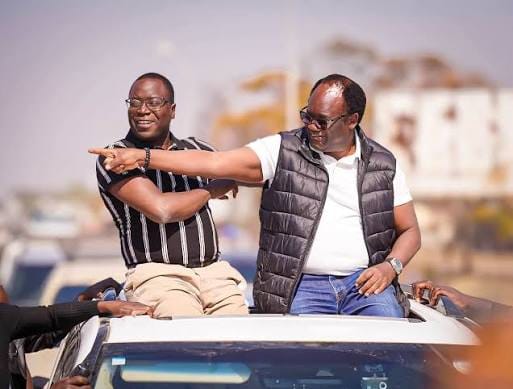
Where a party is weak, the task is delta harvest. Where it is strong, the task is margin protection. UPND does not need to win Chawama for Chawama to contribute positively to Hichilema's national result. It needs to improve its presidential share relative to 2021, preserve the turnout of its own supporters and compress the inherited opposition margin. A UPND candidate can lose the parliamentary election while succeeding strategically if Hichilema rises from 18% to 25%. A UPND MP can retain a stronghold comfortably while failing strategically if the presidential vote falls from 88% to 80%. The seat remains red. Thousands of national votes disappear.
The 72 NRPUP candidate gaps therefore impose two different losses. In competitive constituencies, absence prevents seat conversion. In uncompetitive constituencies, it causes presidential under-harvesting by removing meetings, ward structures, polling agents, household contact, election-day transport and activist incentives. An allied RP, independent or Tonse-aligned candidate may substitute for the missing NRPUP candidate, but only where the machinery actively transfers to the common presidential ticket.
A national popular vote is not assembled nationally. It is assembled locally under a national name.
VIII. Campaigns as Competing Mobilisation Systems
UPND: repair, delivery and cultural incumbency. The message sequence is: crisis inherited, repair achieved, social benefits protected, continuity required. The macroeconomic record is translated into free education, teacher recruitment, school feeding, CDF, mining jobs, roads and the promise that reliable power is being built.[3] The personal language of "Bally" converts a technocratic presidency into reciprocity. The Heroes Stadium launch was a popular-culture production — Yo Maps, Roberto, Slapdee, Chile One, alongside comedians, digital personalities and crossover political figures[4] — performing two claims at once: control of the institutional centre and the contemporary cultural centre. The nested architecture beneath it: the President nationalises, the Vice-President penetrates the northern circuit as a high-delta strategy, provincial figures translate, candidates harvest, ward structures deliver. The danger is that a complete machine can mistake coverage for enthusiasm.
Tonse: household pain, coalition theatre and psychological momentum. The central figure is Nakulu Mutinta nemisepela pamakasa — the grandmother carrying the household burden with the youth behind her, while leaders discuss balance sheets. The multilingual greetings perform a national coalition before the coalition is institutionally complete.[5] Mundubile's sharpest line places the central-bank reserve beside the hungry household: how can a government celebrate what he rounds to US$6.5 billion in reserves while people struggle to eat?[6] The campaign converts UPND's strongest macroeconomic achievement into evidence that preservation has arrived before distribution. The K500 maize promise gives the critique physical form — a 44% premium over the FRA's K347, K3.06 billion per million tonnes before transport, storage, financing and disposal risk — and the instruction "do not sell now" is politically sophisticated: it asks the farmer to enter Tonse's expected victory into a present commercial decision, recruiting the country's second vote to decide its first.
Tonse's strategy operates through rallies (coalition theatre), candidates (physical surface) and digital surrogates (the psychological campaign). It is rational because Tonse must use the campaign to create the integration a consolidated party would possess before the campaign. Its weakness is that online enthusiasm is endogenous: algorithms expose supporters to one another, and the coalition can win the argument among the already-decided while mistaking impressions for polling agents.
UPND is using organisation to harvest a national lead. Tonse is using momentum to manufacture the organisation required to overturn it.
IX. The Patronage Overhang
Tonse's PF inheritance is simultaneously its route to power and its first governing constraint. The coalition draws on former ministers, MPs, councillors, officials, financiers, contractors and local patrons who did not disappear when PF lost office. These networks carry memory, recognition and mobilisation. They also carry claims.
Mundubile is a comparatively new presidential vehicle placed above an older political infrastructure. He did not create every organisation now campaigning for him, and NRPUP does not possess enough independent parliamentary surface to govern without the wider federation. His candidacy therefore depends on actors who are helping to manufacture his authority rather than submitting to an authority already settled. Not every claim is corrupt: coalitions legitimately require representation, inclusion and the return of experienced officials. The problem begins when representation becomes repayment. The farmer expects K500. The household expects cheaper fuel. The contractor expects payment. The former official expects restoration. The financier expects access. The market expects restraint. All arrive at the same Treasury.
UPND risks second-term discretion after repair. Tonse risks first-term encumbrance before governing begins. Both risks are priced in Part Two — by the same instrument.
X. The Forecast
| Specification | HH median | 90% interval | First-round probability |
|---|---|---|---|
| Robust structural model | 55.6% | 50.5–60.7% | 96.4% |
| Historical transition model | 54.3% | 47.8–60.8% | 86.2% |
| Equal model average, no poll | 55.0% | 48.9–60.7% | 91.3% |
| Full robust posterior | 55.5% | 51.8–59.2% | ~99% |
| Prior-robustness ensemble (headline) | 55.0% | 48.9–60.8% | 93–95% |
| Hard uncertainty stress | 55.0% | 47.9–61.9% | 88.2% |
The poll does not create the 55% centre; remove it and the structural engines still arrive in the mid-fifties. The ~99% figure is faithful arithmetic on a confident prior — the structural prior alone assigns 96.4% before any current evidence, and no width of poll uncertainty can move the posterior below its own prior. The ensemble instead propagates the uncertainty of the calibrated organisation and topology parameters and averages across prior families. Hichilema is the clear favourite. The defensible first-round probability is 90–95%, with a serious but minority runoff tail. For Tonse to win, it must first compress Hichilema below 50% and then assemble a runoff coalition from voters whose first choices include the Socialist Party, Citizens First, RP and independents. Forcing a second round is the first task. It is not sufficient to win one. And per §IV-A, the runoff tail is a national-event probability, not a mobilisation geometry: no combination of stronghold turnout and urban swing observed or plausibly extrapolated reaches it regionally.
The constituency result. UPND expects 126.7 FPTP seats (median 127; conservative 90% range about 110–143); NRPUP about 51; Other about 48. The probability that UPND reaches the 114-seat FPTP majority is approximately 85–92% under conservative specifications.
The 2021-equivalent delta.
| Group | 2021 share scaled to 226 | 2026 expectation | Delta |
|---|---|---|---|
| UPND | 118.8 | 126.7 | +7.9 |
| Principal opposition | 86.9 | 50.8 | −36.1 |
| Other | 20.3 | 48.5 | +28.3 |
The arithmetic is the argument. Most of the parliamentary estate not inherited by NRPUP flows to Other rather than UPND — and part of UPND's own +7.9 is the defector channel of §IV-A: old-estate seats carried across by their organisations rather than contested against them. Opposition sentiment does not disappear. It de-institutionalises, defects, or reactivates — and the delta table is the price discovery among the three routes.
The provincial map. The Copperbelt is the parliamentary hinge: a nearly even presidential province (HH ~50.7%) where Other is expected to win almost ten of 29 seats because candidate gaps, former PF organisations and independents prevent the opposition presidential vote from becoming one parliamentary bloc. Northern approaches a three-way FPTP province. Chawama remains a likely non-UPND parliamentary seat but a presidential delta opportunity. Southern (24 NRPUP gaps of 29 seats), Western (16 of 26) and North-Western (10 of 19) are margin-protection provinces for UPND and under-harvesting provinces for Tonse.
XI. The Expanded Assembly
The amended National Assembly contains 226 constituency MPs, forty proportional-representation MPs — twenty women, fifteen youths, five persons with disabilities, elected indirectly through the presidential party vote — not more than eleven presidential nominees, the Vice-President and the three presiding officers: a maximum formal composition of 281.[7] The FPTP majority is 114 of 226; the elected majority after PR is 134 of 266. At the balanced centre, UPND begins near 127 constituency seats and roughly twenty-two proportional seats — about 149 elected members — and, with aligned nominees, a governing side near 161.
The enlarged chamber is simultaneously a stabiliser and a centraliser. Smaller presidential parties receive a legislative afterlife; independents receive no top-up; party leadership controls lists. The nominee pool can introduce mineral economists, engineers and power planners, or become a reward mechanism. The constitutional purpose is representation and expertise. The political temptation is reinforcement. Part Four returns to this chamber, because the list seats are also the pre-built gate through which a meritocratic bench can enter parliament without touching universal suffrage.
XII. What Would Prove the Forecast Unsound
The presidential forecast fails materially if Hichilema does not finish first; if he falls below roughly 49% or rises materially above 61%; if UPND fails to protect its exceptional core margins; if Tonse's rallies and digital operation produce substantially more polling-station organisation than its candidate topology suggests; if the unattached-urban bloc of §V mobilises at general-election rates while holding its by-election preferences; if allied candidates substitute almost completely for the 72 NRPUP gaps; or if smaller parties draw much more from the 2021 UPND coalition than from the anti-UPND pool. The parliamentary forecast fails materially if UPND wins fewer than about 110 or more than 143 constituencies; if NRPUP converts the former PF estate much more completely than the candidate map implies; or if Other finishes materially outside the broad 40–55 band.
These are not reasons to withhold the forecast. They are the reason the intervals exist.
Part One has measured the probability that the regime persists. Part Two asks what each regime would do with the persistence — and the reader should remember, entering it, that every actor in Part Two has already priced Part One.
PART TWO: THE TWO FIFTH SETTLEMENTS
XIII. What the Electorate Is Actually Judging
An election aggregates different memories into one number. The rural household may be voting on school fees, CDF, the clinic, fertiliser, maize and the road to the depot. The urban household may be voting on rent, transport, power, food, employment and the humiliating distance between macroeconomic stabilisation and the price at the till. The mine supplier may be voting on contracts. The graduate may be voting on waiting.
Inflation returning to the target band does not restore the old price level. A government that speaks only in rates can therefore be numerically correct and politically illiterate. The benefit of debt restructuring is dispersed through avoided catastrophe. The cost of adjustment is concentrated in the present. The social programmes are therefore not decorative additions to the fourth settlement; they are the political bridge that permits a quantitative reform to survive long enough to reach the household. But a programme whose permanence depends on one party remains a programme. A social floor whose financing, quality and audit mechanisms survive the party becomes part of a settlement.
And there is a mechanism beneath the gap between the reserve account and the till, which the next section states — because it is the law that governs the entire hinge.
XIV. The Law of the Hinge
Pass-through is not a function of the exchange rate. It is a function of the exchange rate's believed permanence.
A merchant repricing shelves downward, a developer re-costing a project, a bank extending tenor — each is writing an option on the kwacha holding. After 2015–16 and 2019–21, every Zambian price-setter carries a depreciation prior: appreciation is treated as transient until it has survived long enough to be boring, while depreciation is priced immediately at replacement cost. World-price increases transmit to the shelf at once; the appreciation transmits slowly, because inventory landed at the old rate and retail prices are sticky downward. The asymmetry is rational hysteresis, and each historical collapse raises the credibility threshold the next appreciation must clear. The dividend of stability is therefore released not by the rerate but by duration under the rerate. Time is the asset. The exchange rate must become boring before it becomes generous.
This is one mechanism observed at three moments. The reserve-and-the-bag gap exists because the repair is real in the accounts before it is believed at the till — which is why Tonse's critique works without the repair being false. The appreciation dividend of §XVII is conditional on believed duration, not on the spot rate. And the unwind of §XIX is the same referendum conducted by the fastest voters: the benefits of stability accrue at credibility speed — slowly, back-loaded, compounding — while the costs of a regime break arrive at portfolio speed, in a jump. Continuity pays like a coupon; reversal charges like a margin call.
The 2007–15 boom that repriced construction, credit and the Zambian city followed an appreciation that held — post-HIPC, multi-year — long enough to clear the threshold. The 2024–26 appreciation is eighteen months old against a decade of depreciation memory. It has not yet served the sentence the shop shelf requires. The election therefore falls inside the credibility lag: after the repair is real, before it is believed. The repair happened in the accounts; the election arrives before it happens in the prices; the vote is therefore on a settlement that has not yet paid its own electorate. That is the hinge, stated as a law — and it is the strongest argument in this essay for the architecture of Part Four, because rules that survive transitions are not merely how windfalls are kept. They are the credibility device that shortens the lag and releases the dividend at all.
XV. The Debt Wall Beneath Every Scenario
One series governs all the scenarios below and is published by the Ministry itself: the external amortisation profile. The restructuring converted default into a schedule, and the schedule stacks its heaviest service years across 2027–2031 — precisely the window in which the fifth settlement must be legislated, the copper expansions financed and the social floor maintained. Every scenario in the table that follows is, silently, a statement about whether that wall is climbed with rising exports and an intact preservation rule, or with renewed borrowing against them. The continuity cases assume the wall is serviced from the productive expansion; the reversal case is, at bottom, a description of what happens when new claims meet the wall first. The preservation rule of Part Four is not an ornament to this schedule. It is the mechanism that prevents the 2030s copper surplus from being spent twice — once on the wall, and once on the coalition.
XV-A. The 2021 Fork, Now Observable
Every scenario in the table below asks the reader to trust forward pricing. One fork requires no trust, because history has already run the control. Until August 2021, Zambia was the counterfactual: in default since November 2020, inflation near twenty-five per cent, the kwacha past twenty and falling at the fastest sustained rate in its history, reserves thin, arrears compounding, no market access, the Mopani balance sheet absorbed by the state without the capital to operate it and KCM in its third year of legal limbo. The question is what five more years of that machine would have produced — with the weather held common: the same copper prices, the same 2023–24 drought, the same 2026 war.
The counterfactual is constructed by extrapolating the observed 2019–21 dynamics rather than inventing new ones: domestic financing and central-bank accommodation continuing at their recorded pace; the kwacha depreciating at approximately its observed 2019–21 rate, with a step devaluation in the drought year on the Malawi pattern; no restructuring, so arrears that cannot be extended compound into the debt stock; no programme, so no drought financing, no emergency power imports, no fuel credit lines — the shock arrives and meets import compression instead of a buffer. Production loses what the repair actually bought: no S3 expansion decision, no Mopani recapitalisation, no KCM resolution, drought-year power unfinanced. Twenty thousand simulated paths, parameters banded around the observed record, graded Estimated throughout:
| 2026, five years after the fork | Counterfactual (P10–P90, median bold) | Actual |
|---|---|---|
| GDP, old base, official rate | US$16.8bn – 18.5 – 20.5bn | US$41.2bn |
| GDP at the clearing (parallel-blended) rate | US$13.7bn – 15.3 – 17.1bn | — |
| Kwacha per US dollar, official | 79 – 97 – 117 | mid-teens |
| Implied parallel rate | 111 – 138 – 170 | no parallel market |
| Real GDP, 2021 = 100 | 98 – 101 – 105 | ~123–125 |
| Inflation | 28 – 33 – 38% | inside the target band |
| Reserves | under US$0.35bn (weeks of cover) | US$6.4bn |
| Copper production | 648 – 675 – 704 kt | ~1,000 kt |
| External debt + unextendable arrears | ~US$23bn, unrestructured | restructured, serviced |
| Debt to GDP | 111 – 123 – 136% | manageable |
That is not a stylised disaster. It is Malawi with deeper starting debt — the same regime class one border east ran over the same years: step devaluations that fail, a parallel premium that reopens, fuel queues, fertiliser shortages, reserves measured in weeks, and a dollar economy that shrinks while the kwacha figures grow. The counterfactual Zambia of 2026 has a smaller dollar economy than the Zambia of 2021, five years of population growth notwithstanding.
And it is not only Malawi. This table has printed once before, in this country, with Zambian names in every cell. The machine of the counterfactual — the break with creditors, arrears that could not be extended, no programme, administered prices defended with vanishing reserves — is the machine Zambia ran to completion between 1987 and 1991: the May 1987 rupture with the IMF and the retreat into "growth from own resources"; debt service capped and arrears to the Fund compounding into some of the largest in the world; the auction suspended and the kwacha pegged while the parallel market set the true price; decontrol, riots, re-control — the Copperbelt in 1986, Lusaka in 1990 — inflation into triple digits, queues as the national logistics system, and the mines decapitalising underneath it all. Same dynamics, same outputs, and the same terminal event: the regime fell. The counterfactual above is therefore not a simulation without a fossil record. It is the third run of an experiment Zambia completed once, Malawi is completing now, and PF was five years into when the 2021 ballot interrupted it. The spiral was avoided in 2021 at the last constitutional exit. It must be avoided again in 2026 — and again in 2031, when the avoidance will be harder, because by then the copper surplus will be visible, and the anchor theory says the qualitative politics of distribution is at maximum strength precisely when there is finally something to distribute. Reflexive regimes are opportunity traps: a state whose policy is a derivative of its political cycle converts every windfall, every relief and every mandate into the financing of the reflexes that consume it. Zambia's booms did not fail to prevent its crises. They funded them.
The invoice, decomposed honestly. The annual gap between the branches — actual output minus counterfactual output, common weather — runs roughly US$7 billion in each of 2022–24 and then widens violently as the credibility trade of §XIV compounds on one branch and the shortage spiral compounds on the other: about US$15 billion in 2025 and US$19–23 billion in 2026, or roughly US$1,000 per citizen in this year alone. Cumulatively, the five years price at approximately US$58 billion — around US$2,800 per citizen — of which the real-output floor (the twenty-two-point real-index gap) is about a quarter, and the remainder is the price of the currency and the arrears regime: the machine, not the weather. Two disclosures keep the exhibit honest. The dollar measure overstates the welfare gap somewhat, since purchasing-power adjustment cushions part of a depreciation; the real-index gap of twenty-two per cent is the conservative floor. And the counterfactual is kind by construction: it assumes the 2019–21 dynamics merely continue, when default spirals historically accelerate — no bank stress, no deposit flight, no disorderly politics is modelled.
Three consequences for everything that follows. The 2021 fork now sits in the invoice series as its middle term: the sixty-year counterfactual priced the full oscillation at US$2,200–2,500 per citizen-year; the 2021 fork prices a single partial reversal, caught five years in, at roughly US$550 per citizen-year and compounding; the 2031 spread below prices the next fork at the same order. Three invoices, independently constructed, one consistent rate structure. Second, the PF-style reversion stress in the table below stops being an extrapolation of conduct and becomes the observed trajectory, resumed — its 2031 range of US$38–48 billion is simply this section's machine given five more years and a larger starting economy. And third, §XIII's observation acquires its number: the benefit of the repair is dispersed through avoided catastrophe, and the catastrophe avoided is currently running at about a billion dollars a month.
The electorate is not being asked to value a hypothetical. It is being asked whether it remembers the branch it was standing on.
XVI. Six Zambias in 2031
The original scenario set understated both directions, and its table understated its own model. The previous essay's dashboard carried per-capita income, poverty, debt and permanent assets precisely because nominal GDP is not the terminal metric; this table restores that discipline, adds the acceleration case as the bridge between the essays, and — because the method requires every standard applied to both sides — adds a continuity-failure case prosecuted with the same machinery as the reversal case. All levels are constant-2026 dollars on the common US$52.6 billion opening; the chain for each scenario (real index × translation path × rebase) is published in the companion model.
| 2031 profile | Nominal GDP | Per capita | Poverty proxy | Debt/GDP | Permanent mineral assets | Evidence grade |
|---|---|---|---|---|---|---|
| Full-Compounding Bull | US$107.3bn (US$113.7bn at 35% rebase) | ~US$4,200 | ~44% | low | US$6.1bn+ | Calibrated on Zambia's own 2007–15 transmission |
| 3 Mt Acceleration (bridge case) | US$85.3bn | US$3,348 | 48.3% | 30% | US$6.1bn | Named-project bridge; 0.47 Mt gap disclosed |
| Existing Policy | US$76.5bn | US$3,002 | 54.3% | 47% | US$1.1bn | Observed vector |
| Continuity with Slow Capture | ~US$70–74bn | ~US$2,800 | ~55% | ~50% | 0 | Calibrated: itemised 2026 election spending; preservation rule un-legislated 2022–25; second-mandate base rate |
| Managed Discontinuity | US$69.8bn | US$2,738 | 57.4% | 77% | — | Specified constraint vector |
| PF-Style Reversion | Illustrative stress: ~US$38–48bn | ~US$1,500–1,900 | 60%+ | high | — | Stress, calibrated on PF 2011–21 conduct; endogenous FX module pending |
Read the permanent-assets column before any other, because it carries the thesis: two continuity scenarios and two discontinuity scenarios all end at zero preservation. The risk this essay describes is not partisan. It is architectural.
The evidence grades enforce a symmetry the reader should test. The reversion case is calibrated on a decade of the claimant coalition's observed governing conduct — not on its campaign promises, which are quarantined as campaign-season observations. The slow-capture case is calibrated on the incumbent's observed governing conduct with the shock year quarantined by the same rule: the fuel-tax suspension and the agricultural overrun are contaminated observations in FY2026, where an external war and asymmetric pass-through make shock response and slippage observationally identical — they resolve at the sunset dates, and the scorecard carries them as open tests. What survives quarantine is clean: the IMF's separately itemised election spending;[1] a preservation rule never legislated through the 2022–25 window, when copper receipts were recovering and no shock supplied a reason — the precise window in which such rules cost no constituency anything; an input-distribution architecture structurally unchanged across four budget cycles; and a Zambian second-mandate base rate of two for two. Same instrument, both directions, grades shown.
And now set the spread against the previous essay's invoice. The distance from bull to reversion is roughly sixty to seventy billion dollars of 2031 GDP — on the order of US$2,000 and more per citizen per year. The historical counterfactual priced sixty years of oscillation at US$2,200–2,500 per citizen per year. The next five years re-run the entire historical experiment at compressed timescale. The forward invoice and the backward invoice are the same number.
The severe case remains an explicit stress, not a point forecast; its purpose is to let the exchange rate, mining response and financing regime become endogenous rather than assume the same favourable dollar translation across every government. Its range is graded as illustrative pending the FX module. The comparison later in this Part to South Africa's turn-of-the-millennium purchasing-power profile is made in constant 2026 international dollars on both sides; it embeds the real-appreciation path of the bull case, which is the Balassa–Samuelson consequence of the productivity vector, stated here so the assumption does its work in the open.
XVII. The Full-Compounding Bull
The original 3 Mt case reaches US$85.3 billion. It is a productive-capacity acceleration case, not a complete bull case. Once the stronger external account is allowed to change the price of capital, the purchasing power of income, the viability of construction and the breadth of domestic services, the central estimate rises to approximately US$107.3 billion on the conservative rebase — real index 143.4 to about 150.6, GDP per capita near US$4,200–4,460, PPP output of roughly Int$220–233 billion. That is approximately the purchasing-power profile South Africa possessed around the turn of the millennium, restated in the same constant dollars: sufficient to support recognisably South African-style urban markets and property formats without yet possessing South African industrial and financial depth.
The historical calibration is Zambia's own 2007–15 boom, when expanded mining, strong inflows and a stronger currency that held touched construction, transport, manufacturing, retail, property and services. The mechanism runs through two channels. The appreciation dividend: a household paid in kwacha becomes wealthier against imported goods; a developer faces lower costs for machinery, steel, glazing and solar components; a manufacturer imports productive capital more cheaply — all conditional, per §XIV, on believed duration. And the credit channel:
lower sovereign risk → lower yields → longer tenors → viable mortgages and development finance → construction
The government-security curve is connected to the skyline. A fall in sovereign risk eventually becomes a house, warehouse, factory, school or shopping centre — and every square metre pulls an upstream chain of quarrying, cement, steel fabrication, transport and services, while the new asset becomes collateral, the collateral supports credit, and the credit finances another enterprise.
The leakage test is the previous essay's retention coefficient, ρ. The bull case requires the stronger currency to reduce the cost of productive capital and the larger market to be met by domestic supply — that is, ρ rising as Q grows. The leakage path is ρ falling: appreciation financing imported consumption, speculative land and empty offices until the dividend leaks back out through the current account. One coefficient decides which economy the boom builds. Three million tonnes are the beginning. The compound economy is the result — and Part Four's credit machine exists to raise ρ deliberately rather than hope it rises.
XVIII. The Continuity Settlements: Compounding, or Slow Capture
The first UPND term was dominated by restoring variables that had approached zero: debt credibility, reserves, monetary stability, fiscal control, mining confidence, an institutional perimeter. A second-term mandate would be judged differently: by whether the repaired macroeconomy changes the firm, farm, school, power market and household balance sheet. The core programme is productivity expansion — reliable electricity, competitive power trading, irrigation, supplier finance, logistics, technical education, long-duration domestic capital, digital administration, and higher output per worker, hectare and unit of capital.
UPND's central risk is second-term discretion, and the slow-capture scenario is that risk costed rather than narrated. First terms inherit constraints. Second terms can begin to experience repaired institutions as their own creation and therefore their own property. Appointments narrow. Internal criticism becomes disloyalty. Procurement acquires political purpose. In the scenario's mechanics nothing dramatic happens: the preservation rule is drafted but never reaches the floor; CDF drifts toward pass-through invoicing; the input-distribution ritual survives another reform cycle because reforming it costs a constituency and keeping it costs only the future; the surplus is consumed by the 2029–31 electoral cycle. The 2031 GDP cost is modest — the number sits between existing policy and managed discontinuity — because drift preserves the objective function and merely decays the execution. The true cost is in stocks and in the next window: a preservation fund at zero when the copper price peaks; debt higher entering 2031; and a fifth settlement never built, so that 2031–36 inherits precisely the reversal exposure the 2026 vote was supposed to close. The fifth settlement requires the governing coalition to constrain itself precisely when its parliamentary numbers make constraint least necessary.
XIX. The Reversal Settlement: The Patronage-Fiscal Machine
The original regime-change forecast was too conservative because it modelled a reduction in execution, not a change in the governing objective function. The PF-style reversion case begins when coalition claims arrive faster than the productive expansion can finance them. The gap is financed first through borrowing, then arrears, then the domestic financial system, and finally — if the constraints are refused — through monetary accommodation. UNIP encountered the same machine under a command settlement. PF encountered it under a debt-financed populist settlement. The forms differed. The financing constraint did not.
The patronage system makes discretion valuable for reasons not captured by an ordinary welfare model: appointments, procurement, licences, boards, public employment, land, credit and protection increase the political value of office, so a rule-bound institution is not merely an alternative economic design — it is a reduction in the value available for coalition distribution.
The FX rerating is front-loaded. The appreciation, falling yields and foreign participation are components of one trade: policy credibility lowers expected depreciation, raising demand for kwacha securities. A political result that changes the expected regime reverses the trade — and foreign portfolio investors do not wait for the deficit to widen. They sell while bonds still contain the capital gains created by falling yields and while the currency remains strong enough to convert those gains into dollars. The sale creates the yield increase and depreciation they are attempting to avoid:
regime-change expectation → bond selling → dollar demand → depreciation → higher yields
The exchange-rate shock is therefore a jump process, not a gradual translation — a move toward or beyond K30 is an early stress threshold if the continuity trade breaks, amplified by importers bringing forward purchases, corporates hedging, exporters delaying conversion. Reserves can smooth disorder and buy time. They cannot permanently validate a regime the market no longer believes. This is §II's rolling referendum conducted at the fastest latency in the economy — the merchant and the fund manager differ in speed, not in kind.
The option in the ground. The mining response follows the opposite timing: investment decisions change immediately; reported production changes later. A mining group maximises the risk-adjusted value of the ore body, not tonnes. If tax, ownership, power and country risk lower the expected IRR below the hurdle rate, the reserve in the ground becomes more valuable than extraction: the mine produces enough to maintain covenants and workforce while deferring stripping, shafts, equipment orders and long-duration power contracts. Production separates into existing operations (inertia), committed projects (can slow) and discretionary expansions (can collapse). Zambia saw the mechanism under PF: current tonnes stayed resilient while the post-2020s production path was cancelled inside boardrooms. The first asset withdrawn from a reversing settlement is not the mine. It is confidence. The miner cancels the expansion before production declines.
Fiscal dominance, the same constraint twice. UNIP entered the trap through external shock, resistance to adjustment, deficits, money growth, controls and shortages. PF entered through inherited fiscal space, cheap external borrowing, opaque project returns, arrears, domestic financing and the loss of market access — the central bank supplying liquidity to a sovereign losing external access until monetary room was consumed by Treasury need. The terminal loop is familiar: money and liquidity support raise inflation; inflation and depreciation raise the cost of fuel, fertiliser and external obligations; the larger fiscal need demands more accommodation. The machine is mechanistic because each participant responds rationally to the preceding constraint — the farmer seeks a price, the household relief, the candidate reward, the investor safety, the Treasury financing, the central bank is asked to accommodate. No participant needs to intend the final result. The interaction produces it.
XX. The Reserve and the Bag
Tonse has identified the central political vulnerability of the fourth settlement. The government points to a rebuilt external buffer of US$6.4 billion; the opposition points to the household that cannot eat it, rounding freely upward as it does. Foreign-exchange reserves are not ordinary Treasury cash — they protect external payments, fuel, fertiliser, medicines, the currency and the capacity to absorb shocks, and cannot be transferred to FRA without an equivalent monetary, fiscal or external consequence. But the accounting correction does not dissolve the political question: why has preservation become visible before distribution? The answer is §XIV's law — preservation is visible at portfolio speed and distribution arrives at credibility speed — and the K500 promise is the distributive answer to the reserves critique: the reserve establishes a claim of national capacity; the bag identifies where Tonse says that capacity should become visible, while transferring price, transport, storage, financing and disposal risk to the public balance sheet and enlarging a politically allocable quasi-fiscal surface.
The fifth settlement cannot ask citizens to choose permanently between the reserve and the bag. It must protect the buffer, raise effective farm-gate income, finance targeted protection and prevent grain policy from becoming an off-budget patronage machine. The reserve must protect the future. The bag must feed the present.
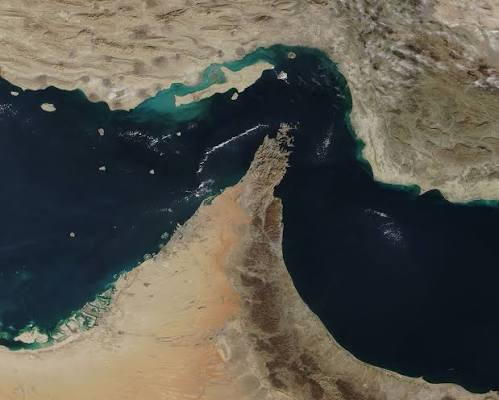
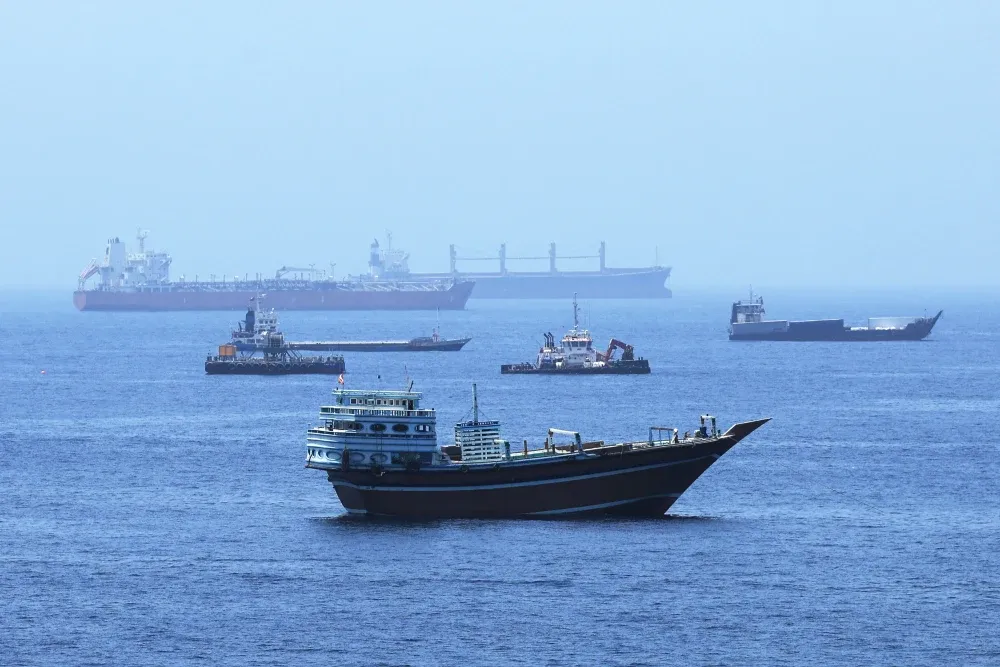
Straight of Hormuz
PART THREE: THE WEATHER AND THE MACHINE
XXI. The Hormuz Audit
The comparison with 1973 is not rhetorical. The first oil shock did not act alone; it landed on a fused architecture in which the state was owner, operator, financier, regulator, welfare provider and political allocator, and the producer was consumed to preserve the settlement built around it.
The 2026 Middle East war has already entered Zambia's fiscal accounts. The World Bank projects a 24% energy-price increase and a 31% fertiliser-price increase in 2026 under a baseline that assumes the most acute disruption eases. The IMF has lowered Zambia's 2026 growth outlook and attributes the reduction in the projected primary surplus partly to the war, fuel-tax suspensions, election spending and agricultural overruns.[8][1] Renewed Red Sea attacks continue to threaten supply chains and insurance costs.[9] Zambia is not situated on Hormuz. It is situated inside the price system Hormuz governs, and a landlocked country pays the international disruption and the inland kilometre.
The institutional test is the response, and it doubles as the resolution date for the quarantined evidence of §XVI: does tax relief remain temporary and targeted; is open access restored when the emergency passes; are fuel procurement terms published; does government protect vulnerable households without converting a shock absorber into a permanent allocation system? The oil shock is external. The import regime is endogenous.
XXII. El Niño and the Covariance Problem
NOAA's 9 July 2026 assessment reports a strengthening El Niño, a 97% probability that it persists into early 2027 and an 81% probability of a very strong October–December event, with the explicit caution that even the strongest El Niño does not produce the expected impact everywhere.[10] A super-El Niño is a serious scenario, not a district-level rainfall prophecy. For Zambia the danger is covariance: one rainfall deficit can strike maize, hydropower, food inflation, electricity, the currency, the budget and social protection simultaneously.
The power system is more resilient than in 2023–24 — solar, coal, emergency imports, regional interconnection and private trading let mines and corporates procure power through channels not wholly dependent on the public hydro system. This reduces the amplitude of the shock. It does not repeal the climate. The remaining danger is a dual electricity system in which mines secure private supply while households and small firms remain exposed to an undercapitalised public grid; mining demand should anchor additional generation and shared infrastructure rather than become an enclave solution. Agricultural resilience requires a water and market architecture rather than another annual input-distribution ritual: irrigation, aggregation, drought-resistant seed, warehouse receipts, crop insurance, predictable export rules, processing and a transparent strategic reserve.
XXIII. The Common External Environment
The 1970s oil crisis, the global financial crisis, Covid-19 and the 2023–24 drought demonstrate that Zambia does not choose whether shocks arrive. It chooses the balance sheet, institutions and productive diversity on which they land. The 2026–31 environment contains an unusual contradiction: oil, fertiliser, freight and insurance pressures raise the import bill while copper remains supported by electrification, grids, data centres and supply-chain competition. The same conflict can worsen the fiscal position and strengthen the price of Zambia's principal asset. That asymmetry increases the value of a complete settlement: the country can use the copper surplus to finance resilience, power and preservation, or allow the external shock and internal claims to consume the windfall before the productive system expands. And the deepest asymmetry of the coming decades is the one the previous essay named the phase shift — electricity → compute → automated production — which raises the strategic value of Zambia's metal while dismantling the cheap-labour ladder earlier late developers climbed. Part Four returns to it, because the patrimony is the hedge.
PART FOUR: THE FIFTH SETTLEMENT
XXIV. The Settlement Defined
The fifth settlement cannot mean a fifth administration. It cannot mean the UPND programme after re-election, because an architecture that survives only while UPND governs remains a policy cycle. Nor can it mean a Tonse coalition agreement, because a settlement that distributes without reproducing production will be consumed by the claims that made it popular.
It means the completion of the equation. N = P × C × D × V, where N is permanent national value — so that a country which produces, captures and distributes without preserving is not merely at a lower present value but is liquidating the estate that funds every other term. The previous essay's four commandments return here as the settlement's specification, verbs restored: production must be made contestable, sovereignty must be made measurable, distribution must be made contractual, and preservation must be made automatic. And the settlement has a test, stated once and used throughout what follows: the fifth settlement is achieved when the economy stops voting on the government and resumes voting only on prices — when the trader, the bank and the mining board no longer need to be election forecasters, because the rules that govern them survive any result.
Two systems sit beneath the four terms: an execution spine protected across political transitions, and a succession system capable of reproducing the technical cadre required to operate the economy. The sections that follow build the machine in order: the claim, the patrimony, the custodians, the credit, and the political architecture that keeps every prior section switched on.
XXV. Seven Agreements
1. Productive capacity must be reproduced. Every tax, ownership and regulatory instrument must be scored partly by what it does to future production. The state should retain the ability to change policy but should not destroy the assumptions under which long-duration assets were built without pricing the consequence.
2. The national claim must be senior and measurable. Royalties, corporate income tax, windfall instruments, dividends, carried interests, local procurement and citizen ownership are instruments, not ideological identities, to be compared by present value, risk, seniority, enforceability and permanence. The national claim should rise automatically with rent rather than through repeated discretionary shocks. §XXVI builds this instrument.
3. Distribution must be contractual. Communities should not wait for ministerial generosity. CDF should be tied to project publication, transparent procurement, engineering verification, maintenance and beneficiary registers. A classroom without a teacher is expenditure, not capital formation.
4. Preservation must occur before recurrent politics. A predetermined share of mineral receipts above a reference price should enter stabilisation and long-duration assets before the residual reaches ordinary expenditure. §XXVII builds this machine and prices it.
5. The execution spine must be protected. The Treasury, Cabinet Office, planning institutions, procurement system, mining regulator, energy planner, revenue authority and statistics agency cannot be reconstructed after every election. Monetary stability acquired its pawl in the 2022 Act. The coordination layer requires an equivalent. §XXVIII extends the pawl.
6. Capability formation is infrastructure. Zambia requires a national formation and return system for mining engineers, geologists, power planners, hydrologists, statisticians, commercial lawyers, project financiers and public administrators. A scholarship becomes a national asset only when selection, formation, return, deployment, mentorship and protection all remain non-zero. §XXX gives this its political counterpart.
7. The settlement must survive the party that builds it. Would UPND retain the preservation rule if an opposition government controlled spending? Would Tonse preserve a mining regime it did not negotiate? Would either retain capable officials appointed by the other? If not, the fifth settlement does not exist. This agreement is the essay's conclusion, and everything between here and there exists to make its answer yes.
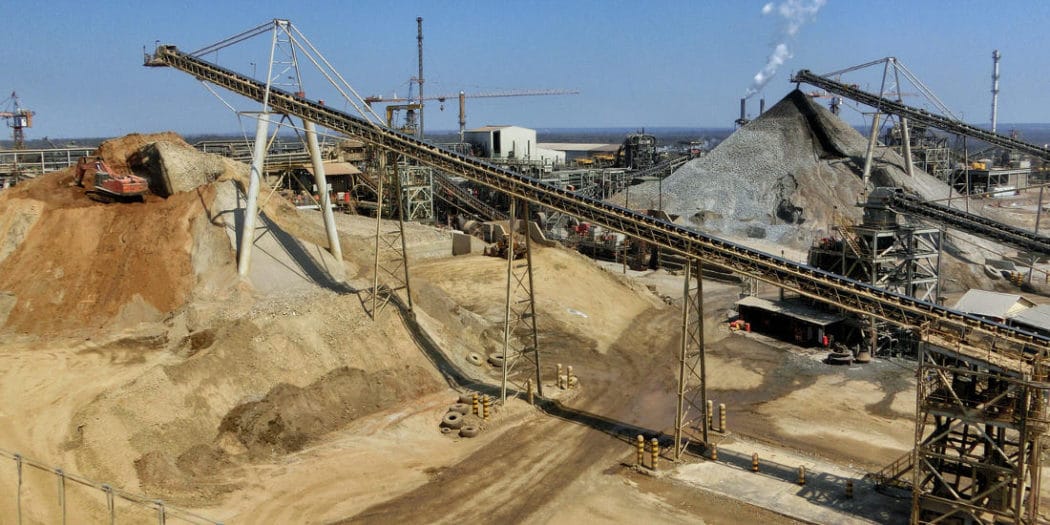
XXVI. The Royalty State
Begin with the diagnosis the prescription requires. Zambia's current mineral fiscal regime — the sliding-scale royalty, corporate income tax with royalty deductibility restored in 2022, and ZCCM-IH's minority equity positions — is a genuine improvement on the whipsaw it replaced: a senior royalty stable across price bands is the learned negation of the 2008–09 windfall-tax arc, in which capture was imposed at the peak and removed at the crash, teaching capital that the rules are the cycle. But two deficiencies remain. The equity leg of the national claim is junior, discretionary and litigable — it pays when operators declare dividends, which is to say when they choose. And nothing in the regime rises automatically with the rent now being created by a secular repricing: the electricity–compute order has made copper strategically scarce while global development bottlenecks lengthen, widening the surplus between full project cost and realised value. A generational bargaining range has opened, and the current instruments do not automatically claim it.
The correction rests on a fact of law, not a theory of tax: the state owns the mineral estate. All minerals are vested in the President on behalf of the Republic. A carried interest and a commercial royalty attached to every new mining licence are therefore not fiscal impositions. They are the landowner's rent — consideration for the grant of rights over a finite asset the nation owns outright. A developer prices the rent into his bid the way a tenant prices a lease, and the only question the arithmetic must answer is whether the residual after rent clears the hurdle rate — a question an auction settles better than a ministry. Fix the carry and the royalty as standing terms of the estate; let bidders compete on work programmes and bonuses; and the rent is priced by the market, on the owner's terms. Because the claim is a property consideration set at grant, it is contractually senior and survives governments: reversing it is not a policy change but the expropriation of a bargain the state itself wrote. Agreement 3 demanded distribution be contractual. The ownership framing makes capture contractual too — cycle-invariant by construction, with nothing to renegotiate at the peak and nothing to concede at the trough.
The state's role extends one step upstream, and only one. As prospect generator — never operator — the state funds the cheap, high-information stages of exploration: geophysics, geochemistry, early drilling, and the geological data monopoly that Mingomba's AI-driven discovery proved is the entry point to the open frontier. It packages and auctions the de-risked deposits, retaining the royalty and carry as compensation for discovery risk actually borne. This inverts ZCCM's fatal design: the old state held operating losses and junior claims; the royalty state holds senior claims and no operating losses. And it completes preservation's other half — reserve replacement is the only preservation that operates on P rather than on money: a state that explores is converting current cash into new natural capital.
The precedent is domestic and already signed. In 2023 ZCCM-IH exchanged the dividend rights on its 20% of Kansanshi for a 3.1% gross-revenue royalty, retaining the shares. The state discovered in cash what this section states in principle: a smaller claim on revenue beats a larger claim on residual profit, because the royalty is paid from first concentrate, indifferent to the operator's cost discipline, and senior to every dispute. The KCM counterfactual is the same lesson taught by its absence: ZCCM-IH's 20.6% equity paid effectively nothing through the entire Vedanta era — the claim was junior, discretionary and litigated — while a royalty of equivalent conversion on the same production at the era's prices would have paid on the order of half a billion dollars, through every dispute, because royalties are paid before the fights start. The equity paid in litigation; the royalty would have paid in cash.
The programme therefore has two legs. Prospectively: a commercial gross royalty — priced off the observable market in mining royalties, where the transaction record of the listed royalty companies supplies comparables no minister can invent — plus a carried interest on every new grant, applied prospectively only, never retroactively. Immediately: the conversion — ZCCM-IH extends the Kansanshi structure across its existing portfolio, exchanging dividend economics for gross royalties at value-neutral commercial ratios while retaining shareholdings, board representation and, where the stake is control-adjacent, a golden share. This is not a sale; it is what the signed precedent actually did, applied to the whole book.
And the pricing standard must be stated in both directions, because the familiar caution runs only one way. Legally, the commercial royalty is the mineral owner's rent; economically, it forms part of the project's total sovereign burden, and an excessive burden sterilises the resource — the option-in-the-ground logic of §XIX, turned against its own owner. But the converse is equally a failure, and it is the one Zambia has actually lived. Where the state grants a valuable deposit on terms below its scarcity value, the investor's return decomposes into two parts:
investor return = required return on risk and capital + unpriced sovereign rent
The first is necessary — it is what induces exploration, development and operation, and the operator who bears genuine geological, construction, price and operating risk deserves every basis point of it. The second is not compensation for anything. It is a transfer created by the owner's failure to price the estate: a licence arbitrage, in which the licensee captures scarcity value belonging to the nation. Taxation does not close the gap, because the instruments price different things — corporate income tax is the state's claim on accounting profit after costs, allowances, losses and transfer-pricing questions; the commercial royalty is the owner's price for granting extraction rights at all. A country can collect its CIT and its statutory royalty in full and still have given the underlying licence away.
The owner's claim should also rise as the owner's contribution rises. A frontier licence with little geological information must leave substantial upside to compensate exploration risk. A deposit the state has de-risked — public geophysics, public drilling, known metallurgy, infrastructure access, a competitive auction — can sustain a much larger claim, because less uncertainty remains for the investor to bear: as the state reduces risk, the required investor return falls and the residual owner's rent rises. This is why the prospect-generator model and the pricing standard are one design, not two — a state that funds the de-risking and then fails to reprice the grant is giving away the value created by its own public information. And the auction is the instrument that reveals the boundary: if several credible developers accept the same fixed carry and royalty while bidding aggressively on work programmes and bonuses, the market has demonstrated that an investable residual remains and the terms are not sterilising anything. The correct standard is therefore neither the lowest government take nor the highest. It is the highest transparent, senior and durable national claim consistent with the project clearing its risk-adjusted hurdle rate — with the all-in stack tested against the conservative deck in the companion model's worked example. An excessive claim leaves the copper in the ground. An absent claim gives the copper away. Zambia's task is to eliminate both forms of mispricing.
The second form has a name in this country's history, and the previous essay already told its origin: the concessions obtained from Lewanika became the legal basis on which the British South Africa Company collected mineral royalties on Zambian copper for decades — until the eve of independence itself, when the rights were surrendered for compensation, hours before the flag changed. That was the original licence arbitrage: the estate's scarcity value flowing to the holder of a cheaply obtained grant while the owner watched. An unpriced or underpriced licence issued today by a sovereign Zambia recreates the same transfer with the coercion removed — the arbitrage continued by consent, administered by the estate's own government. The royalty state exists to end it. The underpriced licence is the concession in modern dress. No more colonial arbitrage.
The optimum, then, lies between surrender and sterilisation, and the owner's task is not maximal rent but the rent that keeps the multiplication non-zero — the fifth settlement stated as a single leasing decision.
XXVII. The Patrimony: Two Funds and Their Arithmetic
The royalty stream requires a destination that recurrent politics cannot reach, and the destination is two accounts under one rule, on the Chilean division of labour.
The Stabilisation Fund runs on a structural-balance rule: deposits are the fiscal take on copper revenue above the reference price of the deck, capped at 5% of GDP, with overflow spilling to the endowment; withdrawals occur only under specified price, climate, disaster or financing conditions. In the companion model's simulations — prices above reference in about six years of ten, drought-class draws on the 2024 pattern every seven — the fund reaches roughly US$4 billion by 2040 and its working ceiling thereafter: a full drought-plus-import-shock absorber, and the sterilisation instrument that resolves the Dutch-disease problem the bull case would otherwise create. The previous essay ended its currency movement on the observation that a strong currency and a diversified economy coexist only with the fund in between. This is the fund in between — and by §XIV's law, it is also the transmission mechanism: the stability it purchases is what lets the appreciation dividend finally clear the credibility threshold and reach the till.
The Mineral Endowment Fund receives the royalty stream — the converted portfolio royalties flowing from 2027, on production that already exists, and the new-development royalties as licences are granted — plus the stabilisation overflow. Its arithmetic, at the conservative deck, deserves the table:
| Endowment fund, constant 2026 US$bn | 2027 | 2031 | 2035 | 2040 | 2050 |
|---|---|---|---|---|---|
| Annual royalty deposit | 0.24 | 0.78 | 0.78 | 0.78 | 0.78 |
| Fund at 5% real (global balanced profile) | 0.2 | 2.5 | 6.4 | 12.5 | 30.1 |
| Fund at 7% real (equity-indexed, US large-cap full-history geometric) | 0.2 | 2.6 | 6.8 | 14.1 | 38.4 |
| Equity profile, simulated P10–P90 | 2.1–3.0 | 8.7–20.3 | 18.2–64.0 |
The return assumption deserves its background, because a reader should not mistake the equity row for optimism. Seven per cent real is not an upside case; it is approximately the long-run historical geometric return of US large-cap equities after inflation. The S&P 500's total-return history, dividends reinvested, has compounded at roughly 9.5–10% nominal over very long periods: on Damodaran's series, US$100 invested at the start of 1928 becomes about US$382,850 by the end of 2018 — roughly 9.5% compounded annually — and after inflation of about 3% that is a real return near 6.5–7%.[22] Siegel's two-century series reaches the same neighbourhood, 6.5–7% real since 1802;[23] the Dimson–Marsh–Staunton dataset puts US equities near 6.5% real since 1900.[24] Three disciplines then attach, and the table encodes each. Geometric, not arithmetic: the figures above are compound realised experience, not the higher arithmetic mean that inflates projections. Survivorship: the US series is the survivor's series — DMS put the world equity real return nearer 5%,[24] and a fund holding global equity for governance reasons should expect the lower bound, which is why the 5% row is not a bond case but the globally diversified one, roughly the realised net-real experience of Norway's fund since 1998 under a 60–70% equity allocation.[25] And volatility: a 17% annual standard deviation is the price of the equity premium, which is why the table reports the simulated P10–P90 band rather than a single path, why the accumulation-phase deposits are contractual rather than discretionary — a fixed royalty schedule is the world's most disciplined dollar-cost averager — and why the entrenchment of §XXVIII is not optional at this allocation. The two return rows therefore bracket the honest range of historical evidence: the endowment's central planning case is the 5–7% real corridor, its upside is the band, and nothing in the table requires the future to be kinder than the recorded past.
Mark four properties. The dead decade is abolished: because the conversion monetises claims the state has held since 2000, deposits begin in the current term, before the first new mine pours — the seed capital was never missing; it was sitting in ZCCM-IH's share register in the wrong instrument. The crossover arrives around 2040–44: from that year the fund's own investment income permanently exceeds the royalty deposit — the compounded claim out-earns the ore, and by mid-century the endowment is in effect the country's second-largest mine, one that never depletes, never floods and never renegotiates. The compounding premium is the answer to every "why not spend it now": against roughly US$17 billion of cumulative deposits, the equity-indexed fund holds roughly US$38 billion by 2050 — the excess is the pure price of patience, the arithmetic content of the previous essay's finding that the oscillation consumed its own compounding. And the raid is priced: consuming the entire fund in the 2031 election year yields US$2.5 billion once and destroys several times that in 2050 value; abolishing the rule costs the full endowment. The equity indexation is itself a governance device before it is a return assumption — indexed global equity is the one asset class no minister can direct to a constituency and no board can steer to a contractor. The fund holds the world so that no one in Lusaka can hold the fund.
The consolidated sovereign balance sheet these instruments build, alongside the reserves and the residual commercial holding:
| Constant 2026 US$bn, medians | BoZ reserves | Stabilisation | Endowment | ZCCM-IH (equity + carries) | Total | % of GDP |
|---|---|---|---|---|---|---|
| 2026 | 6.4 | — | — | 1.5 | 7.9 | 15% |
| 2031 | 7.8 | 1.2 | 2.6 | 4.6 | 16.2 | 25% |
| 2040 | 11.1 | 4.0 | 14.0 | 4.9 | 33.9 | 35% |
| 2050 | 16.4 | 6.7 | 36.3 | 5.6 | 65.0 | 43% |
In 2026 the sovereign balance sheet is 80% central-bank reserves — one pillar, raidable only by catastrophe. By 2050 it is four pillars with four different clocks: reserves for months, stabilisation for the cycle, endowment for generations, and the commercial holding whose income feeds the middle two. At 43% of GDP the country passes Botswana's ratio and triples Chile's. The doubling of the ratio while GDP itself triples is the fifth settlement expressed as one row of arithmetic — and the permanent-assets column of §XVI's table now has a formula behind every cell.
And the endowment carries one further function, which the previous essay's phase-shift warning makes the gravest: it is the state's preparation for the century in which the electricity–compute order matures. That order — electricity → compute → automated production — makes Zambia's metal strategically scarce while dismantling the cheap-labour ladder that every earlier late developer climbed, and it threatens the oldest channel through which production has reached households: the wage.
Consider what AI-driven productivity actually does to prices. It is deflationary — that is what productivity means: cognition, services and manufactured goods fall in price as automated systems produce them more cheaply. But the deflation is relative, and the rents do not vanish; they migrate to whatever the deflation engine cannot produce for itself. Software cannot deflate the physical substrate it runs on — the electricity, the transformer, the grid, the metal. In a world where the abundant factor approaches zero price, value concentrates in the irreducible inputs, and copper is the most irreducible of them. Resource ownership is therefore a hedge on the coming deflation, not despite it but because the resource is fundamental to the productivity gains doing the deflating: Zambia owns a claim on the bottleneck layer of the order that cheapens everything else — and through the fund it holds the double position: the state sells the compute order its copper, and indexed global equity, increasingly a claim on the firms converting electricity and metal into cognition, owns the compute order's output. The estate supplies the input; the endowment holds shares in the result. And on the fiscal side, the transition forces a choice of objective that must be stated precisely, because the rich world will state it wrongly for us. Where labour replacement arrives at scale, the West is already rehearsing its answer as universal basic income: compensate the displaced from capital income. That cannot be Zambia's answer, and the fund's own arithmetic proves it before philosophy is consulted — a 4% draw on even the 2050 endowment spread across thirty-one million citizens is roughly fifty dollars a head a year: trivial as income, transformative as a budget. The purpose of the endowment is therefore not to pension labour off. It is to protect and enable human labour against the automated century: the draw is the permanent financing for the complements that keep a Zambian worker economical — electricity per worker, technical formation per worker, tools and machines per worker, and the AI systems themselves placed in Zambian hands, so that the technician, the artisan, the farmer and the engineer are armed with the same cognition capital that would otherwise displace them. Zambia's comparative advantage in that century is the physical economy — mining, construction, energy, agriculture, logistics, maintenance — where embodied skill and local presence resist remote automation longest, and where AI is a complement to the hand rather than a substitute for it. The distribution term is still rebuilt on ownership; but the ownership income buys capability, not idleness. Agreement 6 called capability formation infrastructure. The endowment is how that infrastructure acquires a funding source no budget cycle can cancel.
But the hedge carries its own expiry, and the essay must price it: the risk is recycling. Copper is infinitely recyclable, and roughly a third of the world's use is already met from secondary material. During the build-out decades — grids, electrification, data centres, storage — primary demand grows faster than the scrap stock can satisfy, and the ore in the ground commands its scarcity premium. But every tonne Zambia sells becomes part of the world's above-ground mine, and once the stock is substantially built, replacement demand is increasingly met by recirculation. The franchise is therefore a wasting one on roughly a generational timescale: maximal during the build-out, declining in relative value as the above-ground mine grows. The response is not lament but tempo — grow exports and production hard inside the window, and convert an aggressive share of the proceeds into the permanent claim, because significant savings during the build-out are the buffer against the franchise's own depreciation. Three clocks now run on the same deadline: the political clock of the anchor theory, under which preservation can only be legislated in this narrow interval; the technological clock of the phase shift, which sets when the wage channel thins; and the geological-economic clock of recycling, which sets how long the ore's premium lasts. The precision stands: the endowment does not hedge a copper bust — the stabilisation fund and the diversified economy of §XVII exist for that — it insures the distribution term against the century's specific threat to it, and it converts a wasting mineral franchise into a permanent financial one while the conversion is still on offer. The window and the warning are the same decade. The fund is the instrument that must be built inside it.
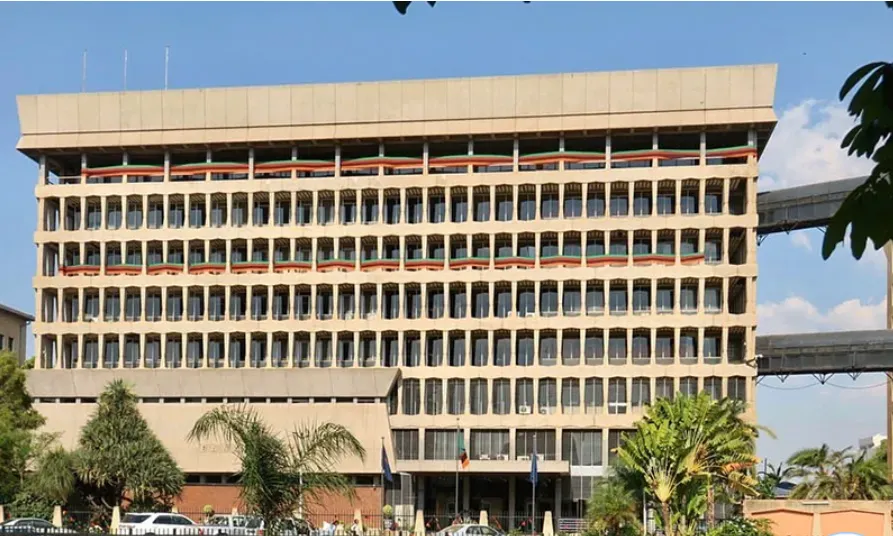
XXVIII. The Custodians
A balance sheet of this scale requires an answer to the oldest Zambian question: who holds it, and what stops the holder's successor? The reference systems solve two different problems, and the design needs both solutions.
Norway solves execution: the fund is owned by the Ministry of Finance but managed inside the central bank through a ring-fenced investment-management arm, with parliament setting the mandate and a fiscal rule — spend only the expected real return — closing the loop. Singapore solves separation: the monetary authority holds the reserves, GIC manages the state's financial wealth, Temasek holds the operating companies — three balance sheets, three mandates, three boards, so no single capture reaches the others — and above all three sits the constitutional two-key rule, under which past reserves cannot be drawn without the concurrence of an officeholder the government of the day does not control.
The Zambian translation uses institutions that already exist. The Bank of Zambia is the custodial apex — the only Zambian economic institution with a demonstrated ratchet, whose arc from norm to breach to the statutory protections of the 2022 Act the previous essay traced through three governors. It already holds the reserves; it acquires a ring-fenced investment-management division on the Norwegian model, managing both funds as fiscal agent under published mandates — which is precisely Chile, where the central bank manages the sovereign funds for the Finance Ministry. ZCCM-IH is the Temasek: a professionalised commercial holding for the retained shareholdings, the new-development carries and the energy assets, with its royalty income passing to the endowment by statute, not by dividend declaration — the pipe welded shut against the very discretion that starved it under the equity regime. The Ministry of Finance is owner, never operator: it sets mandates and receives the rule-based draws; it touches no security and directs no allocation. The design principle beneath the trio is the previous essay's central finding inverted into an instruction: the institution that earns, the institution that keeps and the institution that spends must be three different institutions, because every settlement failure in the historical panel occurred where two of those functions shared a balance sheet. Zambia has run the fused version twice. The domestic anti-patterns are instructive precisely because they are close: a state holding company chaired by statute by the President is the Temasek copy that demonstrates the governance failure this design exists to prevent, and a development bank with a mandate for everything is the DFI copy that demonstrates the other one. Zambia does not lack precedents. It lacks disciplined ones.
The entrenchment. The 2022 Act protected the institution that keeps the currency; the fifth settlement extends the same pawl to the institutions that keep the patrimony, in tiered lanes. Operational matters — benchmarks, allocation bands, manager selection — amend at a two-thirds majority, so the constitution never forces a technical change through an impossible gate; rigidity that blocks maintenance eventually legitimises rupture, which is the one failure mode entrenchment must not manufacture. The narrow, nameable acts — dissolving either fund, invading principal outside the specified triggers, repealing the Bank's custodianship — require a unanimous vote of Parliament, and behind unanimity sits the second key: a national referendum on the same acts, so that unwinding requires every legislator and the country. Unanimity to unwind is an unusual rule, and its defence should be stated plainly: supermajorities exist to protect present minorities, but an intergenerational fund's true stakeholders — the citizens of 2060 — hold no seats. Unanimity-class entrenchment is how an unrepresented majority acquires a proxy: every single sitting member must agree before the future is disinherited. That places the fund's dissolution alongside the Bill of Rights in protection, which is exactly where a claim held in trust for people who cannot yet vote belongs. And the equity indexation of §XXVII raises the stakes non-linearly: a 17%-volatility fund will post a losing decade at some point, the drawdown will become the qualitative campaign's exhibit, and the raid will arrive dressed as prudence. The instrument's expected value is maximised at precisely the volatility that maximises its political mortality. The equity election is therefore not a portfolio choice but a constitutional one — rational only under this architecture, and the difference between the protected path and the raided one is on the order of twenty billion dollars by 2050.
XXIX. The Credit Machine
The previous essay's counterfactual left one residual unexplained by static flows: roughly twenty billion dollars of private credit never deployed, a sixty-billion-dollar lending ceiling that never existed because the bank equity behind it never formed. The balance sheet of §XXVII explains the gap and preserves the surplus. This section is the machine that deliberately constructs what the counterfactual says compounding would have built — and it is built to the Korean discipline, not the Korean outline.
What made the Korean development-finance state work was not that the state directed credit; every failed state directed credit. It was that the allocation criterion was export performance — a test administered by foreign buyers who owed Korean firms nothing. A confirmed export order is the one document a minister cannot forge and a rally cannot substitute for. Subsidised credit flowed to whoever passed the foreigner's test and was withdrawn from whoever failed it; and export finance carries its discipline in its own collateral, since the receivable is foreign, the repayment is in dollars, and the loan self-liquidates in the currency it was made in. The targets are the retention coefficient's own address book: the supplier belt around the mines, power exports through the new interconnector, agro-processing into COMESA, the corridor where Zambian firms can invoice the Congo's ramp. This is ρ raised deliberately.
The vehicle sits under ZCCM-IH — the Temasek position, where Singapore held its development bank — as an operating financial institution, professionally boarded and regulated by the Bank of Zambia as any bank is. The custodian cannot own what it supervises; placing the lender inside the Bank would recreate the fused balance sheet in miniature. And the vehicle lends to no firm. It operates wholesale: it sets eligibility terms and extends funding lines and partial guarantees to licensed commercial banks, which originate, underwrite and hold first loss. The state supplies the conditions of credit; the market supplies the judgment of credit. The patronage surface collapses to zero borrowers — the counterparties are a dozen supervised banks, each risking its own capital ahead of the guarantee, and the politician who wants a loan directed must now convince a credit committee that eats the first tranche of his failure. The regulator can regulate, because the state has stopped competing with the regulated: every export loan sits on a supervised balance sheet under normal classification, provisioning and capital rules, and the facility's terms are contractual overlays on institutions already inside the perimeter. Banks that build export desks to access the facility acquire the skills and correspondent relationships permanently — the programme does not merely move money through the banking system; it trains the banking system, which is how the counterfactual's missing intermediation depth actually gets built.
Sequencing and scale: begin as an export credit agency — guarantees and insurance, capital-light, de-risking existing banks into export lending rather than competing with them, which addresses the actual Zambian constraint of liquidity without risk appetite — and add direct wholesale funding once the underwriting record exists. An initial capitalisation of some US$500 million from ZCCM-IH dividends supports a guarantee book of US$4–5 billion by the early 2030s; capital built toward US$3 billion by 2040 through retained earnings and, after the crossover, a defined slice of the endowment's rule-based draw, supports US$12–15 billion of export credit exposure — against today's entire private credit stock of roughly US$4 billion. The disciplines are statutory: export performance as the sole allocation gate; automatic exit from non-performers; single-borrower and group concentration limits from day one, because the Korean nexus still detonated in 1997; one mandate, with no SME policy, no bailouts and no social lending, which are budget functions wearing a bank's clothes; a published portfolio; and three clauses at the seam where every on-lending scheme leaks — the pass-through bound (a maximum spread over the facility rate, so banks cannot hoard the subsidy), eligibility verified against shipping documents and confirmed orders rather than projections, and refinancing only after disbursement, so the facility reimburses real credit rather than pre-funding intentions. All three are auditable from documents, which keeps the grading out of anyone's discretion.
The whole architecture now closes in one sentence: the royalty converts the estate into cash; the funds convert the cash into patrimony; the balance sheet converts the patrimony into sovereign credit; the credit machine converts sovereign credit into bank funding; the banks convert the funding into exporters — and at no point in the chain does a political officeholder choose a price, a borrower or a beneficiary. Every allocation has been surrendered to a test someone else grades: the market prices the royalty, the index prices the funds, foreign buyers grade the exporters, and bank capital grades the borrowers. That is this essay's answer to the patronage objective function — not the moral reform of discretion, but its systematic unemployment.
XXX. The Custodial Republic
Everything above is fiscal and administrative machinery, and machinery has never yet survived a Zambian transition on its own merits. The seven agreements' final question — would the settlement survive the party that builds it? — is a question about the political architecture, and the honest answer under the current architecture is no. Durable economic stability requires generations of policy consistency to compound; the anchor theory of the previous essay shows why a five-year electoral cycle, contested between a permanently available qualitative politics and a crisis-anchored quantitative one, structurally denies that horizon to any winner. This term can create the possibility of the fifth settlement — the pawls above can all be legislated by 2028 — but possibility is not durability, and 2031 arrives carrying the same reflexive potential as every peak before it.
The missing instrument is political, and it must be specified with care, because Zambia has heard this argument in its worst form: UNIP justified the one-party state in almost exactly the language of unity, long horizons and development above faction, and produced the first settlement's liquidation. The distinction on which everything rests is between engineered durability and earned durability. The custodial republic retains democracy as the removal technology — the voter's undiminished power to expel a failing or predatory custodian — while installing meritocracy as the operating technology, and its durable advantage must be produced by performance and remain continuously revocable. Singapore is the canonical proof that a parliamentary system can sustain generational policy horizons; Botswana is the nearer and stronger one, already in this essay's corpus: a durable advantage earned across six decades, a technocratic pipeline, a preservation fund built at the peak — and then, in 2024, the ruling party removed peacefully after fifty-eight years. Botswana is the existence proof that generational dominance and the removability criterion can coexist. That coexistence, not the dominance, is the design.
The meritocratic instruments locate where they are both legitimate and effective — and pointedly not at the ballot, because capability tests for political participation carry the odour of exactly the colonial exclusions the previous essay indicts, and because the deeper lesson of that essay's institutional history is that the chairs swing and the directors accumulate. You cannot examine the chairs; democracy fills them. You can build everything around them. Inside parties: candidate certification, measured member performance, published scorecards — parties are voluntary associations free to impose any standard, and a party that certifies becomes the custodial party by visible quality differential, which is the earned advantage. Inside the expanded chamber: the forty list seats and eleven nominations of §XI are the examination gate the constitution has already built — party-controlled, capability-gated by choice, a technocratic bench seated without touching universal suffrage. Inside Parliament itself: a professional legislative counsel corps, a parliamentary budget office, committee assignment gated by certification — the legislature acquiring, as an institution, the capability its individual members will always vary in.
The objection arrives immediately, and it is the right one: a certification gate is only as good as the certifier, and a certifying body the ruling party can staff becomes a loyalty screen in academic dress. The answer is not to build a new commission — a new body is born capturable; its first board is a political appointment. It is to name the certifier that already exists and restore the independence it has lost. Zambia ran this architecture for a generation: the University of Zambia's economics department formed the cadre that returned to teach or proceeded to the Bank of Zambia and the Treasury; its law school fed the judiciary through ZIALE's unforgiving examination; its medical school staffed the hospitals. The certification infrastructure of the custodial republic is the formation circuit of the previous essay — UNZA, CBU and the chartered professional bodies, whose standards are calibrated not to any Zambian government but to the disciplines themselves. What fell was not the design. It was the funding. UNZA is underfunded to the point of technical insolvency, and the insolvency is not incidental decay; it is the capture channel — an institution that cannot pay its staff without a bailout certifies whatever the bailer prefers. The measure of a university's domestic standing is revealed preference: whether the elite send their children to it or send them abroad. By that measure UNZA has fallen. By the same measure its restoration can be scored.
The design therefore carries three shields, each an existing instrument extended rather than a new one invented. Funding independence: an endowed charge on the formation draw, so that no budget cycle can starve the certifier into compliance. Governance independence: statutory council autonomy and insulated vice-chancellor appointment — the 2022 Act's pawl extended to the formation institution. Standards independence: examination-based certification with external examiners and published results, never honorific — because the region's political epidemic of decorative doctorates demonstrates exactly how a credential gate corrupts when the examination can be waived. And the custodial argument has a living constituency, not merely a future one. The unanimity rule spoke for the citizens of 2060; the youth majority of §V is the bridge to them, alive and voting now. Today's first-time voter reaches mid-career at the endowment's crossover, when the fund out-earns the mines; the labour-enablement draw is their armament against the automated century; the fifteen youth seats of the proportional bench are the custodial republic's ready-made gate for the certified young cadre. The demographic half-life that erodes crisis memory is also the clock on entrenchment: the architecture must be locked while the electorate that remembers why still holds the majority, and it must be owned by the electorate that will hold it next — which is the deepest reason the settlement's instruments are written as the youth's property (the fund, the formation draw, the bench) rather than as their elders' legacy. What Mwanza did personally, the endowed university does institutionally. It is not necessary to build something new. It is necessary to revitalise what exists and give it standing — and standing, like credibility at the till, is earned at duration: the settlement's education leg is complete on the day a minister's child enrols at UNZA by choice. The standard has a benchmark ready to hand: it is not coherent for lawmakers to be less capable than the judges who must apply their laws. And the definition, for the record: a custodial republic is one whose institutions hold the state in trust across electoral cycles — where the voter retains the power to remove the custodian, and the architecture removes the custodian's power to consume the trust.
The method requires that this proposal, too, carry its falsification conditions, stated in advance and with particular severity, since its author is who he is. The custodial design is failing if certification becomes loyalty screening; if the proportional bench becomes the reward pool the constitution's drafters feared; if the durable advantage is maintained by electoral manipulation rather than performance; if the removal mechanism itself degrades; or if, a decade after the endowment flows, the governing class still educates its own children abroad — the revealed-preference verdict on the certifier no communiqué can overrule. Any of these converts custody back into possession, and the reader holds the grading sheet.
XXXI. Power, Agriculture and the Domestic Cascade
The copper target is physically an electricity target. The fifth settlement requires a financially credible utility, transparent wheeling, bankable offtake, independent generation, hydro rehabilitation, storage, distributed solar, regional balancing and transmission built ahead of demand — with mining demand anchoring a shared system rather than escaping into an enclave.[11] Agriculture must break the covariance between rainfall, maize and hydropower: higher and more stable value per hectare, not larger administered procurement, with FRA's five fused mandates separated into accounts that can each be judged. The domestic cascade then becomes deliberate rather than hoped for: mine investment creates power and logistics; payroll and procurement create deposits and pensions; currency stability — purchased by the stabilisation fund and believed because of §XXVIII's entrenchment — creates housing, retail and factories; construction creates demand for quarrying, cement and fabrication; assets become collateral; collateral finances enterprise through §XXIX's rails. The mine becomes the beginning of a larger economy rather than its fenced exception.
XXXII. The Mandate After the Vote
If the centre holds — Hichilema near 55%, UPND near 127 constituency seats, a plural parliamentary remainder — the electorate will not have issued a blank cheque. It will have affirmed that the memory of the previous settlement's terminal crisis remains stronger than Tonse's claim to have escaped it; that the social programmes created a broad enough anchor; and that voters continue to distinguish the presidency from the local steward. The mandate would then be architectural: legislate the preservation rule before the copper surplus becomes politically visible; execute the conversion; charter the funds and the credit machine; extend the pawl to the execution spine; and use the proportional and nominated seats to begin the custodial bench.
If the tail occurs and Tonse wins, the burden of proof is different but the architecture is identical. The incoming coalition would have to disappoint some of the people who made victory possible: preserve the buffer, respect the debt schedule, cost the K500 promise, protect mining IRRs while improving the national claim through instruments rather than seizures — and it would find that every element of Part Four serves a distributive government as faithfully as a productivist one, because a fund, a royalty and a credit machine do not know who appointed them.
It must be said plainly: the programme of Part Four appears in no party's manifesto. That is not an accident of drafting; it is the anchor theory operating in real time — preservation architecture pays no one inside the electoral cycle, which is precisely why it has never been built at a peak and why the only time it can be built is now, in the narrow interval after repair and before the surplus becomes visible enough to fight over. The fifth settlement is not on the ballot. It is what the winner must do with the ballot. A re-election can provide sponsorship. An upset can provide a new mandate. Neither provides persistence. That must be built.
XXXIII. The Scorecard
The favourable continuity reading fails by 2031 if copper does not move decisively beyond its historic range; if power remains the binding constraint; if receipts rise without automatic preservation; if the fiscal position is consumed by election-cycle expenditure; if CDF produces unmaintained assets; or if the technical state is politicised. The full-compounding bull fails if appreciation finances imports rather than productive capital — if ρ falls as Q rises; if falling yields inflate land rather than firms; or if the pipeline is not matched by power. The PF-style reversion stress is falsified if a Tonse government binds itself through transparent costings, open procurement, professional appointments, mining stability, a debt rule and an automatic preservation mechanism — the party name does no economic work; the rules and incentives do. The slow-capture case is falsified by dated acts: the quarantined 2026 measures sunset on schedule; the preservation statute reaches the floor; the FRA's mandates are separated.
And the settlement itself now has a check-in date, pre-registered here: by mid-2028, the preservation rule and fund charters enacted with their entrenchment; the ZCCM-IH conversion executed across the portfolio; the first prospect auctions held; the export credit agency chartered and its first bank facilities signed; the CDF audit regime publishing; and statutory tenure extended to the execution spine. If September 2028 arrives with these absent under a continuity government, the slow-capture scenario has ceased to be a stress case and become the central one — and this essay's own scorecard will be obliged to record it.
The fifth settlement exists when productive rules survive a political transition; when the mineral claim is transparent, senior and written into the estate; when distribution is contractual; when windfalls are automatically preserved by custodians no coalition can purchase; when the electricity system is financially and climatically resilient; and when the state reproduces the technical cadre — and now the parliamentary cadre — required to operate the whole system.
CONCLUSION: THE MACHINE THAT RECEIVES THE WEATHER
The 2026 election is likely to be less dramatic than the economy it will govern. Hichilema is favoured to win. UPND is favoured to retain Parliament. Tonse remains capable of compressing the margin, winning important constituencies and turning dispersed sentiment into a more coherent opposition. But the central outcome is continuity, and continuity is not the fifth settlement. It is only the time in which one might be built.
The first four settlements altered ownership, taxation, financing and distribution while leaving one term of the national equation at zero. The fifth must make the variables coexist: production without surrender; capture without suppression; distribution without consumption; preservation without paralysis. The invoice for failing to do so has now been priced three times, independently, at one consistent rate: backward, at US$2,200–2,500 per citizen per year across sixty years of oscillation; in the present, at the 2021 fork, where the branch taken runs roughly a billion dollars a month ahead of the branch abandoned — the branch Malawi is on, the branch Zambia completed once before in 1991; and forward, across the 2031 spread, at the same order again. The country is not being asked to imagine the cost of its choices. It has been billed for them in every tense — past, present and conditional — and the three bills agree.
The architecture is specified, its arithmetic is run, and its parts are, without exception, extensions of things Zambia has already done once: a royalty conversion already signed, a central-bank pawl already legislated, a stabilisation logic already proven one border south, a credit discipline already demonstrated one ocean east. What has never been done is to make them survive their builders. And the deadline for doing it is no longer merely electoral: three clocks now run together — the anchor theory's narrow window, in which preservation can be legislated only before the surplus becomes visible; the phase shift, which sets when the wage channel thins and the endowment must already be arming Zambian labour; and the recycling horizon, which sets how long the ore commands its premium before the world's above-ground mine competes it away. The estate that financed a chartered company's empire until the eve of independence is, for one more window, the nation's to price on the nation's terms. And so the essay ends where the seven agreements end, on the only question that matters, the one this election cannot answer and the next five years must: would either party retain the capable officials appointed by the other? Would the preservation rule survive a copper-price peak? Would the settlement survive the party that builds it?
The previous essay's conclusion mapped each failure mechanism to a design principle. This essay has built the instruments, so the map can now be drawn to machinery — and the reader can audit the coverage:
| Failure mechanism, named and dated in this pair | Instrument that retires it, built in this essay |
|---|---|
| The licence arbitrage — scarcity value flowing to cheaply obtained grants, from the concessions to the present | The estate's rent: commercial royalty plus carry on every new grant, priced two-sidedly, prospective only (§XXVI) |
| The junior national claim — equity that paid in litigation while operators chose | The conversion: portfolio dividend rights exchanged for statutory royalties on the signed Kansanshi precedent (§XXVI) |
| Preservation impossible at the peak — the Magande theorem, the fund never built in sixty years | Twin funds with automatic deposit rules, seeded this term from claims already held since 2000 (§XXVII) |
| The reflexive trap — every windfall financing the reflexes that consume it | Earn, keep and spend separated into three institutions; BoZ custody; unanimity plus referendum to unwind (§XXVIII) |
| The credibility lag — repair real in the accounts before it is believed at the till | The stabilisation tranche purchasing the duration that releases pass-through (§XIV, §XXVII) |
| The missing compounding — twenty billion dollars of credit never deployed | The wholesale credit machine: export-gated funding through supervised banks holding first loss (§XXIX) |
| The phase shift — automation pressing the wage channel while recycling expires the ore's premium | The endowment as labour-enablement fund: power, formation, tools and AI in Zambian hands, on the three-clock tempo (§XXVII) |
| The five-year horizon — generational compounding structurally denied to every winner | The custodial republic: earned durability, capability standards inside parties and the chamber, removal retained (§XXX) |
| No consequence for public numbers | Pre-registered failure conditions, the graded forecast, and the mid-2028 check-in this essay must itself survive (§XII, §XXXIII) |
The 1973 shock found a country without buffers and an architecture that consumed its producer to preserve its politics. The 2026 shocks find a country with rebuilt reserves, a restructured debt perimeter, a credible monetary institution and a social programme embedded in the state — and at risk of treating those buffers as the distributable proceeds of political victory. Reflexive regimes are opportunity traps, and Zambia has escaped the trap twice at the last hour — in 1991 by exhaustion, in 2021 by ballot. The fifth settlement exists so that no third escape is ever required. The election will decide who operates the machine. The fifth settlement — the estate priced, the patrimony locked, the custodians entrenched, the credit disciplined, the republic made custodial — will determine what survives them. And the settlement will be complete on the day it is no longer news who won: when the trader prices only his goods, the bank prices only its risk, the miner prices only his ore, and the country, having finally built a machine that does not require its citizens to forecast their government, is free to vote about the future instead of against the past.
The previous essay ended at the first negotiation: a king who asked for three things for his people — protection, revenue and education; capture, preservation, formation — and was defrauded on all three, and it declared the fifth settlement to be that negotiation resumed, with the arithmetic at last on our side of the table. This essay has drafted the terms. Protection: the twin funds and the reserves, four pillars entrenched behind every member and everyone. Revenue: the estate's rent — senior, contractual, written into the licence, ending the arbitrage that began with his signature. Education: the formation draw no budget cycle can cancel, arming his descendants with the cognition capital of the age. The negotiation the previous essay resumed, this one concludes: the three asks priced, the instruments specified, the custodians named. The ore will leave the ground either way. What remains after it — for the first time in a hundred and thirty-six years — is written down before it leaves.
POST-SCRIPT: THE REGISTER SPEAKS
Added at final revision, 28 July 2026.
After the publishing of v1 of this essay I revisited the Electoral Commission's certification data and brought more fully into the model considerations regarding the youth vote. That process corrected one of this essay's own inputs in public view. The unattached-register module was built on a census-imputed youth share of 50–56% of the roll. The certified figure is 4,066,423 youth — 46.3%. The imputation was high; the bloc has been rescaled accordingly, from 0.9–1.1 million to 0.75–0.95 million (median 0.84 million, 0.86× the 2021 presidential margin) — the order-of-margin claim survives, the point estimates shrink, and every dependent figure in the body has been restated. The provincial weights in the offset arithmetic were likewise replaced with the certified shares (Lusaka 16.3%, Copperbelt 14.7%, Eastern 12.7%, Southern 12.6%); the extreme regional conjunction re-lands at 52.9%, and the finding that no mobilisation geometry reaches the runoff is strengthened by observed data.
The correction carried two findings:
First, the gap is itself a datum. Between the census age structure (roughly 53% of eligible adults) and the certified roll (46.3%) sit some six hundred thousand young Zambians who never registered at all. Part of the bloc priced in §V-A disenfranchised itself in advance; apathy?
Second, the register's growth has a shape, and the shape is diagnostic. The roll grew 25% over 2021, but Lusaka's certified 1,430,889 implies provincial growth well below the national rate on any plausible 2021 base‡ — the 2022–25 registration surge was rural- and Eastern-weighted. The 2021 ignition arrived with an urban youth registration wave. The 2026 wave is the opposite shape. An already-ignited urban bloc registers; this one under-registered.
These observations were then put to the forecast formally. A Bayesian nowcast of the ignition question — priors set for a shock year, likelihoods on five dated observables: the Chawama mobilised residue, the fuel-tax suspensions, the June defector flow toward the incumbent, the cultural alignment of the campaign season, and the registration composition above — returns a probability of roughly 3% (13% under adversarial likelihoods) that full ignition has already occurred, partial drift near one-third, and a blended first-round probability of approximately 93%. The published interval survives its own hardest question. The likelihood table is a live sheet in the companion workbook; every entry is disputable cell by cell, and the ward-level test registered in §V-A will grade the whole construction within days of the count.
One further discipline must be imposed on the bloc before the reader leaves with it, because the headline number invites a misreading the geography forbids: the 0.84 million are not a floating national mass. They are distributed where the register is, and they vote where they live. The approximate provincial decomposition (Estimated, on the certified shares and urban structure):
| Where the bloc lives | ~000s | Presidential environment | Operative constraint |
|---|---|---|---|
| Lusaka urban | ~330 | 52% — competitive | The 2021 wave's own cohort; candidate-layer mediation |
| Copperbelt urban | ~180 | 50.7% — the hinge | MP and defector mediation (a Kantanshi youth votes beside Mumba's machine); retrenchment-memory households |
| Line-of-rail towns (Central, Southern) | ~120 | 60–90% | Regional pattern dominant |
| Northern/Eastern provincial capitals | ~140 | 20–42% | Regional pattern dominant |
| Western and North-Western towns | ~70 | 78–88% | Regional pattern dominant |
The constraint in the right-hand column is the finding. Zambian youth do not vote as a generation; they vote as members of their provinces, and 2021 — the largest youth mobilisation in the country's history — is the proof: the wave amplified the established geography rather than scrambling it. Luapula's young voters gave Hichilema roughly what their parents did; Southern's young voters likewise; the wave moved the competitive middle. A Solwezi or Chipata youth in this bloc is unattached from a household, not from a political community. The genuinely contestable mass is therefore the urban Lusaka and Copperbelt slice — roughly half a million voters — and the direct-arithmetic ceiling shrinks accordingly, from two and a half to three points to something nearer one and a half if only the contestable slice moves. And even inside that half million, two anchors operate. History: these are, to a large degree, the 2021 wave's own participants and their younger siblings — voters whose formative political act was electing this government, for whom defection means reversing themselves, a higher-friction act than punditry assumes. And the ballot itself: under §VII's nested logic the presidential vote is mediated by the parliamentary layer, so a popular constituency candidate — not least the defector class of §IV-A, standing now on the incumbent's ticket in exactly these towns — pulls the youth vote toward the established pattern one polling station at a time. The correct final statement of the bloc is therefore narrower and sharper than the headline: a contested half-million in two urban systems, anchored by their own history and their own MPs, whose direct swing is worth perhaps a point and a half — and whose true national significance remains what §IV-A established: not the payload, but the visible epicentre from which any larger repricing would have to spread.
The scorecard institution this essay proposes for the state begins, as it must, at home: the reader now holds not only this essay's conclusions but its corrections, dated and itemised, and may grade the updating as severely as the forecasting.
SOURCE NOTES AND COMPANION MODELS
Electoral forecasts, candidate topology, constituency estimates, by-election inference and scenario outputs are drawn from the author's companion research pack v1.1 (ECZ candidate census; historical constituency panel; sixteen-contest by-election register with completeness enumeration; candidate-quality overlay; ten-million-draw Bayesian Monte Carlo; prior-robustness ensemble) and the Zambia 2031 Scenario Model v0.4, all downloadable with live formulas. These notes are a working source register rather than final publication footnotes; items marked ‡ are flagged for final citation against primary documents before publication.
[1] IMF, "IMF Staff Concludes Visit to Zambia," 14 May 2026 (primary-surplus attribution incl. separately itemised election spending). [2] IMF, Sixth Review Under the ECF, 27 Jan 2026; Joint DSA (external amortisation profile 2027–31). [3] State House, campaign launch, 28 June 2026. [4] News Diggers, 30 June 2026. [5] Tonse Alliance, Manifesto of Brian Mundubile, 2026. [6] Reuters, 9 July 2026. [7] National Assembly, composition amendments, Dec 2025. [8] World Bank, "Middle East War to Spark Biggest Energy Price Surge in Four Years," 28 Apr 2026. [9] IMO statement, 23 July 2026. [10] NOAA CPC ENSO Diagnostic Discussion, 9 July 2026.‡ (very-strong-event category to be re-verified against the issued probabilities.) [11] World Bank, "Powering Zambia's Transformation," 2026. [12] Reuters, 24 July 2026. [13] ECZ, Chawama by-election declaration, 15 Jan 2026 (incl. per-candidate results).‡ [14] ZCCM-IH, Kansanshi royalty conversion announcement, 2023 (structure and terms).‡ [15] Bank of Zambia Act, 2022 (statutory tenure and independence provisions). [16] Banco Central de Chile / Ministerio de Hacienda, fiscal-agency arrangements for the ESSF and PRF; structural balance rule. [17] Government Pension Fund Act (Norway); NBIM mandate and the fiscal rule. [18] Constitution of Singapore, Fifth Schedule and past-reserves provisions (the "two-key" mechanism); GIC and Temasek governance. [19] KDB and Korea Eximbank, historical mandate design; Berne Union standards. [20] Mining and Minerals Development Act (vesting of minerals).‡ [21] Ministry of Finance and National Planning, external debt service projections.‡ [22] A. Damodaran, "Historical Returns on Stocks, Bonds and Bills: 1928–Current," NYU Stern (annually updated dataset; the US$100-in-1928 compounding series). [23] J. Siegel, Stocks for the Long Run (US equity real returns, 1802–present). [24] E. Dimson, P. Marsh & M. Staunton, Global Investment Returns Yearbook (UBS, latest edition; US and world equity real returns since 1900, and the survivorship discussion).‡ [25] Norges Bank Investment Management, Government Pension Fund Global annual reports (realised nominal and net real returns since inception, 1998–present).‡
Companion models: Zambia 2026 Election Research Pack v1.1 · Zambia 2031 Scenario Model v0.4 (six-scenario dashboard with published level chains; royalty-fund, stabilisation-fund and consolidated balance-sheet modules; seed 20260727). The PF-style reversion range remains an illustrative stress pending the endogenous FX, portfolio-flow and monetary-financing module specified in §XIX and registered as the model's priority research gap.