
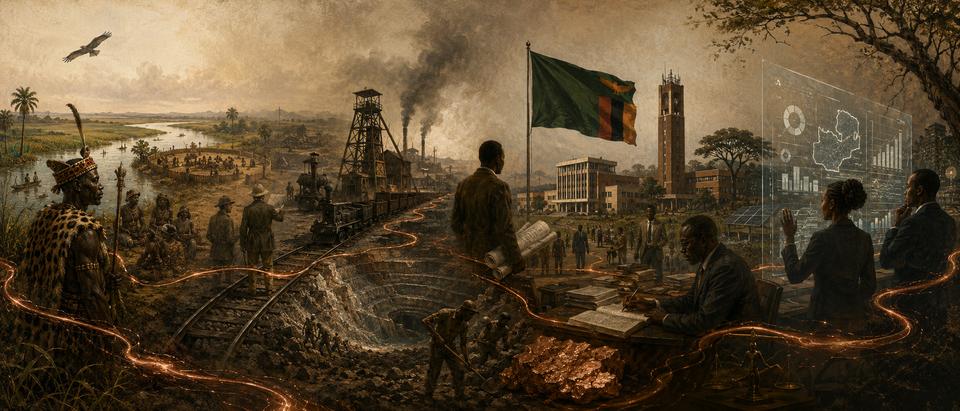
What sixty years of reactionary decision making cost, and what deciding well is worth
Zambia has spent sixty years changing who owns the mine, who taxes the mine, who finances the state and who gets blamed when the arithmetic fails. The deeper problem was always simpler: ownership was mistaken for the objective, visible benefit was detached from deferred liability, and each settlement consumed or rebuilt the platform on which the next would operate — while the underlying arithmetic ran regardless, and sent the bill. This essay is best understood as a single recursive systems model; it is one object with several moving parts. Read it, then put the parts together and it will synch.
TL;DR
Zambia’s economic history is not a contest between state ownership and private ownership. It is a sequence of incomplete settlements, and the sequence has an engine.
A viable mineral settlement has four multiplicative requirements — production, sovereign capture, broad distribution and preservation. If any one approaches zero, the national result collapses. Every settlement since 1964 has scored well on some terms and driven another toward zero, because each was designed as a reversal of the last failure rather than as a complete architecture.
The settlements do not alternate over fixed ground. Each manufactures the constraint set and the platform inherited by the next. UNIP consumed productive, financial and institutional capital until MMD entered office with almost no bargaining room. MMD reconstructed production, solvency and the technical state, creating the fiscal and institutional space PF inherited. PF used that inherited space, weakened the restraints that had created it, and transferred default to UPND. The cycle is reflexive: repair recreates optionality; optionality recreates discretion; discretion consumes repair; crisis restores arithmetic.
The engine is an asymmetry in what anchors politics. Qualitative politics — grievance, sovereignty, moral characterisation and the promise of immediate control — is permanently available and pays inside the electoral cycle. Quantitative politics is anchored principally by crisis and loses authority as the crisis lifts. The oscillation is therefore phase-locked to the commodity and credit cycle: Zambia has rarely reformed except at a wall and has never built a durable preservation rule at a peak.
The cost is now priced. Applied to Zambia’s own base years, the production trajectories actually achieved by Chile from 1974 and the Democratic Republic of Congo from 2011 imply a 2025 counterfactual economy of roughly US$78–84 billion, against approximately US$29 billion on the old statistical base: a comparator-implied annual gap of about US$49–55 billion, or roughly US$2,200–2,500 per citizen and US$11,000–12,500 per household of five. Differently constructed routes, with partially overlapping inputs but distinct transmission assumptions, converge on the same order of magnitude. Roughly forty per cent of the measured gap is not the missing mining flow itself but the missing economy that sustained flow could have compounded into — capital, credit, supplier systems, currency stability and permanent assets.
The corrected national self-image follows from the arithmetic: Zambia was never poor in capacity. It was mispriced — undercounted by an obsolete statistical base, denominated in a collapsed currency, and governed by an oscillation that consumed its own compounding. And it mispriced itself.
The world is now entering an electricity–compute order in which copper is again strategically scarce while automation threatens the cheap-labour ladder used by earlier late developers. The window and the warning are the same decade. The companion 2031 model prices what is riding on whether the current productive sequence survives long enough to transmit: a spread across the specified scenarios of roughly fifteen and a half billion dollars of GDP, nine percentage points of poverty and six billion dollars of permanent national assets against none.
That forecast answers the slogan that citizens cannot eat GDP. The slogan is half true: growth that never transmits is politically incomplete. But GDP is not a meal — it is the productive income and fiscal capacity from which meals, wages, credit, services and savings become possible, and what is guaranteed never to reach the kitchen is the output that was never produced. The missing $49–55 billion a year appears in household life as weak wages, a shallow tax base, expensive credit, a fragile currency, unreliable power and a state with little durable value to distribute. The real question is whether production is connected contractually and institutionally to the kitchen.
The escape is an architecture in which sovereignty is measurable, operation is contestable, distribution is contractual and depletion is automatically converted into permanent assets. But the architecture will not persist without a shared understanding of the substrate, a reproducible technocratic pipeline and political leaders willing to use power to constrain the future use of power.
This is why Jacob Mwanza matters. He did not merely occupy offices. As Vice-Chancellor he identified and sponsored a cohort that later led the Bank of Zambia, Cabinet Office, the Treasury and the Ministry of Finance. The question is therefore not only what policy Zambia needs. It is who is building the people, institutions and consensus capable of sustaining it for a generation.
And beneath all of this sits the true subject. Zambia’s knowledge institutions have too often produced disciplinary fragments and moral postures instead of a shared, longitudinal and falsifiable account of the system. That failure is not outside the Coordination Trap. It is one of its mechanisms. A country that cannot agree on what created its constraints cannot preserve the reforms that remove them.
First-things-first: my Math
This is a model-backed essay, not an official forecast. Historical facts are sourced. The forecast begins from one common 2026 opening economy; the scenarios diverge in 2027 and run to 2031. The GDP levels use a provisional 27.5 per cent rebasing uplift because ZamStats has not yet published the final 2023-base national accounts [7]; the re-base used is my own estimate built from similar official exercises executed recently in Zimbabwe, Nigeria and Ghana. The counterfactual estimates use only production trajectories that comparator countries (DR Congo and Chile) actually achieved. In the workbooks, blue text marks hardcoded observations, green marks cross-sheet links, and yellow cells mark calibrated assumptions and unresolved residuals requiring scrutiny — the workbook’s equivalent of a claims table. The point of all this apparatus is not to make the assumptions look authoritative. It is to make them visible enough to attack. I've shared the workbook's here as downloadable files so you have full access to my methodologies if you want to evaluate the math for yourself.
Companion models: Zambia 2031 Scenario Model v0.3 · Zambia Comparator Counterfactuals v0.4
MOVEMENT I — THE TWO EQUATIONS

I. The Thing We Keep Arguing About Instead of the Thing That Matters
Here is the argument Zambia has been having since independence. The mines should belong to the state. No, the mines should be operated by private capital. The state must capture more. No, the state must stop changing the rules. We need public ownership. No, we need investment. We need sovereignty. No, we need tonnes.
Everyone can produce a historical episode that proves their side. Nationalisation coincided with decline. Privatisation coincided with recovery. Private production coincided with weak household transmission. State activism coincided with visible infrastructure. Debt-financed infrastructure coincided with default. Fiscal consolidation coincided with macroeconomic repair and household frustration.
This is why the argument never resolves. Each side is holding one part of the machine and describing it as the machine.
The state-ownership camp is right that a country can produce enormous mineral value while remaining poor, externally owned and politically humiliated. The investment camp is right that a mineral title without capital, engineering and operating discipline is sovereignty over an empty shaft. The distribution camp is right that GDP which never reaches food, work, schools and power is politically fictitious. The fiscal camp is right that distribution financed by debt or depletion without replacement eventually liquidates the future.
The mistake is treating these claims as alternatives. They are simultaneous constraints. And the way to see that is to write them down.
A mineral economy has four things it must do at once.
| Variable | What it means | What failure looks like |
|---|---|---|
| Productive capacity (Pr) | Keep the asset financed, technically competent, explored, maintained and producing | Ownership survives; tonnes disappear |
| Capture (C) | Secure an enforceable national and community claim on the value created | Tonnes rise; the country watches the value leave |
| Distribution (D) | Transmit value through wages, suppliers, pensions, public services and household purchasing power | GDP rises; legitimacy collapses |
| Preservation (V) | Convert depletion and windfalls into replacement reserves, infrastructure and permanent financial assets | The boom is consumed; the next generation inherits the hole |
Normalise each between zero and one. The national result is not the sum of these variables. It is closer to their product:
National economic value: N = Pr × C × D × V
Watch what the multiplication does. If productive capacity is zero, there is no rent to capture. If capture is zero, the country is a corridor through which value passes. If distribution is zero, the arrangement loses legitimacy and becomes unstable. If preservation is zero, the country appears richer during the cycle and ends poorer after it. A settlement can score brilliantly on three dimensions and still fail nationally because the fourth approaches zero. The variables are complements. They are not substitutes. That algebraic fact is what the ideological argument has missed for sixty years.
II. The Proxy We Mistake for the Objective
Now write the second equation, which governs the gross sectoral flow entering Zambian life:
Domestic flow: F = ρ × Q × p
where ρ is the domestic-retention coefficient, Q is saleable volume and p is the realised price.
The retention coefficient is the share of gross revenue that enters the domestic economy through wages, locally procured operating expenditure, power purchases, taxes and royalties, pension contributions and retained domestic financial balances. On the sector’s current structure that coefficient is calibrated near forty-five per cent in the companion model, which at scale becomes billions of dollars a year of domestic flow from a sector often described as a pipe to elsewhere.
Notice what equity is in this framework. It is not an independent national objective. It is an instrument whose value must be measured through its effects on productive capacity, domestic retention, capture, risk and preservation. Equity can produce dividends, information rights, capital gains and domestic balance-sheet value. It can also concentrate operating risk, require repeated capital calls and become politically irreplaceable. The correct question is therefore not whether the state owns shares. It is what the instrument does to Pr, C, D and V, and what present value it produces relative to the risks assumed.
Policy reaches domestic value through ρ — local-content rules, fiscal instruments, wage formation, power purchases, pension saving and domestic financial intermediation — and through Q, where capital, operating competence, power and geological development determine the scale available to retain. Raising the equity share while collapsing volume can reduce national value even as it raises the flag. Conversely, a smaller equity position combined with senior fiscal claims, enforceable local-content obligations, community rights and large-scale production can produce a larger national result.
The proof sits on both sides of the border and at both ends of Zambia’s history.
Across the border, the Congolese copper ramp of the last decade was substantially foreign-operated — Kamoa-Kakula under Ivanhoe and Zijin with a state minority; Tenke Fungurume under an eighty per cent Chinese majority [29]. From a starting GDP essentially identical to Zambia’s in 2011, the DRC’s economy then multiplied as production expanded. The equity register and the flow register are different documents.
At home, the inversion appeared under full state ownership. In the late years of ZCCM, the mining system’s net national flow became negative as the Treasury provided subventions to sustain shafts unable to finance themselves. One hundred per cent of the shares could coexist with a negative current claim on national resources. Today, under minority participation, fiscal capture as a share of gross revenue is materially higher. Capture did not move mechanically with the share register because the instruments are not the same thing.
Where the popular argument is right — and it is right about something important — it is right about ρ. Domestication of supply chains raises the retention coefficient and can lower mine costs at the same time: a capable supplier belt in Kalumbila is cheaper and more resilient than one in Johannesburg. The national project is therefore precise: raise ρ while growing Q, and preserve the resulting claim. The catastrophic project, run in different forms more than once, is to enlarge the symbolic claim while consuming the productive base beneath it.
Hold both equations in mind. The rest of this essay is the story of a country repeatedly mistaking an instrument for the objective, a present flow for a permanent asset and an inherited stock for a self-renewing system.
MOVEMENT II — THE TRAP AND ITS ENGINE
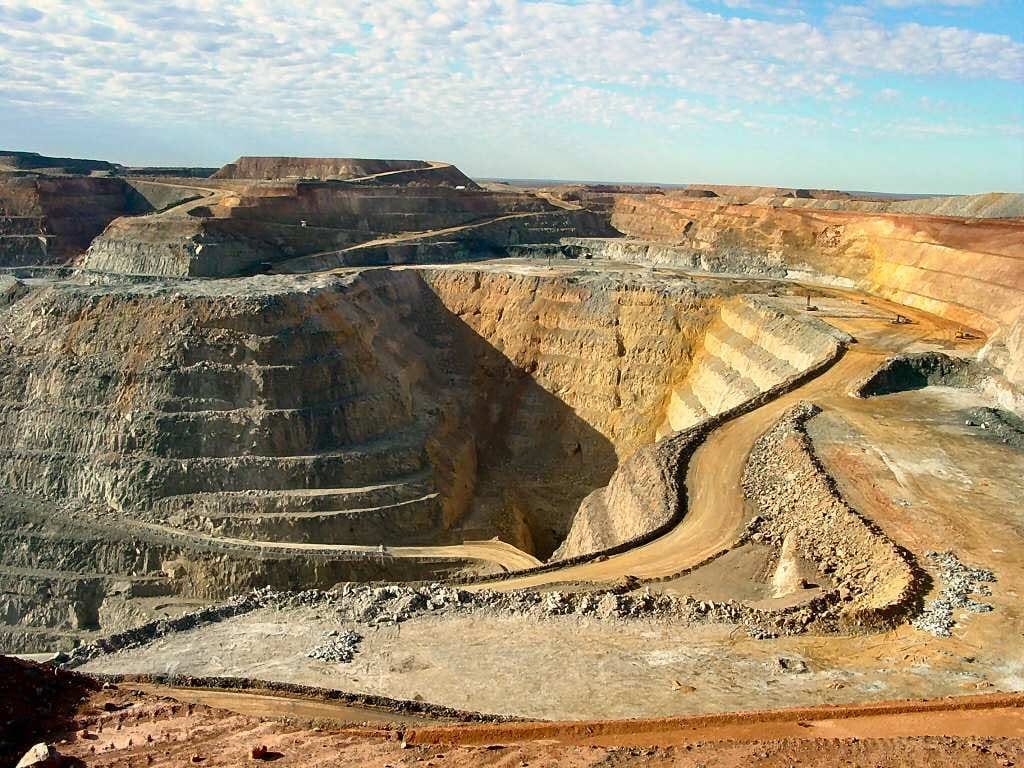
III. 1964–1991: We Owned the Mine and the Mine Owned the State
Independent Zambia inherited a strange kind of wealth. The mines were technologically sophisticated, globally connected and capable of generating extraordinary foreign exchange. The country around them was institutionally thin: a small educated workforce, limited administrative depth, weak integration between the Copperbelt and the rural economy, and a state that had to be built while it was already governing.
Before the Colony: States Under Pressure
The inheritance did not begin with the Company, and it did not begin in an empty political space. The territory that became Zambia contained decentralised communities, smaller kingdoms, nested principalities and several large, centralised political systems whose authority radiated through tribute, trade, marriage, military power, ritual office and negotiated allegiance.
The Lozi state governed from the Bulozi floodplain through a central court, councils and layered territorial authority, with tribute and political influence reaching into broad and sometimes contested zones to the north-east, east and south-east. The Bemba kingdom operated through a royal and federal administration around its northern core, projecting authority over subordinate and allied communities toward the Bisa and Ushi, the Luangwa valley and the Tanganyika region. The Maravi-Chewa political world joined major chieftaincies across the country north of the Zambezi between the Luangwa, Shire and Lake Malawi. Kazembe’s eastern Lunda kingdom linked the Luapula valley and southern Katanga to long-distance circuits in copper, ivory, salt and people [46][47].
These were not modern cadastral states with uniformly surveyed borders. Direct administration weakened with distance from the core, and sovereignty was often layered rather than exclusive. But neither were they merely “tribes.” Some operated across zones of authority comparable in geographic reach to major European states and contained subordinate kingdoms, title-holders and principalities inside wider political fields. Alongside them stood societies organised more diffusely through lineages, villages, councils and custodians. Among the Tonga of parts of the south, colonial indirect rule later appointed chiefs and Native Authorities where the preceding political order had not contained an equivalent centralised office [47].
Nor was the pre-colonial world free of endogenous or exogenous pressure. States faced coups, succession disputes, rival royal houses, tributary resistance, commercial disruption, migration, conquest, ecological shock and competition for routes, labour and imported weapons. European expansion entered a system already moving.
Lewanika’s Barotseland makes the point most clearly. He governed after deposition and restoration, shoring up his position against internal rivals while Ndebele pressure and European concession-seekers approached from several directions. His pursuit of British protection followed the visible precedent of Khama and the BaTswana: use one imperial power to constrain stronger rivals, secure recognition and enlarge the kingdom’s diplomatic room [46]. The strategy was neither simple naivety nor uncomplicated surrender. It was statecraft under multi-front pressure.
It also demonstrates the constraint-inheritance theorem before colonial rule was complete. British protection widened Lewanika’s immediate room while transferring control over the kingdom’s external representation. When competing British and Portuguese claims to Barotseland’s western boundary were submitted to King Victor Emmanuel III of Italy in 1905, the formal parties were Great Britain and Portugal. Barotseland was the territory being adjudicated, not an independent litigant [46]. Protection secured international arbitration and simultaneously removed the kingdom from the table.
Colonialism therefore did not introduce political economy, external pressure, taxation, redistribution or strategic bargaining. It changed their scale, technology and institutional form. It converted layered zones of authority into mapped administrative territories; made some chiefs answer upward to the colonial state; created chiefly offices where its model required them; and compressed several political worlds into one territorial shell.
The pre-colonial inheritance also matters for patronage, but only with care. Tribute and chiefly distribution in centralised polities were forms of taxation, recognition, protection and reciprocal obligation, often constrained by councils, custom, rival authorities and the possibility of exit. Modern patronage is not an unchanged survival of “African culture.” It emerged when colonial rule altered or removed many of those checks while preserving the visible grammar of rule through intermediaries, and when the postcolonial state later attached appointments, contracts, credit, housing and foreign exchange to that grammar. The result was institutional recombination, not cultural destiny.
The Cadre the Colony Made
The colonial order’s deepest bequest was not merely that Zambia had too few graduates. It was an elite-selection mismatch.
The colony concentrated technical, commercial and senior administrative capability inside expatriate government, mining and business institutions. Africans were largely excluded from the apprenticeship through which complex organisations reproduce themselves: the Treasury desk, district administration, mine management, engineering office, corporate board and regulatory chair. Indigenous authorities were commonly admitted as intermediaries for taxation, labour, land and local order; African workers entered the industrial system principally as labour. Between brokerage and labour, the pathways into strategic command remained deliberately thin.
Political talent therefore developed elsewhere: in churches, welfare associations, unions, urban organisations and the nationalist movement. That curriculum selected for courage, organisation, grievance articulation, coalition formation, moral clarity and mass persuasion. These were the capabilities required to defeat colonial rule. Independence immediately required accounting, engineering, monetary management, commercial discipline, project appraisal, maintenance, impersonal administration and the ability to make a politically costly “no” survive.
Liberation capability was indispensable. It was not identical to administrative capability.
The tragedy was not that the founding generation lacked intelligence. It was that history had trained it for one game and then handed it another. Zambia entered independence with overwhelming activist legitimacy, scarce indigenous technocracy and almost no institution capable of reconciling the two. A cadre trained to challenge an extractive state had to become, almost overnight, the cadre administering a complex industrial one.
That mismatch helps explain why capable administrators could remain politically fragile. In a polity where mobilisational credentials were the dominant currency of authority, technical restraint could be interpreted as ideological hesitation, insufficient Africanisation, resistance to sovereignty or indifference to immediate need. Valentine Musakanya’s later marginalisation as authority migrated from Cabinet Office toward the party is one biography of the larger problem.
It also explains why UNIP was, from the beginning, partly a patronage settlement. That statement is analytical rather than merely accusatory. Patronage helped Africanise institutions, reward liberation service, balance regions, incorporate rival elites, distribute scarce formal opportunity and make the new state materially visible. A mass movement’s internal economy of loyalty, office and distribution became the personnel system of the state when party and state fused.
But a nation-building technology can become an operating system. Once employment, scholarships, licences, housing, credit, contracts and advancement flowed principally through the party-state, possession of the state became economically existential. The institution responsible for producing national value also became the principal reward for membership in the governing coalition. Political incorporation and economic administration occupied the same balance sheet.
The structural echo in South Africa is instructive rather than identical. Apartheid built a far deeper industrial and administrative state, but systematically excluded Black South Africans from its senior command while forming liberation leaders through prison, exile, unions, underground organisation and mass mobilisation. The post-1994 state therefore had to transform the purpose and personnel of an inherited bureaucracy while producing its own technical cadre. Under Mbeki, technocratic centralisation increasingly lost parts of its activist constituency; under Zuma, cadre deployment and patronage networks penetrated appointments and public enterprises until the country’s own commission described the result as state capture [45]. Different history, same warning: where political legitimacy and technical capability are not institutionally reconciled, patronage can become the mechanism through which the activist coalition reclaims the state.

The Universities That Built the State
This is why the University of Zambia, and later the Copperbelt University, were not educational amenities. They were sovereign infrastructure.
UNZA was established almost immediately after independence because the state could not become substantively indigenous until it could reproduce the economists, lawyers, doctors, teachers, administrators, scientists and engineers who would inhabit it. Before Zambia could possess an indigenous central bank, Treasury, judiciary, planning system or national health service in more than name, it had to produce the people capable of making those institutions work [48][49].
CBU and its institutional predecessors performed a complementary function closer to the productive machine. Located within the Copperbelt economy, they helped develop the engineering, business, environmental, accounting and industrial capability required to operate around mining rather than merely negotiate with it [48].
The division was never absolute, but the architecture was clear:
UNZA helped reproduce the administrative and policy state.
CBU helped reproduce the technical and industrial state.
Together they attempted to create a new source of authority: professional competence grounded neither in hereditary office, expatriate command nor liberation biography. Their ideal product was not the apolitical technocrat. It was the postcolonial state-builder capable of holding political legitimacy, technical competence and institutional discipline together.
A country can consume a university as it consumes a mine. Buildings remain, enrolment rises and certificates continue to be issued while faculty depth, research culture, laboratories, postgraduate formation, professional mentorship and institutional links are depleted. The loss arrives later as weak project appraisal, dependence on foreign consultants, shallow regulation, poor succession and public argument unable to distinguish an instrument from an objective.
The Scholarships That Imported Capability
The young universities could identify and begin forming talent, but they could not yet reproduce every specialised discipline, laboratory or professional tradition Zambia required. Overseas scholarships became a sovereign technology-transfer mechanism: advanced knowledge returned embodied in a citizen.
Under UNZA stewardship, promising students were sent into mature universities and returned to the university, the Bank of Zambia, Treasury, Cabinet Office and other institutions. The later cohort associated with Jacob Mwanza is the clearest example: selection at home, advanced formation abroad, deployment on return and eventual succession across the economic state [P].
ZCCM operated the industrial equivalent. Its bursaries, apprenticeships, technical colleges, mine training and overseas engineering pathways helped form the mining, metallurgical, geological, electrical, mechanical, accounting and managerial class required to understand the productive system from within [50]. ZCCM was therefore not merely a company owning shafts. It was one of the country’s largest technical formation systems in practice.
The two circuits were complementary:
UNZA → advanced formation abroad → university, BoZ, Treasury and Cabinet Office
ZCCM → technical training and scholarships → shafts, plants, workshops and mine management
The scholarship was not consumption. It was capital equipment in human form. Its national value depended on the complete circuit:
selection → formation → return → deployment → mentorship → succession
A scholarship without strategic selection becomes patronage. Formation without return becomes brain drain. Return without deployment becomes frustration. Deployment without institutional protection becomes attrition. A brilliant official who reproduces no successor remains an isolated exception.
When ZCCM’s balance sheet collapsed, Zambia therefore lost more than operating capital, pensions and mine-town services. It also weakened a major channel through which the technical class reproduced itself. That human-capital loss is one of the less visible items on the receivership invoice.
The founding settlement’s record must therefore be held whole. It fused party, state and producer; patronage became load-bearing; and the productive platform was progressively consumed. But it also built the institutions intended to cure the formation deficit colonialism had manufactured. The settlement that depleted the mine helped create the university and scholarship systems through which later generations could reconstruct the state.
The mine was not merely a company. It was the tax base, export sector, skills system, municipal provider, formal employer and proof that independence had economic content. A government treating it as an ordinary commercial asset would have misunderstood the political object in front of it.
Nationalisation therefore solved a real problem. It established that political sovereignty extended beneath the soil. It accelerated Africanisation. It allowed copper surpluses to finance schools, hospitals, roads, a civil service and the national project itself. It also located the most important asset of a frontline state within the state’s own strategic control.
And the geopolitical bill was real. Zambia was landlocked inside a hostile regional order; Rhodesia, Angola, Mozambique and South Africa were not neutral lines on a logistics map. TAZARA was geopolitical insurance purchased at enormous cost. Support for liberation movements carried transport inefficiency, security expenditure and foregone commercial convenience. Any history evaluating the First Republic as though it were operating a mine in a politically quiet neighbourhood is not doing economics. It is removing the variables that complicate the conclusion.
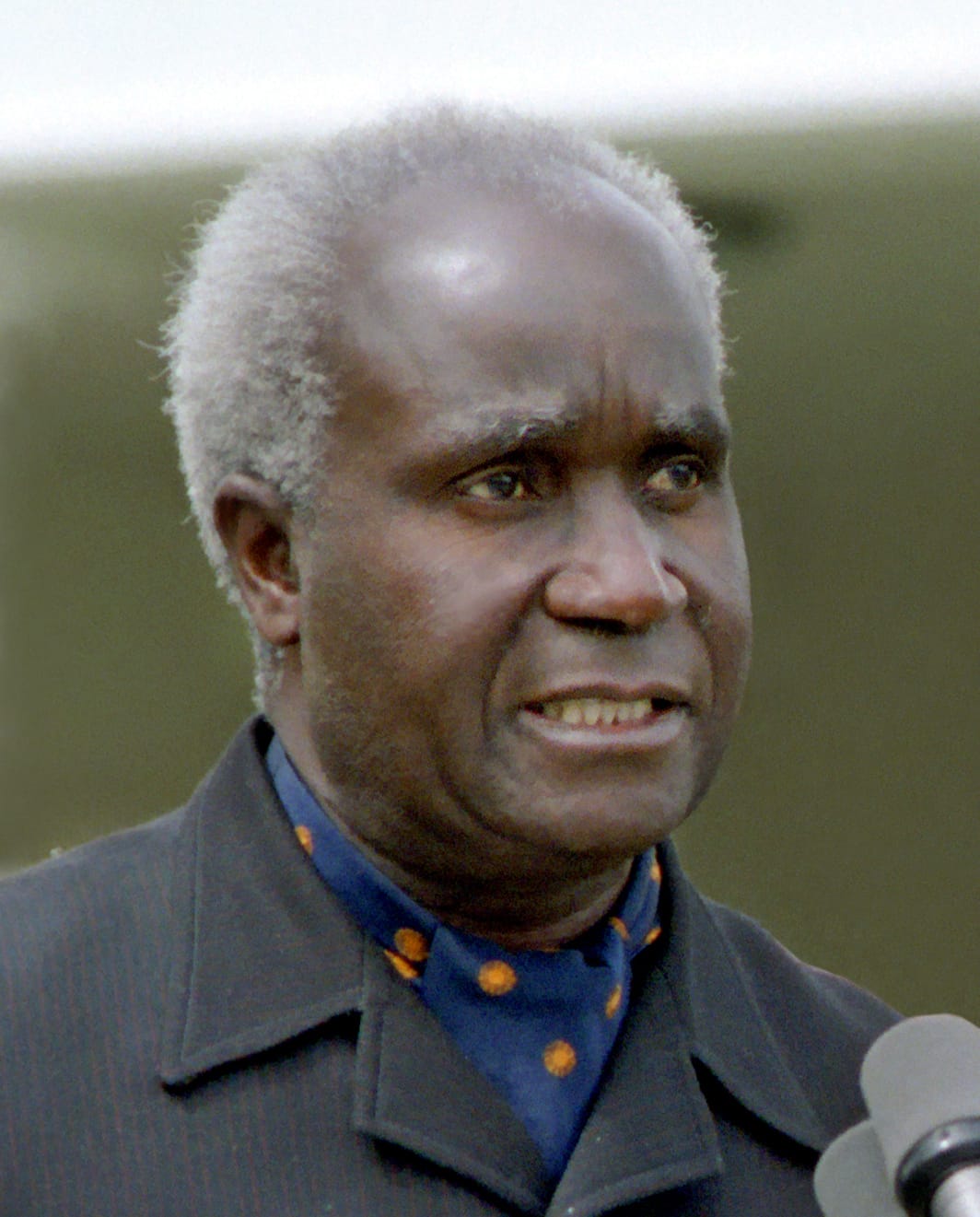
But UNIP inherited more than a mine. It inherited a private commercial system it had every moral and political reason to transform but which it had not itself built: operating routines, maintenance systems, management hierarchies, supplier relationships, commercial farms, banks, trading networks, foreign-market access and accumulated organisational knowledge. The sovereignty question was visible. The reproduction cost of the machine was less visible.
That distinction is decisive. Possessing an operating system is not the same as possessing the capability and incentives required to reproduce it. An inherited machine can continue running for years while the capital, maintenance, skills and disciplines that renew it are weakened. The continuing flow can be mistaken for evidence that the new structure created the flow. UNIP knew what the commercial machine extracted. It did not fully price what the machine required to remain a machine.
The problem was therefore not simply that copper prices fell. It was the institutional form onto which the shock landed.
The state was the owner. The state appointed the operator. The state was the regulator, the financier of last resort and the dependent of the same producer for foreign exchange and tax. The producer carried employment, housing, health, municipal services, industrial policy and political legitimacy. There was no independent balance sheet left to say no.
If the mine needed to cut employment, the political settlement resisted. If it needed foreign exchange for equipment, the Treasury had competing national claims. If maintenance was deferred, the loss arrived later and was therefore easier to hide. This is what happens when ownership, operation, regulation, finance and welfare are fused: the system becomes morally indivisible and economically uncorrectable. The mine could not fail a commercial test without the state appearing to fail a sovereign test.
The 1970s delivered the external break — weak copper, expensive oil, the end of Bretton Woods and then punishing global interest rates. Zambia did not cause those events. It decided, under severe constraint, how the losses would be absorbed: partly through borrowing and partly by consuming the capital base. Mine development is easy to postpone because the shaft does not collapse on the day the budget is cut; the loss appears in future output, and by the time output disappears the original decision is buried beneath a decade of explanations. Lower output reduced foreign exchange; scarce foreign exchange constrained equipment; lower investment weakened future output; debt financed the attempt to preserve the old equilibrium. The attempt to avoid adjustment made the eventual adjustment larger.
The same process extended beyond the mine. Inflation and currency collapse hollowed out wages, deposits and pension claims. Public enterprises accumulated liabilities and the financial system carried directed or politically convenient credit that would later surface as bad assets. The formal promise remained on paper after much of the real economic claim had disappeared. The full pension and banking series still require archival reconstruction, but the terminal fact is larger than ordinary descriptions of stagnation: the first settlement progressively liquidated the balance sheets through which citizens believed they owned the state.
And yet context, fully granted, cannot close the case. Contemporaries under comparable or severe constraints chose differently in the same age.
Seretse Khama’s Botswana is the institutional control the first settlement cannot escape. Landlocked, like Zambia. A Frontline State, exposed directly to apartheid South Africa. Poorer at independence by a wide margin, with a tiny graduate class and minimal infrastructure. Once diamonds surfaced, mineral-dependent to a degree Zambia never was. Khama faced the same age, neighbourhood and menu and wrote a different contract: partnership with the operator rather than the fusion of ownership and operation; renegotiation upward after discovery scale became clear; expatriate capability retained until domestic capability existed; windfalls routed into reserves and, in time, a sovereign fund; multiparty democracy preserved [39]. In this essay’s language, Botswana raised retention and capture, protected productive capacity and built preservation.
Lee Kuan Yew removes the last refuge — that the age itself compelled the choice. Singapore was expelled from Malaysia in August 1965, in the same strategic decade, with no resources whatever. The intellectual fashion of the moment pointed toward suspicion of multinational capital; Lee courted it and built state competence around serving production rather than owning every operation [40]. The spirit of the age was real. It was resistible by leaders willing to be graded on arithmetic rather than applause.
The comparators do not convict Kaunda’s generation of folly. They price its discretion. Context defines the available band; Khama and Lee demonstrate that the band contained other designs. The difficulty was genuine, the regional bill was real and the alternatives were visible in real time.
The State in Receivership
UNIP did not merely lose an election in 1991. Its economic settlement entered receivership.
The productive capital of the mines had been consumed, the currency no longer preserved long-term claims, creditor relations had broken down, public enterprises carried liabilities they could not service and the financial system contained losses accumulated under inflation, weak supervision and politically mediated credit. Pension rights remained legally recorded, but for a generation of workers the real value of those claims had been severely eroded. The state still possessed offices, statutes, companies and payrolls. It no longer possessed a balance sheet capable of making all the promises represented by them true. [41]
That is why the terminal UNIP condition must be described as more than low growth. By 1991, something approaching a systemic liquidation had occurred across the productive, financial and contractual claims of the state: mine capital, foreign-exchange capacity, pension value, financial intermediation, public-enterprise solvency and creditor leverage. The subsequent decade of bank failures was not caused by one administration alone; it was partly the recognition, under a liberalised and more transparent regime, of losses accumulated in the system before and during transition.
Political memory recorded this sequence differently from the accounts. Citizens remembered formal employment, subsidised food, mine-town services, bursaries, housing and the dignity of a visible state. Those memories were real. But the depletion of mine capital, pension solvency, reserves and bank loan books was less visible and arrived later. The administration that consumed the balance sheet remained associated with the benefits paid before exhaustion. The administration that recognised the exhaustion became associated with the closures, retrenchments, price adjustments and asset sales through which the bill was acknowledged.
The memory was not false. It was temporally incomplete.
Political memory = benefits received before collapse − weakly attributed deferred liabilities
This is not a morality play in which foolish men nationalised a functioning asset and destroyed it. It is the harder story of a strategically intelligible sovereignty settlement that built a nation, trained people, created institutions and carried liberation commitments — but fused too many national functions into one producer and possessed no mechanism for allocating prolonged loss without consuming the machine beneath the nation.
First incomplete settlement: capture and distribution without preserved production — ending in the liquidation of the platform itself.
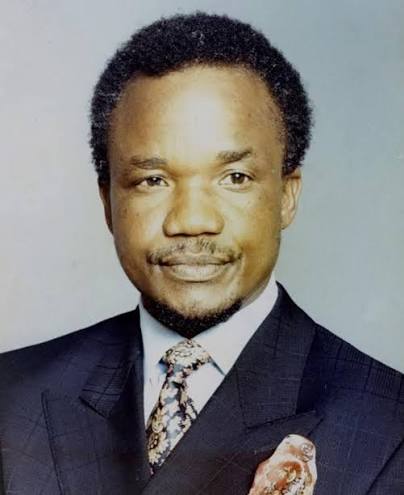

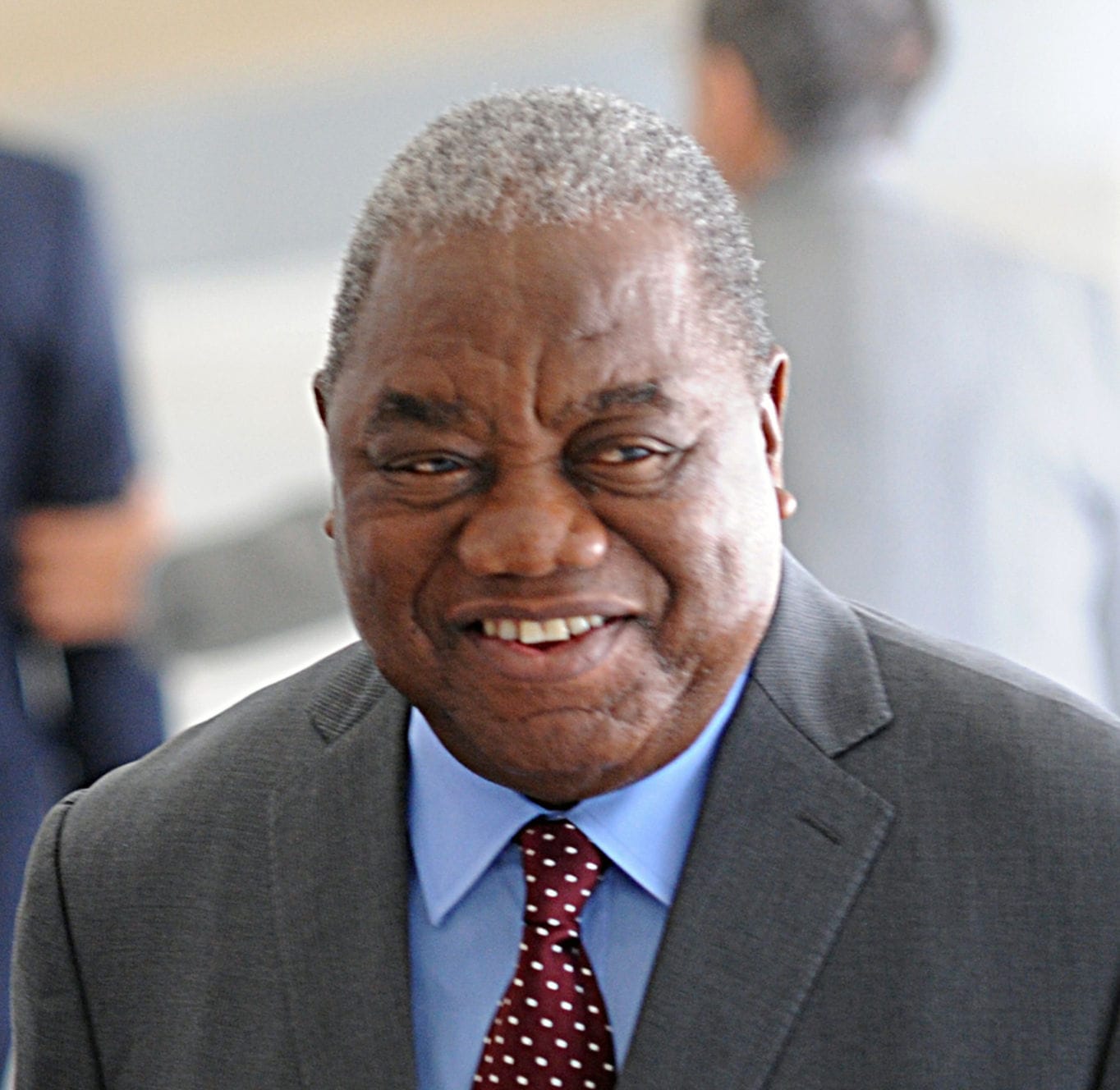
Fredrick Chiluba, Second President of Zambia (Left); Levy Mwanawasa, Third President of Zambia (Center); Rupiah Banda, Fourth President of Zambia (Right)
IV. 1991–2011: The State Was Resurrected, Production Returned, and Prosperity Lagged
By 1991 the international order that had made state-led development one legitimate option had disappeared, and the technical form of the global firm had changed. Mining companies coordinated capital, contractors, software and engineering across borders. The vertically integrated parastatal was no longer competing with the company nationalised twenty years earlier. It was competing with a networked global production system.
MMD did not inherit a normal state and choose to dismantle it. It inherited the legal shell of a state whose productive, financial and contractual balance sheets no longer reconciled. It became simultaneously the receiver of the old order and the reconstructer of the institutions beneath it.
The privatisation argument is often conducted against an imaginary option: Zambia keeps a fully maintained ZCCM, finances the shafts, waits for prices to rise and captures the entire upside. That option was not sitting in a drawer in 1991. The actual state had debt, weak foreign exchange, deteriorated assets, falling output, impaired financial claims and creditors able to condition the financing required to remain open. This does not prove that every sale term was good. It establishes the correct sequence of questions: the condition of each asset at sale; the liabilities the buyer assumed; the financing alternatives genuinely available; the value of stopping the operating loss; and the mechanism, if any, preserving Zambia’s participation if the market recovered. The first four explain why distressed assets sell cheaply. The fifth explains why a necessary transaction can still become an incomplete national settlement.
UNIP’s collapse had therefore done more than create a crisis. It had removed the leverage with which a successor might otherwise have negotiated it. A solvent owner can choose when to sell, what to retain, whether to recapitalise and which creditor conditions to reject. A state in receivership cannot. Some of what is remembered as MMD ideological choice was already an inherited constraint.
The reconstruction was larger than privatisation. It included restoring creditor relations, rebuilding monetary control, recognising and resolving failed financial institutions, creating prudential systems, constructing the Zambia Revenue Authority, reforming public administration, rebuilding the securities and foreign-exchange markets and re-establishing the state’s ability to collect, pay and contract. At the Bank of Zambia, Jacob Mwanza and the operational teams led the difficult conversion from a central bank embedded in a command system toward a more autonomous market institution. At Cabinet Office, Treasury and the public service, reform sought to rebuild the sequencing machinery of government. [37][41][42]
Privatisation imposed costs immediately — jobs, mine-town functions, protected supplier demand — and delivered benefits later, after capital, rehabilitation and a better copper market. Political legitimacy is not calculated as a discounted cash flow; people experience sequence. The worker saw retrenchment today. The country saw production recovery years later. Even where a transaction was economically defensible, the burden was asymmetrical, and that asymmetry created the political memory from which later resource nationalism would draw.
Then China industrialised and copper was repriced. Mines that had required inducement became scarce assets. Production recovered; capital returned; debt relief repaired the public balance sheet. This was the moment the settlement needed to change. Terms designed to restart distressed production should not govern a scarcity cycle forever; a complete architecture would have contained automatic upside sharing, transparent windfall formulas, information rights, community entitlements and intergenerational saving. Instead, fiscal capture adjusted through political conflict and repeated rule change. Weak capture produced demands for abrupt extraction; abrupt extraction raised the cost of capital; weaker investment threatened future revenue; and the weaker result was cited as evidence that still more direct control was required.
The 2000s were Zambia’s strongest growth decade in the historical panel because the productive constraint was genuinely relaxed and the economic state had been substantially reconstructed. But the mine is capital-intensive; it transforms exports faster than household income. Without deliberate links through wages, power, suppliers, pensions, agriculture and finance, a copper boom creates a large national account and a small lived economy. The debate between “the mines are producing” and “the people are still poor” was sterile because both observations were true. One described productive scale. The other described transmission.
MMD’s long settlement therefore achieved something easy to overlook: it created the platform from which its successor could again exercise discretion. It restored the ability to borrow, tax, regulate, intervene and spend. Those capacities later appeared natural only because the reconstruction that produced them had faded from public memory.
And the resurrection was neither clean nor complete. The later MMD years also produced corruption, politicisation and the third-term crisis; the social bargain remained thin; and the disposal of ZCCM near the trough preserved too little automatic participation in the recovery it made possible. The settlement restored the state's capacity without yet creating an architecture worthy of that capacity — which is the precise sense in which it, too, remained incomplete.
Second incomplete settlement: productive and institutional resurrection without sufficient capture, distribution and preservation.


Michael Sata, Zambia's Fifth President (Left) Edgar Lungu, Zambia's Sixth President (Right)
V. 2011–2021: We Inherited Fiscal Space, Mistook It for Income and Charged the Future
PF inherited almost the opposite of the state MMD had inherited twenty years earlier: HIPC-created fiscal room, restored copper production, functioning private mine capital, a professionalised central bank, a revenue authority, lower inflation, market access and accumulated credibility. These were not natural properties of the Zambian state. They were the output of painful restructuring, institutional reform, debt relief, mine rehabilitation and several administrations’ technocratic work.
This is the structural analogy with UNIP. UNIP inherited a productive commercial machine it had not built. PF inherited macroeconomic stability and borrowing capacity it had not created. Each mistook an inherited stock for a self-renewing flow and underpriced the cost of reproducing it.
After the global financial crisis, money became cheap; Eurobond markets opened; Chinese lenders financed infrastructure. External borrowing is politically elegant because it separates the benefit from the bill. The road is visible now. The airport opens now. Contracts and appointments are distributed now. Debt service belongs to a future budget, a future exchange rate, perhaps a future government. Taxation forces a coalition to pay for its choices in the present. Borrowing permits the coalition to experience the project as a gift. Borrowing is not merely finance. It is a device for moving political cost through time.
Fiscal space is created to be used. The failure was not the fact of using it. The failure was weakening the restraints that had made it available: project appraisal remained opaque; borrowing expanded faster than the export-generating asset; political discretion widened; institutional chairs became less protected; productive investment did not grow proportionately; and future foreign-currency claims accumulated against a copper system that barely expanded.
The public argument divided into two theatres. One side pointed at roads and power stations and said development. The other pointed at the debt stock and said theft. Neither was a project appraisal. A road can be productive and an airport strategic, but each asset must be matched to its procurement cost, financing currency, utilisation, maintenance, tax return and foreign-exchange effect. If it does not raise future output or revenue enough to carry its liability, it is not development merely because it is made of concrete. Zambia did not maintain a public project ledger that allowed citizens to see the matching. The state accumulated a visible asset stock and an opaque return profile. The politics was settled by photographs. The economics waited for the debt-service schedule.
Meanwhile, the unresolved legitimacy of privatisation became an electoral resource. When households saw foreign operators, high prices and weak living conditions, a government could earn immediate value by appearing to take control. A royalty change, licence intervention or state acquisition produces a cheap sovereignty signal long before it produces — or destroys — cash. The hard signal is more demanding: sustained tonnes, competitive costs, taxes collected, communities with contractual rights, suppliers that become real firms and permanent assets accumulating after depletion.
The patronage system made discretion valuable for reasons not captured by an ordinary welfare model. For many political actors, power was not simply a means of delivering informed policy choices. It was a means of controlling appointments, procurement, licences, public employment, boards, land, credit and the distribution of protection. In that objective function, a rule-bound institution is not merely a different economic design. It is a reduction in the political value of office.
Political utility = public welfare + coalition control + visible signalling − discounted future liability
Where coalition control and visible signalling receive high weights while future liability is discounted, economically weak instruments can be politically rational. Debt supplies resources without current taxation. State operating control expands the patronage surface. Automatic saving removes resources from discretionary allocation. Independent technical offices reduce the ability to reward and punish. This is why better advice alone cannot end the cycle: the disagreement may concern not the route to a common objective, but the objective itself.
The interventions in KCM and Mopani [44] answered genuine questions about employment and operator performance. But once the state becomes the residual operator or financier, technical and capital problems become public liabilities. The country can own the mineral claim without owning every operating loss. It can hold senior royalties, information rights, community claims and commercially priced equity without becoming the last cheque written to the shaft.
The 2020 default was not caused by one road, one lender or one minister. It was the terminal balance-sheet result of accumulated borrowing, weak project returns, depreciation, deficits, commodity volatility and the pandemic. COVID-19 was exogenous. The liability structure it struck was not.
PF did not merely spend fiscal space. It consumed much of the institutional credibility that had made fiscal space available, and transferred a sharply narrowed opportunity set to its successor.
Third incomplete settlement: visible capital, patronage and immediate distribution without return discipline or preservation — financed by the platform reconstructed before it.

VI. 2021–2026: Repair Before Transmission
The government elected in 2021 inherited default, impaired market access, large external debt-service claims, major mines requiring new operating settlements and an electricity system approaching a severe hydrological test. Its strategy was sequencing: repair the macroeconomy, restructure the debt, restore the tax base, recapitalise the mines, open the power market, let investment produce tonnes, wages and revenue, and use the larger productive base to fund social capability.
This is coherent economics. It is also dangerous politics because the benefit is back-loaded and the pain is experienced in real time.
What has changed is substantial. The restructuring and Fund programme repaired part of the sovereign balance sheet [4]. Copper output reached a record 890,346 tonnes in 2025, and government placed a three-million-tonne target at the centre of the 2031 ambition [5]. The energy market began to change form through open access, traders and private generation. None of this is completed transmission: a signed transaction is not a ramped shaft; a licence is not an energised plant; a debt agreement is not a higher household income. The present settlement has more hard signals than the cheap-signalling caricature allows and not yet enough throughput to settle the argument.
The 2023–24 drought was an external shock, and external shocks reveal institutions rather than absolve them. A diversified, financially viable power system absorbs drought as a price and dispatch problem. A concentrated, undercapitalised one absorbs it as national load shedding. Mining consumes a large share of Zambia’s electricity; at the model’s integrated intensity of 6.25 MWh per tonne, three million tonnes require 18.75 TWh of mine demand alone. You cannot announce the tonnes and discover the electrons later.
The political problem is equally simple: reserves, debt present values and final investment decisions are not edible. Households experience the settlement through mealie meal, rent, transport, power, work and school costs. ZamStats measured national poverty at 60 per cent in 2022 [6]. Free education, school feeding, social cash transfers and the CDF carry real distributional value, and they sit beside a household economy still under pressure. If the productive payoff arrives too slowly, the political return to preserving the sequence falls.
The slogan “you cannot eat GDP” exploits this lag. It contains an important truth: an aggregate is not household welfare, and production without distribution is incomplete. It becomes deceptive when it treats production and economic scale as irrelevant to the kitchen.
The aphorism the slogan trades on — that GDP is not edible — is only half true, and the counterfactual demonstrates which half. GDP is eaten every day: as wages, food purchasing power, credit, school meals, clinics and pensions. GDP is not identical to household consumption; it is the productive income and fiscal capacity from which consumption becomes possible, and the transmission can lag — Section VI concedes where it does. But the comparator arithmetic supplies the proof of substance: the forty-nine to fifty-five billion dollars of missing annual scale is productive potential that was never allowed to actualise into the meals, wages and firms it funds everywhere it exists. What is truly inedible is GDP foregone. Its absence appears as unemployment, weak wages, a shallow supplier market, low tax collection, expensive credit, a fragile currency, higher imported food and fuel costs, unreliable power, weak pension accumulation and a state permanently choosing which promise to break. The journey from output to the kitchen is not automatic. It is nevertheless real — and the only thing guaranteed never to reach a kitchen is the output that was never produced.
The opposition coalition attracted by the slogan is not homogeneous. It includes households facing genuine distress; citizens carrying an incomplete but understandable memory of earlier provision; and actors whose lived experience of the prior state was access to contracts, appointments, licences and protection. These constituencies can speak the same distributive language while seeking different things. One asks for faster transmission. Another asks for the restoration of discretionary access.
The present settlement therefore contains a coordination problem. Investors must believe policy continuity will survive the election. Households must believe investment will reach them. Government must resist spending the future before it arrives. Each party waits for a hard signal from the others, and the signals are complements. No actor can cheaply produce the whole sequence alone.
The 2031 scenarios are the forward test. They do not say that GDP is the destination. They show that different productive and institutional paths generate different household possibility sets: different revenues, power systems, poverty outcomes, pension and permanent assets. The current settlement cannot finally be judged successful because the balance sheet was repaired. It succeeds only if the repaired balance sheet becomes work, purchasing power, services and citizen ownership.
Fourth settlement, still open: repair and recapitalisation under inherited constraint, with household transmission lagging and the sequence politically vulnerable at the exact point where continuity is required.
VI-A. The Stewardship Panel
The structural argument of this essay could be misread as a machine for excusing everyone. It is the opposite: it is the instrument that makes fair judgment of individuals possible for the first time — because a steward can only be graded against the discretionary band the settlement actually gave him. Here is the panel. The reader holds the grading sheet.
| Era | President | Finance | Central Bank | Sec. to the Treasury | Revenue authority | Settlement phase | Exogenous regime |
|---|---|---|---|---|---|---|---|
| 1964–73 | Kaunda | Wina · Mudenda · Kapwepwe · J. Mwanakatwe | Zulu · Kuwani | gazette | Commissioner of Taxes / Customs Dept | First settlement built | Copper strong; region hostile |
| 1973–91 | Kaunda | Chikwanda (I) · J. Mwanakatwe · K. Musokotwane · Mwananshiku · Mulimba · Chigaga | Mwananshiku · Kuwani · Phiri · Nkhoma | gazette | Departmental administration | First settlement consuming itself | Price collapse; oil; rate shock |
| 1991–96 (Chiluba I) | Chiluba | Kasonde · Penza | Bussières · Mulaisho · Mwanza | ZRA created 1994; expatriate management | Second settlement: big-bang liberalisation; non-mining privatisation | Aid conditionality; weak copper | |
| 1996–2001 (Chiluba II) | Chiluba | Penza · Nawakwi · Kalumba | Mwanza | Mtonga | Early ZRA | ZCCM sale delayed through the trough, completed 2000 at the bottom; Penza dismissed ’98, murdered ’99; third-term bid blocked | Copper at lows; HIPC process |
| 2002–08 (Mwanawasa) | Mwanawasa | Kasonde · Magande | Mwanza · Fundanga | S. Musokotwane (~2003–05) · Chibiliti | Mwansa | Second settlement’s harvest; HIPC completion 2005; windfall tax introduced 2008 | China boom begins |
| 2008–11 (Banda) | Banda | S. Musokotwane (I) | Fundanga | Ndalamei | Mwansa · Nhekairo | Windfall tax removed 2009; GFC absorbed; growth restored | GFC shock and rebound |
| 2011–14 (Sata) | Sata | Chikwanda (II) | Gondwe | Yamba | Msiska | Third settlement opens: Eurobonds I–II; wage expansion; discretion rises | Cheap global money; copper still high |
| 2015–21 (Lungu) | Lungu | Chikwanda · Mutati · M. Mwanakatwe · Ng’andu | Kalyalya (dismissed Aug 2020) · Mvunga | Yamba | Msiska (removed early) · Chanda | Third settlement’s bill: Eurobond III; energy crisis; KCM seizure 2019; default Nov 2020 | Tightening; drought; COVID |
| 2021–26 (Hichilema) | Hichilema | S. Musokotwane (II) | Kalyalya (reinstated Oct 2021) | Nkulukusa | D. Banda | Fourth settlement: restructuring; record output; social floor | Restructuring era; drought 2024; copper repricing |
[37] Officeholder record per official and standard reference lists (Ministry of Finance, Bank of Zambia, ZRA, State House); Secretary-to-the-Treasury sub-tenures, pre-2000 revenue-authority administration, and the presidential advisory succession (Sata-era holder unverified; Moses Banda/Musokotwane/Sichinga/Chembe exact dates) flagged for verification against the gazette before publication.
Read the panel with the essay’s method — inherited settlement plus exogenous regime define the band; the grade attaches to the choices inside it — and it yields findings no leaderboard could.
The same man sat at both catastrophes, and the architecture, not the man, is the common factor. Alexander Chikwanda held Finance in 1973–76, as the first settlement met the price collapse, and again in 2011–16, as the third settlement leveraged itself toward default. Two different global regimes, two different party systems, forty years apart — and both tenures ended in the same place, because both settlements lacked the same variable: a preservation rule senior to politics. One career, run twice through radically different versions of the machine, is a revealing historical recurrence: the architecture changes the meaning and outcome of stewardship, while the absence of a preservation rule reappears.
The theorem of Section VII has a name and a face. Ng’andu Magande, 2003–08, is by conventional accounts among the ablest ministers in the record: HIPC completion, fiscal discipline, the strongest growth era in the panel. And the windfall of the greatest copper boom in the country’s history passed through his tenure — the best conditions ever handed to a Zambian finance minister — with no permanent fund established, because none existed to be funded and the peak is precisely when none gets built. The institutional absence constrained him, but it does not remove stewardship from the discretionary band: the tenure must still be judged on whether a preservation instrument was foreseeable and politically attemptable. The episode demonstrates the anchor-scheduling theorem at maximum. At the country’s best moment, saving remained nobody’s automatic instrument.
His tenure also contains the mineral settlement’s characteristic Zambian paradox. In 2004, after Anglo American’s withdrawal left KCM requiring operating and investment capital the state could not sustainably supply, Vedanta was admitted as a 51 per cent strategic investor for an initial consideration widely reported at US$25 million, alongside investment obligations and continuing minority participation by ZCCM-IH. Four years later, as copper prices surged, the same Finance Minister introduced a windfall tax. The two decisions are not contradictory. They are the settlement problem in miniature: Zambia lacked the balance sheet to preserve production at the trough, then sought discretionary capture at the peak because the original restructuring had not embedded sufficient automatic participation in the recovery. The state first surrendered operating control under constraint and then tried to recover value through a fiscal instrument after the constraint had lifted.
The policy inconsistency Zambia exhibits doesn't sit apart from commodity prices; it is reflexive and coupled to them--but worse because a clear orthodoxy does not exist; the country whipsaws between positions without reconciling what is best for the long term. The problem is not merely that Zambia is inconsistent. It is that policy itself becomes a derivative of the commodity cycle.
At the trough, fiscal weakness and operating distress force the state toward investor accommodation:
Low price→capital scarcity→concessions, privatisation, tax restraint
At the peak, restored production and visible foreign profits revive sovereignty politics:
High price→rent visibility→tax escalation, intervention, ownership demands
Then, when prices or financing conditions turn again, the state retreats from the instruments adopted at the peak. The next government treats the reversal as a new policy rather than as evidence that the previous instrument was never embedded in a complete architecture.
The deeper failure is therefore not volatility alone. Commodity-dependent states will always adjust to prices. Zambia’s distinctive weakness is that no durable orthodoxy governs the adjustment. There is no settled answer to:
- what must remain stable across the cycle;
- what should adjust automatically with price;
- how much upside the state should capture;
- how productive capacity should be protected;
- and what portion of windfall income must be preserved.
So the country does not merely respond to the cycle. It amplifies it:
Commodity cycle→political mood→policy reversal→investment response→future production→fiscal constraint→next policy reversal
That is the reflexivity. Copper prices alter politics; politics alters the investment environment; the investment environment alters future copper production and fiscal capacity; those outcomes then determine the politics of the next cycle.
Central-bank independence in Zambia has a full institutional arc — norm, breach, statute — and three governors mark its stages. The norm: Jacob Mwanza, appointed in 1995 into the Meridien banking collapse, presided over the second settlement’s monetary reconstruction — disinflation from triple digits, the cash-budget discipline, the maturing securities markets — and then crossed the 2001 presidential transition intact: Mwanawasa kept Chiluba’s governor, as Banda would later keep Mwanawasa’s (Fundanga, 2002–2011). For sixteen years the MMD ran an informal norm of governor continuity across presidencies — protection by convention, never by law.
The breach: the norm eroded in 2011, when the incoming government replaced Fundanga within weeks, and shattered in August 2020, when Governor Kalyalya was dismissed three days after a rate decision, in the middle of the slide to default. The statute: Kalyalya reinstated in October 2021 as one of the new government’s first signals, to immediate market approval — and then the 2022 Act writing a six-year term into law, so that what Mwanza had enjoyed by convention became what no future governor need depend on convention for.
The same man, the same competence, repriced twice within fourteen months purely by the protection around the chair; the same office, repriced three times across three decades by the form that protection took. Nothing in this essay states the value of insulated institutions more precisely than that arc — and Mwanza personifies more of it than his own tenure.
As Vice-Chancellor of the University of Zambia, he was the sponsor under whom the pipeline’s defining generation was formed: Fundanga, Kalyalya and Musokotwane all obtained their Masters and doctoral scholarships under his vice-chancellorship — a fact within the author's direct knowledge, recorded as first-person testimony [P] — which means the governors of 2002–2011 and 2015 onward, and the Finance Minister of two separate walls, trace to one administrator’s human-capital decisions made in the fused era, decades before any of them paid off. The pipeline had an architect. The stabilisation of 1995–2002 was conducted by the sponsor; the stabilisations of the 2000s and the 2020s were conducted by the sponsored. That is the deepest form of the ratchet this essay has found — capability reproduced across a generation by deliberate sponsorship — and it carries its own warning, which Section XVI must answer: a pipeline seeded by one far-sighted man is a thin pipeline. What Mwanza did personally, the fifth settlement must do institutionally, because the reproduction of a country’s quantitative capacity cannot be left to the accident of who runs its university.
And the fused era shows why no steward could win inside it. In the first settlement the same individuals rotated between the Bank, the Treasury and the ministries — Mwananshiku governed the central bank and then held Finance within two years — not from any impropriety, but because the architecture had fused the balance sheets those offices exist to separate. Where there is no independent balance sheet, there is no independent steward; the panel’s early rows record capable men administering a structure with no seat from which to say no.
The MMD’s two halves are a sequencing experiment, and the second half priced delay. Chiluba’s first term executed the liberalisation big-bang and created the ZRA — the single most durable institutional innovation in the panel, a semi-autonomous revenue authority that outlived every government since. His second term held the state’s largest asset through the copper trough and completed the ZCCM sale in 2000, near the bottom of the market — the costliest sequencing error in the record, made worse by the era’s instability: a finance minister dismissed in 1998 and murdered in 1999, and a third-term bid that consumed the political capital institutional reform required. The same presidency contains the settlement’s best institution and its worst-timed transaction — which is exactly what the anchor theory predicts of a reform era as its crisis anchor faded.
Mwanawasa-to-Banda is the capture experiment at the cycle’s turn. The windfall tax was introduced in 2008 at the boom’s peak and removed in 2009 as the financial crisis struck — one instrument, tested across one cycle turn, by two administrations of the same party. Whatever one concludes about either decision, the episode demonstrates the fourth settlement’s later design insight in reverse: capture instruments imposed and removed by discretion, at the cycle’s whim, teach capital that the rules are the cycle. The 2022 redesign — a senior royalty, stable across the price bands — is the learned negation of 2008–09.
Sata-to-Lungu splits the third settlement into the borrowing and the bill. Under Sata: two Eurobonds, a public-wage expansion, and rising discretion — expansion launched at the peak, as the anchor theory requires. Under Lungu: the third Eurobond, the energy crisis, the KCM seizure, the Governor’s dismissal, and the default — the bill arriving, and discretion widening as it did. One party, one settlement, two phases; the panel’s structure makes visible what a single “PF era” row would blur: the borrowing was popular and the bill was not, and the men who signed the first were mostly gone before the second arrived.
And the revenue authority’s chair tells the same independence story as the Governor’s. A commissioner-general removed ahead of term and replaced by the ministry’s preferred candidate; his successor appointed despite an earlier dismissal from the same institution; that successor removed in the new government’s first weeks for an internal moderniser. Set beside Kalyalya’s dismissal-and-reinstatement, the pattern generalises: in Zambia the technical chairs are priced by their protection, not their occupants — and the fourth settlement’s re-professionalisation of both chairs is as much a part of its architecture as any fiscal number.
The advisory chair reads the settlement arc through a single office — and the verified ledger runs longer than the folklore suggests. Kaunda maintained a formally documented Special Assistant to the President—Economics (Lishomwa M. Lishomwa, 1974–75) inside a wider advisory circle. Chiluba kept a long-serving personal economic adviser across both terms (Donald Chanda). Under Mwanawasa the chair became the Treasury’s antechamber: Dr Moses Banda held it in the early period — in post when the 2003 Finance Minister was selected — and Dr Situmbeko Musokotwane held it for nearly two years in the later period, continuing briefly under Banda before his appointment to Finance on 14 November 2008, "until today, Economic Advisor to the President."
Banda’s main period ran through Dr Austin Sichinga (before his move to Chief of Staff (dates to gazette)) and then Dr Richard Chembe, terminated by Sata in October 2011. Sata’s own appointee is unverified — the record shows the function retained but no name confirmed, and the gap is recorded as a gap rather than guessed; the contemporaneous pattern suggests reliance on Finance and Cabinet rather than a visible presidential economist.
Lungu appointed Hibeene Mwiinga within days of taking office in January 2015, spanning both mandates — and later arrested on twenty-three counts of possession of suspected proceeds of crime, the arithmetic chair claimed by the era around it. And the current administration has split the office for the first time: a Special Assistant—Economic for macroeconomic policy (Dr Pamela Nakamba, from November 2021) beside a Finance and Investment Advisor for private capital and transactions (Jito Kayumba, from September 2021) — the chair differentiated into a policy channel and a market channel, which is itself a small datum of institutional deepening.
The chair matters for a reason the panel’s other columns cannot capture: it is the channel through which analysis reaches the President without passing through the Treasury. So the test it enables, era by era, is alignment — whether President, Finance, State House, the Bank, the Treasury Secretary and the revenue authority constituted one centre of economic authority or several in competition. Mwanawasa ran State House economists beside a strong Finance Minister; Banda moved his adviser into Finance and rebuilt the chair behind him; Sata appears to have centred authority in Cabinet; Lungu ran a politically adjacent chair beside three Finance Ministers in four years; the current structure separates macro advice from investment facilitation by design. Where the centres aligned, the record shows coherent settlements; where they competed, it shows the policy turns that otherwise puzzle. The chair does not merely advise the settlements. It records them.
And one correction must be entered against this panel’s own bias, because the chairs are not the institutions. The panel reads institutional quality through the protection of the top offices — and by that reading, 2011–2021 is a dark age. The operational record says otherwise. Inside the Bank of Zambia, the second tier — Deputy Governors and Directors — spent the discretionary decade building: the modern policy-rate framework introduced in 2012 at the era’s very opening; the payments modernisation — the national switch, mobile-money interoperability, the digital-finance regulatory perimeter — that created the rails now carrying most of measured GDP; the financial-inclusion architecture; risk-based supervision; and the drafting work that surfaced, fully formed, as the 2022 Act’s statutory protections the moment a government would enact them.
When the Governor’s chair was captured, institutional continuity ran through the Deputy Governors — one of whom bridged the chair between its captured and restored occupants, and another of whom became the Finance Minister handed the default itself. The chairs swing; the directors accumulate. The operational layer is the ratchet’s pawl — the reason each re-separation in this record is more structural than the last is that a semi-insulated second tier preserves and compounds capability through the peaks, so that when the crisis anchor returns, the machinery for reform already exists. It is, in the language of Section VII, a third anchor: the bureaucratic anchor — slow, unglamorous, and the only one that neither dissolves at relief nor waits for a wall.
The honesty clause attaches: the same institution transmitted the era’s worst directives too; the layer resists capture, it does not nullify it. But no account of why Zambia’s financial system stood ready to intermediate the current expansion — and why its statistical rails could even measure the informal economy the rebase now counts — is complete without pricing the decade of unglamorous work done two floors below the chair the politics was fighting over.
Run the same exercise at Cabinet Office, and the result is the asymmetry that explains the present constraint. Cabinet Office is the polity’s sequencing organ — the machinery that converts a decision into whole-of-government execution — and its history tracks the settlements as faithfully as the Bank’s. The fused era subordinated it to the party: the first Zambian Secretary to the Cabinet, Valentine Musakanya, was among the ablest administrators the state ever produced, and the era’s trajectory for him — marginalised as authority migrated from Cabinet Office to the Central Committee, later arrested in the 1980 treason episode and acquitted on appeal — is the fusion told through one career.
The second settlement then did something almost as damaging by omission: the market era abolished planning itself — no national development plan existed between 1991 and the early 2000s — which is the machinery explanation for that settlement’s signature failure: production restored with nothing to transmit it, because no organ existed whose job was the linking.
The planning apparatus was rebuilt from the Mwanawasa period — Vision 2030 and the Fifth Plan, then the Seventh Plan’s cluster architecture, now the Eighth — while the unglamorous stream accumulated beneath: public-service reform programmes, the integrated financial-management system, payroll control, and the e-government division whose portals are the state-side counterpart of the Bank’s payment rails. And the fourth settlement’s social anchor runs through this office: the CDF’s guidelines, disbursement machinery and 156-constituency rollout are Cabinet Office circulars before they are anybody’s politics.
So the second tier exists here too, and it accumulates here too. What it lacks is the pawl. The 2022 Act gave the Governor a statutory term; no equivalent protects the Secretary to the Cabinet or the permanent-secretary class, who serve at pleasure and can be — and across every transition in the record, have been — removed by the instrument politely named retirement in the national interest. Each incoming government’s purge of the PS layer resets exactly the institutional memory the ratchet requires; the coordination organ rebuilds its capability each cycle and can never retain its protection. The asymmetry is now the binding constraint’s biography: the monetary institution ratcheted and the coordination institution did not — which is precisely why, in the fourth settlement, the money is stabilised while the execution is the risk. Every gate this essay has named — local-content enforcement, generation scheduling, project delivery, the CDF’s integrity — is a Cabinet Office function performed by a layer with no tenure. The design implication belongs to Movement V and is stated here in one line: the fifth settlement requires for the execution spine what the 2022 Act achieved for the monetary one. The Secretary-to-the-Cabinet succession and the scale of transition-era removals are flagged for the same gazette ledger as the advisory chair.
And one career traverses the entire pipeline, which is the absorption channel of Section XVI personified. The same economist served at the central bank as director and deputy governor, at the IMF, as advisor to a neighbouring central bank, as Secretary to the Treasury from 2003, as economic adviser to the President for nearly two years, and as Finance Minister at two separate walls. That is the UNZA-to-BoZ-to-Treasury-to-Fund circuit in one curriculum vitae — the state absorbing its best quantitative capacity into itself, which is precisely why, when the crisis anchors lifted, there was never an independent domestic custodian of arithmetic left outside the building.
One disclosure, required by the panel itself, and stated at its full extent: the author is the son of that economist — the officeholder who appears in the panel across as many as six chair-classes: the central bank’s deputy governorship, the Deputy Secretaryship to the Cabinet for Finance and Economic Development, the Secretaryship to the Treasury (from 2003), the presidential economic advisership in the late Mwanawasa period (continuing briefly under Banda), and Finance in 2008–11 and in the current era. The panel applies the identical constraint-adjusted test to those tenures as to every other row — the reader has the inherited conditions, the discretionary band and the outcomes, and is invited to grade them by the same method, with particular severity if inclined. The method does not know whose son is applying it. That is the point of having one.
The panel’s aggregate finding, and the bridge to what follows: across sixty years, steward quality varies far less than settlement outcomes do. The same individuals succeed and fail as the architecture around them changes; different individuals fail identically inside the same architecture. Zambia’s problem has never principally been the calibre of the people in these three chairs. It has been what the chairs were bolted to.
VII. The Asymmetric Anchors — and the Inheritance of Constraint
The settlement trap has an engine, and it explains the sixty-year rhythm.
Political decision-making in a mineral democracy is usually reactionary, and it is often logical in its immediate context. The problem is not simple irrationality. The problem is that the two poles of politics are anchored in different kinds of ground.
Populism is anchored in the qualitative: grievance, sovereignty, visible injustice, the remembered state and the felt gap between national wealth and household life. That anchor is endogenous and permanent. It is always available, costs little to invoke and pays inside the electoral cycle.
Reform is anchored in constraint: default, the creditor, the drought, the empty reserve, the failed bank, the shaft without capital. That anchor is exogenous and episodic. It binds when the wall is hit and dissolves as relief arrives.
So the polity does not oscillate simply between two ideas. It oscillates between two anchor types — one that never leaves and one that only visits. When the constraint releases, reform loses its anchor while grievance retains its own. The swing back is not merely a failure of reformers. It is the mechanical consequence of reform having no durable anchor except pain.
The historical panel confirms the timing signature. The major reform onsets in 1991 and 2021 occurred at balance-sheet walls. Neither began at an opportunity. Quantitative politics arrived as the grammar of crisis, usually wearing a creditor’s face. Qualitative eras launched at peaks or after relief. The oscillation is phase-locked to the commodity and credit cycle: arithmetic governs at the trough; narrative and discretion govern at the peak.
That phase-lock explains why preservation approaches zero in every settlement. Permanent saving can only be built at the peak because windfalls exist at the peak. But the peak is precisely when quantitative politics is weakest and discretionary politics is most valuable. Preservation requires arithmetic to remain in power at the phase when arithmetic is repeatedly dismissed as unnecessary.
The 1986 episode is the controlled lesson. The classic adjustment programme cut the qualitative anchor first — the maize subsidy — and the reform died in the riots that followed. The programme was abandoned, and the swing back deepened the collapse. Distribution is not simply the reward of reform. Distribution is one of the political anchors that gives reform a runway.
The current programme encodes that lesson. Free education, school feeding, social cash transfers, CDF and food-for-work programmes are not merely concessions carved out against consolidation. They are load-bearing components of political persistence, and social spending is protected inside the programme architecture [4]. Each converts some of the reform payoff from deferred and aggregate to immediate and felt. The CDF is especially important because it makes the state locally legible across 156 constituencies. The reform is attempting to acquire what populism receives free: an endogenous constituency with something concrete to lose from reversal.
But the anchors are only half the engine. The settlements also alter the ground on which their successors stand.
The Constraint-Inheritance Theorem
Every administration inherits a feasible policy set:
Ωₜ = f(balance sheet, productive capacity, institutional credibility, creditor constraint, political memory)
Its decisions then transform the set inherited by the next:
Ωₜ₊₁ = T(Ωₜ, policy choices, external shocks)
A government therefore makes two allocations: it allocates present resources, and it allocates the future government’s freedom of action. The second allocation is rarely priced politically.
UNIP’s depletion did not merely hand MMD a crisis. It removed the leverage with which MMD might otherwise have negotiated it. MMD could not sell, retain, recapitalise or reject conditions as a solvent owner because the first settlement had already consumed much of the option set.
MMD reconstructed the opposite inheritance. It restored mines, monetary control, revenue administration, creditor relations and fiscal space. PF could borrow because others had restored the capacity to borrow. It could intervene because others had restored productive assets worth intervening in. It could distribute because others had repaired the balance sheet from which distribution was financed.
PF then weakened the restraints that built the room and handed UPND a narrowed set: default, creditor supervision, impaired market access, unresolved mines and a weak external position. UPND’s sequencing was therefore not selected from the same menu PF received.
The theorem yields a simple rule:
A government can appear more generous precisely because its predecessor was disciplined, and more austere precisely because its predecessor was not.
That asymmetry corrupts political memory. The government that consumes inherited space receives the credit for generosity. The government forced to reconstruct it receives the blame for constraint.
The cycle is reflexive because repair creates the conditions for its own reversal:
repair → restored optionality → enlarged patronage surface → weakened restraints → balance-sheet exhaustion → new repair wall
The settlements therefore finance their own opposites.
The Patronage Objective
The mechanism cannot be completed by assuming every government maximises long-run national welfare and merely chooses the wrong instrument. For many political actors, power has another objective: control over appointments, procurement, licences, boards, public employment, land, credit, protection and punishment. And this objective has a genealogy, established in Section III: it is the founding movement's own internal economy — positions, loyalty, distribution — carried into the state at fusion and never since demobilised. Patronage is not a deviation from the Zambian political tradition. It is the tradition's original operating system, which each settlement has either constrained or fed.
A developmental conception of power is:
power → policy → capability → welfare
A patronage conception is:
power → control of the state → allocation of rents → coalition survival
Under the second conception, policy is instrumental to possession rather than possession being instrumental to policy. Rule-bound royalties are less useful than discretionary control. Automatic saving removes resources from the allocation surface. Independent technical officials reduce the value of office. Debt creates resources without present taxation. Visible construction creates a coalition before the debt-service schedule arrives.
This is why the trap cannot be solved by technical correctness alone. Better advice may be rejected not because it is misunderstood, but because its institutional strength lies precisely in reducing discretion.
The phase-lock, inheritance theorem and patronage objective now form one mechanism:
- Crisis removes discretion and anchors reform.
- Reform rebuilds capacity and widens the successor’s option set.
- The origin of the capacity fades from political memory.
- Restored optionality is interpreted as available patronage and fiscal room.
- Qualitative grievance legitimises renewed control.
- The productive and institutional platform is consumed.
- Crisis restores arithmetic.
The duration can change. MMD’s settlement lasted roughly twenty years; PF consumed much of the restored space in roughly ten. Modern debt markets, faster financial transmission and shorter political attention can compress the cycle. The mechanism remains.
The question is therefore not whether the cycle will repeat on the same timetable. It is whether Zambia can create a shared understanding, institutional constraints and a succession system strong enough to stop it from repeating at all.
MOVEMENT III — THE INVOICE
VIII. The Counterfactuals: What the Neighbours Actually Did
Every claim in this movement obeys one discipline: nothing in the counterfactual grows faster than a comparator actually grew. The method is a scale factor — Zambia’s own base-year production, multiplied by the comparator’s achieved index — and the two comparators are chosen to close the two standard escape routes. Chile is the canonical mineral-governance comparator across the full period. The Democratic Republic of Congo shares the Central African Copperbelt itself — the same Lufilian Arc, one border away — and its ramp occurred in the same years, at the same prices, under the same global conditions as Zambia’s stagnation. The full apparatus, with every anchor flagged for verification and every assumption in an editable cell, is in the companion workbook [36].
The Chile path. In 1974, Chile produced 902,000 tonnes and Zambia 702,000 — the same order of magnitude [27][28]. Chile then compounded: 1.6 million tonnes by 1990, 4.6 million by 2000, above 5 million ever since. Zambia declined to 249,000 tonnes by 2000 and has only in 2025 regained its 1970s level. Apply Chile’s index to Zambia’s base and the counterfactual produces 4.1 million tonnes in 2025. The cumulative gap over fifty-two years: 115.5 million tonnes of copper never mined; roughly $623 billion of export revenue never earned at actual historical prices; $94–156 billion of government revenue never collected at a 15–25 per cent effective take. The central fiscal loss alone is fourteen years of today’s entire tax collection. And the bleed is current: the 2025 gap is roughly $30 billion — about three-quarters of actual GDP — in a single year.
The DRC path — the sharpest regional achieved comparator. In 2011, Zambia out-produced the DRC: 668,000 tonnes against 499,000 [27][29]. Zambia was 1.34 times its neighbour, within the same Central African Copperbelt. The DRC then executed the fastest copper ramp in modern history — past one million tonnes by 2015, 1.6 million by 2020, above three million by 2024 — while Zambia’s output moved from 668,000 to 890,000 over the same fifteen years. The DRC is today nearly four times Zambia, within the same regional mineral system, having started behind.
Apply the DRC’s achieved index to Zambia’s own 2011 base and the counterfactual produces 4.55 million tonnes in 2025: a cumulative 21.5 million tonnes foregone, $172 billion of revenue, $26–43 billion of fiscal receipts — and a 2025 annual gap of $34 billion, larger than the Chile path’s, because the divergence is steepest now.
The DRC comparator is powerful because it narrows the standard objections: the same broad Central African Copperbelt, the same historical window, the same global copper cycle and a neighbour that began behind Zambia. It does not hold constant ore grades, project scale, cobalt co-product economics, power arrangements, transport or investor composition, and is therefore not a causally identified natural experiment. It is the sharpest regional achieved path available — evidence that Zambia’s realised trajectory was not imposed by era or region alone.
IX. The Compounding: From Foregone Flow to Foregone Economy
A flow of foregone revenue is not yet an economy. The question is what the flow would have built. Two differently constructed estimation routes, followed by a decomposition, answer it — partially overlapping in inputs, distinct in transmission assumptions — and their agreement is the finding.
Instrument one — the comparator realisation. In 2011, Zambia’s GDP was $23.5 billion and the DRC’s $23.8 billion — near-identical [2][3]. By 2025 the DRC had multiplied 3.3 times, to $79 billion; Zambia managed 1.2 times, to $28.9 billion on the old statistical base — and Zambian income per head, measured in dollars, actually fell over the period. Zambia at the DRC’s multiple is a $78 billion economy: a foregone GDP level of roughly $49 billion a year by 2025.
Instrument two — the bottom-up flow. Take the annual foregone revenue, apply the domestic retention coefficient (~45 per cent) and a mining-economy expenditure multiplier (~1.8): a static foregone GDP flow of roughly $28 billion a year at the 2025 gap — and cumulatively, $139 billion of GDP-years lost since 2011, half a trillion since 1974.
The decomposition — which measures what the routes disagree by. The realised comparator gives $49 billion; the static flow method gives $28 billion. The $21.5 billion residual is the portion the static-flow estimate does not explain. Its scale is consistent with the accumulated effects of capital formation, credit, agglomeration, formalisation and human capability — the things fifteen years of circulating flows build and a static multiplier cannot see — although its precise composition is not separately identified. Roughly forty per cent of the measured gap is not the missing flow. It is, on this decomposition, the scale of the economy the flow could have compounded into.
And the residual has micro-foundations, because the largest single channel of compounding is credit. Bank earnings do not add; they lever — a dollar of retained bank equity supports roughly eight dollars of lending under capital-adequacy rules. Run the foregone banking value added through ordinary profit, retention and leverage parameters and the counterfactual banking system accumulates some $7.5 billion of equity that never formed — a $60 billion lending-capacity ceiling that never existed. Capacity would not have been the binding constraint; deployment would. At a deepened-but-ordinary private-credit ratio of 30 per cent of GDP — against Zambia’s actual 13 per cent, among the lowest on earth — the counterfactual credit stock is $23 billion against an actual $4 billion: roughly $20 billion of private credit never deployed.
Mark the convergence — and mark its class. The comparator–static-flow residual, derived entirely from GDP aggregates: $21.5 billion. The illustrative credit-stock gap, derived entirely from banking coefficients: $21.4 billion. The mechanism can plausibly account for the whole of the residual — twenty billion dollars of credit that never financed the farms, houses and firms it finances everywhere else [30]. That is consistency between two calibrations, not independent confirmation; the residual is mechanically measured, and its composition awaits the capital, labour and balance-of-payments accounts that would decompose it. But a residual that one named mechanism can fully absorb, at the first attempt, is no longer a mystery term.
One refinement follows, and it moves the whole estimate upward. The DRC executed its ramp through the shallowest financial system of any major producer — private credit near seven per cent of GDP, an economy largely dollarised. Zambia in 2011 already had roughly twice that depth, plus a national pension system, an insurance industry, a stock exchange, and mobile-money rails about to scale. The same mining flows through deeper intermediation produce a larger economy: applying the standard finance–growth elasticity to Zambia’s depth advantage yields a growth premium that lifts the counterfactual toward $84 billion. The DRC realisation is therefore a conservative achieved-path benchmark under the model's intermediation assumptions — it embeds the comparator's own shallow intermediation, which Zambia's deeper 2011 financial system might have improved upon, though other frictions could have run the other way.
X. The Currency: The Casualty Nobody Priced
There remains one channel larger than any of these, and the comparator route was structurally blind to it: the DRC is dollarised, so its GDP realisation carries no exchange-rate term. Zambia’s would have.
The actual Zambian path includes the kwacha’s collapse from K4.86 to the dollar in 2011 to beyond K25 by 2025. The counterfactual is not assumed to be different; it is modelled to be different. The workbook rebuilds the external account from the 2011 opening state — the retained mining foreign exchange (some $77 billion cumulatively), its allocation across reserves, market liquidity and domestic deposits, roughly $10 billion of external debt avoided or retired under a preservation rule, external indebtedness held near a strategic floor instead of the realised 55 per cent of GDP, and a neutral depreciation path with transmission elasticities run weak, central and strong. The modelled counterfactual exchange rate emerges at K9.6–11.5 to the dollar, central K10.5 — a derivation, not an assumption, and the sheet’s governing sentence deserves quotation: the exchange-rate path no longer inherits the realised debt/default cascade.
Two consequences follow, and the model is disciplined about keeping them apart.
The real consequence: cheaper imported capital goods supporting additional investment; lower pass-through raising household purchasing power; lighter debt service; less a Dutch-disease drag net of sterilisation — a net real external-balance feedback of roughly $4 billion a year in the 2025 GDP-equivalent level, lifting the comparator benchmark to approximately $82 billion, beside the intermediation sensitivity of $84 billion.
The nominal consequence is deliberately quarantined: today’s actual kwacha economy, translated at the modelled counterfactual rates, measures $64–76 billion with not one additional tonne — but a translation is not production, and the model registers it as a unit-of-account sensitivity that must never be summed with the real routes. It is reported for what it honestly shows: much of the "missing" dollar GDP was never missing activity. It was a collapsed unit of account.
The defensible central band is therefore roughly $78–84 billion of counterfactual economy — a comparator-implied GDP gap of $49–55 billion a year: $2,200–2,500 per citizen, $11,000–12,500 per household of five, every year — with the nominal translation standing beside it as the measure of how far the unit of account itself fell.
The sectoral anatomy of the foregone economy, allocated on comparator boom patterns: a construction sector five to eight billion dollars a year larger — bigger than Zambia’s entire current construction industry, never built. Agriculture and the food economy, three to five billion of wage-driven demand that never pulled. Manufacturing, four to seven billion — roughly the entire industrial expansion now projected for 2031, which on the DRC path would already exist. A banking system with seventeen to nineteen billion dollars more balance sheet — nearly three times its current size. An insurance industry double its actual premiums. Pension assets of roughly three billion dollars never accumulated — approximately an entire second NAPSA that does not exist. Half a million livelihoods; forty-four billion dollars of development capital never spent; fifteen terawatt-hours of demand and nearly three gigawatts of generation with no offtaker to justify them. These are not transfers that were blocked. They are sectors that were never built — sitting now, fully constructed, one border away.
And the currency channel carries one further lesson, which is the movement’s quiet twist. A kwacha in the low teens squeezes exactly the non-copper tradables the counterfactual celebrates — Dutch disease is the classic failure mode of strong-currency mineral economies. The comparator that solved it is Chile, through the structural balance rule and the offshore stabilisation funds that sterilise mineral inflows. The counterfactual does not merely enlarge the prize; it demonstrates that the prize is unsustainable without the preservation instrument. A strong currency and a diversified economy coexist only with the fund in between. We will meet this fact again.
XI. Never Poor — Mispriced
Stack the three corrections and the national self-image changes.
The statistical correction: ZamStats is rebasing the national accounts from 2010 to 2023 [7]. The 2010 weights predate the country’s largest copper province, the entire mobile-money economy, the independent power sector, and most of Lusaka’s built form. On the African precedent of two to four per cent of uplift per gap-year across thirteen years — and with an informal economy near half of GDP and informal employment near ninety per cent being counted for the first time by a comprehensive establishment census [9][10] — the pre-registered working range is thirty to forty per cent. Zimbabwe, whose statistics now capture the world’s second-largest informal economy and whose agency recently restated a single year’s GDP upward by 26.2 per cent, currently measures nearly twice Zambia’s size at more than double the income per head [8] — a gap nobody who has stood in both capitals believes is real. And the payment rails point the same way, though they cannot serve as an independent checksum: digital transaction values — twenty-two billion kwacha in 2018 — now exceed seventy per cent of official GDP [11]. Gross payment flows are not value added; money circulates repeatedly, and the ratio cannot be translated mechanically into GDP. What the scale and growth of the rails do reinforce is the likelihood that significant economic activity is poorly represented in an old-base national account — corroboration for the precedent-based estimate, not proof of it.
The valuation correction: the exchange-rate channel of Section X — the actual economy, translated at the exchange rate the counterfactual’s own external account sustains, already measures $64–76 billion, more than double its stated size, before a single additional tonne.
The decision correction: the counterfactual itself — a defensible central band of roughly $78–84 billion, produced by applying achieved comparator trajectories and calibrated transmission channels to Zambia’s own opening conditions.
The conclusion is not that Zambia is secretly rich. It is more precise and more useful than that. Zambia was never poor in capacity. It was mispriced — a real economy near the regional norm, weighed on a 2010 scale, denominated in a collapsed currency, governed by an oscillation that consumed its own compounding. And the mispricing was not done to the country. The scale, the currency and the oscillation were all, in the end, decisions. It mispriced itself.
MOVEMENT IV — THE WINDOW AND THE FORWARD PRICE
XII. The Phase Shift
The energy transition and artificial intelligence are usually discussed as separate stories. Technically they are converging into one production system: electricity → compute → automated production. A data centre converts electricity, chips and data into design, code, scientific search, logistics and industrial control; the IEA’s central outlook places global data-centre electricity demand near 950 TWh by 2030, roughly double the mid-2020s level [25]. Reliable, competitively priced electricity no longer determines only where a smelter can operate. It increasingly determines where high-value cognitive systems can be trained and deployed.
The transition is made of metal. Grids, motors, transformers, vehicles, storage and data centres require enormous physical capital, and copper runs through all of it, while mine development remains slow, ore grades decline and supply stays concentrated [26]. For Zambia this creates a second strategic age of copper. The first age financed the old industrial order. The second finances the electricity–compute order. The danger is playing the same structural role twice: indispensable input exported, higher-value system built elsewhere.
And AI changes the industrial ladder itself. The traditional development story moved labour from low-productivity agriculture into labour-intensive manufacturing, used cheap labour to enter global value chains, and climbed. Automation makes that ladder less reliable: routine service work, coding, logistics, quality control and parts of assembly can be automated before Zambia builds them at scale. This does not make development impossible. It changes the entry ticket. Reliable electricity matters more. Capital, logistics, institutional predictability and technical education matter more. Domestic ownership of productive financial assets matters more. Cheap labour, by itself, matters less. Zambia cannot rely on exporting copper until someone else’s technology eventually creates jobs at home. The new system may use the copper and automate the jobs.
The window and the warning are the same decade — which is the final reason the country’s default argument, conducted in adjectives about equity shares, is the wrong argument, had at the wrong time, about the wrong thing.
XIII. The Exit, Already Observable
The escape from the trap is not a proposal in this essay. On the existing policy vector, it is visible in steel, and the companion model registers it project by project [36].
The tonnage: a record 890,346 tonnes in 2025, and a named pipeline — Kansanshi S3 commissioned; Lumwana’s expansion; KCM’s recapitalisation under a $1.27 billion commitment; Mopani up sharply under new capital; Kitumba, Mimbula, Kashime, Lubambe; and Mingomba, a Kamoa-class orebody under construction with Silicon Valley’s own capital [14]–[18]. The electrons, on both legs at once: the first wave of utility-scale solar commissioned since 2024, the 250-megawatt plant with the country’s first grid battery under construction, and a thermal wave — Maamba’s doubling past 65 per cent complete, financed by NAPSA, the nation’s own pension savings, with ZCCM-IH holding 35 per cent of the operator; a 600-megawatt joint venture behind it; a miner building its own 300-megawatt plant [19]–[23]. The corridor: the first privately financed high-voltage cross-border line in the region, IFC-arranged, connecting at the substation of a Zambian mine and running into the Congo’s power-short mining heartland [24]. The plumbing: export proceeds domiciled onshore within ninety days under the central bank’s tracking framework, foreign direct investment at its highest since 2017, digital payments carrying most of measured GDP [11][12].
Mark what these facts have in common. Domestic institutions now hold the inputs of their own growth — pensions in baseload power, the state vehicle compounding into energy, banks holding the export float, mines internalising their own generation. For the first time since the 1960s, the loop is closing onshore. That is not a boom profile. It is a compounding profile — and every one of its gates is a decision: enforcement, scheduling, continuity.
XIV. Three Zambias in 2031
The 2031 scenarios are not an election forecast and not an electoral endorsement. They are conditional risk assessments of specified policy and execution vectors; the party name does no analytical work in any of them. The model assigns no probabilities. It holds the external world common — including a copper price deck set fifteen to twenty-three per cent below the current market as a deliberate margin of safety — and changes the specified domestic policy and execution vector. All three scenarios begin from one common 2026 opening economy: the IMF’s old-base estimate of $41.2 billion, multiplied by the provisional 27.5 per cent rebase, for a common anchor of $52.6 billion [3][7]. The rebase changes the measured level and ratios. It does not create real growth, revenue or debt relief by statistical magic. At the session-central 35 per cent uplift, the baseline 2031 level would read approximately $81 billion rather than $76.5 billion — a level sensitivity, not additional growth.
| 2031 profile | Existing Policy | 3 Mt Acceleration | Regime-Change Constraint |
|---|---|---|---|
| Rebased nominal GDP | US$76.5bn | US$85.3bn | US$69.8bn |
| GDP per capita | US$3,002 | US$3,348 | US$2,738 |
| Copper production | 1.9 Mt | 3.0 Mt | 1.3 Mt |
| Installed generation | 7.6 GW | 10.0 GW | 5.8 GW |
| Total exports | US$26.2bn | US$38.4bn | US$18.9bn |
| Domestic revenue | US$14.2bn | US$18.1bn | US$11.2bn |
| Public debt / GDP | 47% | 30% | 77% |
| Poverty proxy | 54.3% | 48.3% | 57.4% |
| Permanent mineral assets | US$1.1bn | US$6.1bn | — |
The existing-policy case is continuity with its visible weaknesses preserved — project delay, power bottlenecks, incomplete local content and slow household transmission. It produces a recognisably better economy that remains recognisably the same kind of economy.
The acceleration case treats the three-million-tonne target as a system requirement rather than a motivational poster. The named-project bridge covers 1.53 million tonnes of the increment and discloses a 0.47 million-tonne gap still to be allocated, exactly as the power register discloses its residual gigawatts. Hiding either would convert a target into a forecast by typography.
The constraint case is not an election forecast. It is a specified policy-discontinuity stress test — faster fiscal expansion, more discretion, larger public operating exposure and weaker contractual continuity. The party name does no economic work; the constraints do. A successor government preserving continuity would not belong in it. An incumbent adopting the constraint vector would.
The model’s political-economy result is not that GDP is edible. It is that the productive and institutional system represented by GDP changes what households can eat, earn, save and own.
Policy continuity → investment → tonnes and electricity → exports and retained domestic flow → revenue, wages, suppliers, credit and pensions → household welfare
The links can fail. That is why the model includes poverty, deposits, pensions and permanent assets rather than treating nominal GDP as the terminal metric. But the links cannot be replaced by rhetoric. There is no distributive path in which production, exports, fiscal capacity and currency strength disappear while household welfare remains unaffected.
The slogan of the season is therefore a high-leverage cheap signal: it converts a real transmission lag into evidence that the productive sequence itself is irrelevant, and it lands hardest among the three constituencies Section VI distinguished — genuine distress, temporally incomplete memory, and displaced discretionary access. The incumbent settlement fails politically if it treats those three as one, or answers all of them with macroeconomic abstractions.
The 2031 forecast therefore judges the current programme as well as its critics. A correct debt treatment is not enough. A financed mine is not enough. A licence is not enough. The sequence must be accelerated through project execution, local supplier formation, power delivery, agriculture, credit and visible social protection. Production without transmission remains incomplete; distribution without production remains temporary.
Now read the spread. Under the specified scenarios, with the external world held common, the terminal states differ by fifteen and a half billion dollars of GDP, 1.7 million tonnes, 4.2 gigawatts, nine percentage points of poverty and six billion dollars of permanent assets against zero. The spread is the priced consequence of the modelled domestic policy and execution vector. It is roughly six hundred dollars per citizen per year across the scenario range.
Set the backward and forward invoices side by side. Movement III prices the historical divergence at roughly US$2,200–2,500 per citizen per year by 2025. This movement prices the next five years at roughly US$600 per citizen per year across the scenario range. The scale differs; the mechanism is the same. One settlement inherited a platform it did not build and consumed it. Another inherited the resulting constraint and is attempting to rebuild. The election sits at the phase where relief begins to widen optionality and the qualitative anchor becomes strongest.
Political economy is not a footnote to the forecast. Political economy is the forecast.
And the method requires that the favourable reading of the present vector carry its own failure condition, stated in advance. The current settlement should be judged to have failed if debt repair does not become named mine and power delivery on the registered schedules; if local-content conversion and credit transmission remain weak; if poverty and household purchasing power do not measurably improve as the revenue arrives; or if fiscal space is reconstructed without an automatic preservation mechanism to hold it. A repaired balance sheet that does not alter lived economic capability would be another incomplete settlement — and this essay's own scorecard would be obliged to record it as one.
MOVEMENT V — THE SETTLEMENT THAT RETIRES THE PROXY
XV. The Architecture, Derived
The historical record eliminates the comfortable options. State ownership is not enough. Private capital is not enough. Higher royalties are not enough. Infrastructure is not enough. Fiscal discipline is not enough. Three million tonnes are not enough. Each is one variable pretending to be the system.
The settlement Zambia needs has four properties.
Make production contestable. The operator must face a performance test it can fail. Capital and technical capability must be able to enter beside it or replace it. No operating certificate should become synonymous with sovereignty, and no company should become politically irreplaceable.
Make sovereignty measurable. The national claim should be senior, transparent and valued. Royalties, corporate tax, community rights, information rights, commercially priced equity and local-capability obligations should be compared as instruments rather than symbols. The question is not whether the state owns shares. It is the present value, risk, seniority and permanence of the national claim.
Make distribution contractual. Producing communities should not wait for discretionary generosity, and citizens should not need an election-season confrontation to make mineral value visible. Wages, pension assets, supplier ownership, community funds and public services are all forms of national ownership. A state certificate is not the only way citizens own an economy.
Make preservation automatic. A finite mineral endowment is an asset being converted, not income being earned. The sovereign metric is permanent national wealth created per tonne of natural capital depleted. A rule-bound share of mineral income should enter stabilisation and intergenerational assets before the balance reaches recurrent politics, because automatic rules are how arithmetic remains in power at the peak.
The whole must survive elections. Investor confidence cannot depend on one party remaining in office; national legitimacy cannot depend on one operator behaving well; community benefit cannot depend on a minister making a phone call. The architecture must make the national claim durable enough that a change of government does not require a change of economic system, and operation contestable enough that continuity does not become impunity.
Sovereignty measurable. Operation contestable. Distribution contractual. Preservation automatic.
This design is not merely a preference. Four bodies of evidence converge upon the same requirement. The current expansion profile identifies the missing permanent-asset mechanism as the largest gap in an otherwise increasingly coherent policy signature. The fiscal arithmetic finds a large share of the coming revenue increment requiring a rule-bound home if it is not to be consumed by the cycle. The anchor theory finds preservation impossible under ordinary discretion at the peak. The currency analysis finds the counterfactual’s stronger kwacha unsustainable without sterilisation and offshore or long-duration assets. The evidence does not prove one unique legal vehicle. It imposes a convergent design requirement: the settlement must contain a preservation mechanism senior to recurrent politics.
XVI. The Missing Institution and the Refusal to Triangulate
One vacancy remains, and it explains why none of this was done before.
At every hinge in the sixty-year record, what the country lacked was not intelligence, capital or intent. It lacked a maintained domestic instrument for preserving causal and quantitative memory between crises: a public historical panel, a scored forecast record, a register of claims with consequences attached, visible counterfactuals and a common account of what each government inherited, built, consumed and transferred.
The professional bodies that might have built that instrument produced fragments. Economists counted debt, inflation, taxes, growth and exchange rates. Political scientists studied parties, ethnicity, institutions and patronage. Historians reconstructed colonialism, nationalism, labour and liberation. Each discipline possessed part of the answer. Few maintained the complete object:
historical inheritance × political incentives × economic constraints × institutional execution = lived national outcome
This essay and its companion workbooks are a prototype rather than the institution itself: the historical panel, method register, disclosed tonnage and gigawatt gaps, yellow assumptions, result classes and pre-registered estimates written so that published outcomes can score them. The infrastructure is not exotic. It is a public model maintained by people willing to be graded.
What has been missing is the practice — and the institutional home that makes the practice persist after the original author loses interest, office or life.
For Zambia’s political economy was not merely badly managed. It was insufficiently represented.
The country’s loudest public voices often moralise, grandstand and make absolutist judgments without following the issue through its whole causal circuit. Moral judgment is necessary; some decisions were unjust, corrupt, negligent or destructive. The problem begins when the moral category substitutes for causal reconstruction.
Nationalisation failed because socialism is bad. Privatisation failed because foreigners stole the mines. Debt failed because leaders were corrupt. Stabilisation fails because economists do not care about people. GDP is meaningless because households remain poor.
A serious account must hold together historical inheritance, economic arithmetic, political incentives, institutional capability, household experience and a credible counterfactual. Remove one and the account becomes easier to communicate and less capable of explaining Zambia.
The historian can explain the moral necessity of sovereignty while neglecting the reproduction cost of the inherited commercial system. The economist can calculate the losses while neglecting the coalition that made loss-producing choices politically rational. The political scientist can describe patronage without reconciling the balance sheet that financed it. The activist can describe genuine household suffering while refusing to ask which productive path creates the income, tax base and currency through which suffering can be durably reduced.
Each holds one part of the machine and describes it as the machine.
The refusal to triangulate is not surprising. It is a coordination equilibrium. Interdisciplinary synthesis requires archives, macroeconomic reconstruction, institutional biography, company accounts, model construction and the willingness to make claims precise enough to be disproved. Its costs are private and its benefits are public. Moral posture and disciplinary commentary offer quicker rewards: factional approval, media relevance, professional visibility, ideological belonging and insulation from falsification.
Private cost of integrated inquiry > private reward
Social value of integrated inquiry ≫ private reward
Each professional can rationally leave the synthesis to someone else. Collectively, the country is left without a common representation of its own reality. The country deserves better — but within the coordination trap, this too is unsurprising. The game theory predicts it. In truth, many of the loudest voices in Zambian economics, political science and history have done the public a disservice precisely here: not through error, but through the sustained refusal to run the interdisciplinary inquiry that would demonstrate the reality of Zambia's political-economy problem and its cost in Zambian wellbeing — an inquiry that, as this essay demonstrates, was executable from public materials by one essayist in his free time.
Where no common model exists, public actors are not graded on explanatory power. They are graded on posture: sufficiently anti-imperialist, market-oriented, patriotic, pro-poor, sovereign or hostile to the elite currently blamed. Ownership stands in for domestic value. Infrastructure stands in for return. GDP stands apart from the kitchen. Historical grievance stands apart from the productive machine inherited. The posture precedes the inquiry.
The failure is therefore not a shortage of intelligence. The problem is that most actors cannot see beyond their immediate incentives — and therefore never perceive the game they are playing, nor the larger construct that an economic system is, nor the civilisational games that system is nested inside. Intelligent actors can be exceptionally good at solving the local game presented to them — securing appointment, maintaining access, publishing inside a discipline, defending a coalition or winning a media argument. But local optimisation is not system optimisation. Intelligence can make the trap more durable by producing more sophisticated rationalisations for behaviour rewarded inside the local game.
The economic system itself is nested:
civilisational and technological regime → geopolitical order → commodity and financial cycle → domestic political settlement → institutional architecture → individual incentives → household outcome
A person beginning at the bottom sees one tax change, one minister, one mine or one subsidy. A person who understands the substrate asks what phase of the commodity cycle made the instrument attractive; what inherited constraint removed the alternatives; which coalition benefited from discretion; which institution could resist; which liability would mature after the beneficiary left office; and how the decision altered the successor’s feasible set.
This is the eureka principle:
A system cannot be repaired from a description that mistakes its symptoms for its substrate.
Addressing a problem requires understanding the substrate one exists in, so that one asks the right questions; the quality of a solution cannot exceed the quality of the representation from which it is derived. In the absence of system representation, everything becomes mimetic: policy copies the visible form of successful ownership, infrastructure, decentralisation, digitisation or welfare without reproducing the operating architecture that made the form productive elsewhere — and commentary copies the visible form of critique without the inquiry beneath it. In the absence of the substrate, it is all mimetic posturing.
The scandal is not that a private essayist could assemble a model-backed synthesis in his free time. It is that the construction of a shared, falsifiable account depended upon a private essayist choosing to do so as a hobby. A country deserves better from its universities, professional associations, think tanks, Parliament, media and public intellectuals.
The tragedy is not that evidence was unavailable. It is that moral certainty was often more rewarding than triangulation.
And that failure is not commentary on the settlement trap. It is part of its cause. A country that cannot agree on what created its constraints cannot preserve the reforms that remove them. A country that remembers the benefit and forgets the liability will vote repeatedly to recreate the instrument that produced the liability.
So state the requirement positively, because the section should not end in diagnosis. Zambia needs historians, politicians and activists who are economically literate — fluent in the fundamentals and the mathematics — and therefore able to meet the policy technocrats at their own level, where the decisions are actually made. And it needs, symmetrically, economists and technocrats who understand history, political science and the practice of activism — and the further reaches of their own discipline, behavioural economics and game theory among them — well enough to see the whole sixty years in its proper frame. The two literacies are complements, like the settlement's own variables: without the first, critique cannot check power at the level where power calculates; without the second, policy cannot understand the polity it operates inside, and repair keeps losing elections to memory. What Zambia does not need — what it has had in chronic oversupply — is the self-righteous moralist who commands one field only, and who compensates for the absence of quantitative analysis, and of any broader account of what has actually driven human behaviour across these sixty years, with cheap signals and absolutist moral framing. That figure is not a critic of the trap. He is one of its instruments.
XVII. Who Builds the Fifth Settlement?
In the absence of a shared understanding of the substrate, the reflexive loop is not merely likely to repeat. It is the equilibrium — whatever the next generation chooses to consume: physical capital, debt capacity or institutional credibility.
There are only two broad exits.
The first is governance persistence: a political coalition remains in command long enough to sustain a developmental vector across a generation, as occurred in different institutional forms in Singapore and Botswana.
The second is settlement persistence: governments change, but the core economic architecture does not. Political competition continues within a shared understanding of the constraints and the instruments that no temporary majority should reverse cheaply.
A democratic Zambia should not depend on permanent rule by one coalition. It therefore needs a minimum national consensus — an economic constitution in substance, whether or not every element appears in the formal Constitution. The consensus need not settle every tax rate or project. It must hold that productive capacity must be reproduced; national capture must be measurable; distribution must be real; depletion must create permanent assets; technical institutions cannot be rebuilt after every election; and present generosity financed by future constraint is not generosity.
Persistence requires five complementary conditions:
Settlement persistence = shared understanding × technocratic capability × political sponsorship × institutional protection × lived distribution
A technically correct model without political sponsorship remains a paper. A strong leader without capable technocrats produces improvisation. Excellent technocrats without protection are removed or absorbed into patronage. Rules without distribution lose elections. Distribution without production and preservation consumes itself.
This is why the question “Who is this generation’s Jacob Mwanza?” matters.
Mwanza’s deepest contribution may not have been one office. As Vice-Chancellor of the University of Zambia he identified and sponsored the cohort — Caleb Fundanga, Denny Kalyalya and Situmbeko Musokotwane — who obtained their postgraduate pathways under his sponsorship [P]. He later occupied Cabinet Office and the Bank of Zambia, helped transmit capability into the economic state and stood behind a succession whose effects appeared decades after the scholarship decisions were made. The pipeline had an architect.
But the answer cannot remain a single person. The next Jacob Mwanza must partly be a person and more importantly be a system: institutions that identify exceptional quantitative and administrative talent early; fund advanced training tied to national production; create return paths into public service; rotate talent through BoZ, Treasury, Cabinet Office, mining, energy and planning; protect it from arbitrary displacement; and require each generation to reproduce another.
The next cadre must also be broader than monetary economists. Zambia requires mining engineers, geologists, power-system planners, statisticians, data scientists, commercial and constitutional lawyers, logistics specialists, agricultural economists, public administrators and scholars capable of modelling household transmission. The economy has become an integrated technical system. The cadre must become interdisciplinary.
Then comes the political question. Which leaders understand power well enough to constrain it? Who will preserve capable officials appointed by predecessors, place mineral windfalls beyond present discretion, turn benefits into contractual rights, publish project returns and build institutions whose largest gains may be credited to governments that follow?
The relevant test is:
Does this leader enlarge the country’s future freedom of action, or merely enlarge the present government’s field of discretion?
These are not personnel questions appended to political economy. They determine the political economy. A settlement is a theory of the state, a system for selecting people, a mechanism for transmitting knowledge and an agreement about which decisions cannot be reversed cheaply.
The counterfactuals remove the excuse of fatalism. Chile’s long path and the DRC’s recent ramp were achieved, not imagined. They do not prove that Zambia could mechanically copy every outcome. They demonstrate that vastly greater productive scale was inside the historical possibility set. The 2031 scenarios do the same prospectively: materially different economies, poverty outcomes, power systems and national balance sheets arise from different domestic vectors.
The country is therefore refusing two realities at once: reality as it is and possibility as it could be.
The fifth settlement is not merely an economic programme. It is a succession system.
XVIII. The Practice
Which brings the essay to its true subject.
Qualitative decision-making without quantitative long-term consideration is not merely a style of politics. The comparator evidence prices the order of magnitude associated with Zambia’s repeated failure to sustain a complete settlement: a 2025 annual economic gap of roughly US$49–55 billion, equivalent in scale to US$11,000–12,500 per household of five. The asymmetric-anchor mechanism developed here is the essay’s proposed explanation for that divergence, not a separately estimated causal coefficient. The distinction matters because the method must obey the standard it demands.
The indictment is of a practice, not a tribe of persons — but there is no comfort in the distinction because the practice is not weather. It is an equilibrium: arithmetic carries little political return because few supply it, and few supply it because it carries little return. The structure does not excuse the conduct. The structure is the conduct, accumulated and frozen — renewed whenever an analyst reaches for the adjective before reconstructing the number, inheritance, incentive and counterfactual.
The mathematics in this essay was assembled from public material. The argument remains provisional where the sources are provisional and the workbooks expose every calibrated cell that requires attack. The author claims no exemption from the standard: the claims are registered so that they can be scored, corrected or rejected.
An equilibrium made of choices can be unmade by choices, beginning with whoever is willing to perform the inquiry before the discourse rewards it and to be held to the result in public.
The trap forgives ignorance.
It does not absolve the person who could have triangulated and chose the posture of cheap signals instead.
CONCLUSION: WHAT REMAINS AFTER THE ORE
This essay has assembled many parts — equations, empires, settlements, chairs, counterfactuals, scenarios. A conclusion owes the reader the assembled machine, run once from end to end. That is what this chapter does: it states the whole system, demonstrates its signature recurrence, names the engine that guarantees the recurrence, prices its operation, locates the present moment inside it, and maps each element of the proposed architecture onto the specific failure it exists to retire.
The object and its two layers
Zambia's economic history is the interaction of two layers, and every argument in this essay lives in one of them or in their coupling.
The exogenous layer is everything the country never controlled: the copper price and its cycle; global monetary conditions — Bretton Woods and its collapse, the Volcker rates, the post-2008 cheap-money decade, the post-2021 tightening; the imperial geopolitics of the nineteenth century and the Cold War order of the twentieth; the hostile regional field of the liberation era; hydrology and drought; Chinese industrialisation; and now the electricity–compute transition. These forces set the weather.
The endogenous layer is everything Zambia built or chose: the settlement designs and their instruments; the fusion or separation of state and producer; the fiscal and borrowing postures; the protection or capture of the technical chairs; the formation channels and their maintenance; the political anchors, the political memory, and the patronage system inherited from the founding coalition. This layer determines what the weather does.
The essay's governing empirical claim is that the second layer dominates the first. The same exogenous shock lands differently on different architectures — the 2024 drought became national load-shedding because it struck a concentrated, undercapitalised power system; the 1970s price collapse became a twenty-year decline because it struck a fused settlement with no balance sheet able to say no. Shocks do not absolve institutions; they audit them. And the counterfactuals are the measurement of the endogenous share: Chile and the DRC faced the same weather and compounded, which is how we know the gap is not climate. It is construction.
The coupling between the layers has a precise location: the commodity cycle schedules which kind of politics governs. Crisis — the exogenous trough — is the only anchor quantitative politics has ever had here; relief — the exogenous peak — releases it and returns the polity to its permanent qualitative anchors. The oscillation of the settlements is therefore not a sequence of accidents. It is the endogenous machine phase-locked to the exogenous wave.
The recurrence, demonstrated
The machine has a signature error, and it has now committed it twice — once under hostile weather, once under benign weather, which is what proves the error is endogenous.
First instance, 1973–1991. The exogenous break was severe: copper collapsed, oil quadrupled, global rates then punished every debtor. But the loss landed on a fused architecture — owner, operator, regulator, financier and welfare provider in one — and so the adjustment was absorbed by consuming the producer directly: maintenance deferred, foreign exchange rationed away from the shafts, subventions replacing surpluses, borrowing replacing adjustment. The state suppressed its own production by operating it, while consuming the national balance sheet beside it. Production fell by nearly two-thirds; the settlement ended in receivership, taking a generation's pensions and a decade of banks with it.
Second instance, 2011–2021. This time the weather was favourable — copper repriced by China, capital cheaper than it had ever been, Eurobond markets open to first-time African issuers. And the same terminal state was manufactured anyway, through the market rather than through ownership. Across the decade the state made the sector's future unpriceable — royalty and tax regimes churned repeatedly, a sales-tax substitution attempted, non-deductibility escalated, and finally a producing mine seized — so that new investment froze; while the same state simultaneously levered the sovereign balance sheet against the very copper income whose growth it was suppressing. Debt-to-GDP deteriorated from both ends at once: the numerator swollen by three Eurobonds and the parallel loan book, the denominator starved of the expansion that would have carried them. And the whole experiment ran beside a control. On the same Copperbelt, in the same years, at the same prices, the DRC offered capital a different regime — and the final investment decisions that built Kamoa-Kakula and expanded Tenke were taken in precisely the years of Zambia's churn, seizure and freeze, by precisely the class of capital Zambia was repelling. Zambia entered the decade producing a third more than its neighbour and left it producing a quarter as much. The foregone investment is not a hypothesis. It is observed money, date-stamped, one border away.
The recurrence theorem follows. The first settlement collapsed production by fusing with the producer; the third collapsed production's growth by making the producer's future unknowable. Same variable suppressed — the fundability of production — by two different instruments: state operation in a state-owned economy, state-manufactured uncertainty in a privatised one. In both cases the same government was simultaneously consuming the national balance sheet. In both cases the terminal state was identical: a producer unable to finance its future, and a treasury that had already spent it. You do not need to own a mine to stop it investing; you need only make its tomorrow unpriceable. The third settlement was UNIP's error translated into the policy grammar of a market economy — and because the second run occurred under benign exogenous conditions, it settles the attribution question the first run left open. The weather did not do this. The machine did.
The engine that guarantees recurrence
Why does an intelligent polity re-run its own catastrophe? Because five endogenous mechanisms interlock.
The asymmetric anchors. Qualitative politics — grievance, sovereignty, remembered abundance — is anchored permanently and pays inside the electoral cycle. Quantitative politics is anchored only by crisis and dissolves at relief. Reform therefore begins only at walls and loses its grip at exactly the moment saving becomes possible — which is why preservation has approached zero in every settlement: it requires arithmetic to govern at the peak, the one phase where arithmetic never governs.
The asymmetry of memory. Political memory records the flow and forgets the balance sheet: benefits received before collapse, minus liabilities too weakly attributed to be remembered. The UNIP heyday survived the UNIP liquidation intact; the memory was not false — it was temporally incomplete — and it became a permanent asset of qualitative politics, financing reflexive returns to instruments whose costs had been amputated from the remembering.
The patronage objective. For a substantial fraction of political actors, power is an instrument for controlling distribution, not for executing policy — a logic inherited, not invented: the founding movement's coalition technology, itself the descendant of redistributive authority stripped of its indigenous accountability, carried into the state at fusion and never demobilised. Discretion is this system's asset; every formula, rule and published benchmark is an expropriation of that asset. Arithmetic in Zambia does not merely lack a constituency. It faces an opposition with holdings to defend.
The constraint-inheritance theorem. Each settlement's terminal balance sheet manufactures its successor's discretionary band: the MMD's compelled orthodoxy was UNIP's exhaust; the PF's optionality was the Mwanawasa repair, spent by dismantling the restraints that had produced it; the present government's constraint is the default it inherited. A government can appear more generous precisely because its predecessor was disciplined, and more austere precisely because its predecessor was not — so the settlements finance their own opposites, and political memory misassigns the credit each time.
The bureaucratic ratchet — and its missing pawl. Against all of this works one quiet counterforce: the operational second tier, which accumulates capability while the chairs above it swing. It is why each re-separation of economic offices from political discretion has been more structural than the last — agency in 1994, statute in 2022 — and its asymmetry is the present constraint's biography: the monetary institution ratcheted; the coordination institution did not. The execution spine still serves at pleasure, which is why the money is stabilised and the delivery is the risk.
Beneath all five lies the substrate: a formation system foreclosed by design — a civilisation confined to legitimising concessions and supplying labour — then rebuilt after independence through three deliberate channels (the university, the scholarship circuit, the corporate cadre factory, with national service as the mass leg), of which one compounded, one died with ZCCM's balance sheet, and one atrophied until its recent revival. The stewardship panel and the Sponsor establish the decisive fact about this substrate: capability was never the shortage. The same stewards succeed and fail as the architecture changes; one Vice-Chancellor's discretion seeded half a century of economic leadership. Intelligence was never the shortage. Capability existed, but it was too scarce, too concentrated, too personally mediated, too weakly protected and too inconsistently reproduced.
The invoice
Run for sixty years, the machine's cost is now priced against trajectories neighbours actually achieved: a comparator-implied 2025 counterfactual economy of roughly US$78–84 billion against US$29 billion measured on the old base — US$49–55 billion of missing annual economic scale: $2,200–2,500 per citizen, $11,000–12,500 per household, every year — roughly forty per cent of it not the missing production but the missing compounding, the credit system and sectors the flows would have built. The corrected self-image follows: never poor, but mispriced — undercounted by an obsolete statistical base, denominated in a currency that inherited a default cascade, and governed by an oscillation that consumed its own gains. And the essay's method and its history close on the same discipline, stated once for both: never mistake a foreclosed path for evidence about the people who were barred from walking it.
The present position
The fourth settlement stands at a precise coordinate inside this system. The exogenous field is favourable again — copper strategically repriced by the electricity–compute transition, the same transition that threatens the cheap-labour ladder and so raises the price of wasting the window. The endogenous repairs are real and registered: the restructuring, record tonnage with a named pipeline, the statutory Governor's term, the professionalised revenue chair, the domestic loop closing through pensions and power, and — for the first time in the record — a engineered qualitative anchor for a quantitative programme: the schools, the transfers, the CDF, co-signed into the programme's own architecture. What has not changed is the coupling: an election sits at the peak phase of the cycle, the phase at which every previous reform era lost its anchor, and the campaign's signature slogan is the qualitative anchor, the incomplete memory and the displaced patronage network speaking in unison. The scenarios price what rides on the coupling at some six hundred dollars per citizen per year; the failure conditions for the favourable reading are declared in Section XIV and will be scored.
The architecture, mapped to its targets
The fifth settlement is not a policy list. It is the machine rebuilt so that each failure mechanism meets an instrument designed to retire it:
| Mechanism of failure | Design element that retires it |
|---|---|
| Ownership proxy mistaken for objective | Instrument-based national claim: senior, valued, transparent — sovereignty measurable |
| Production suppressed by fusion or unpriceability | Operation contestable; stable, contracted rules a government change cannot reprice |
| Transmission lag feeding the qualitative anchor | Distribution contractual — wages, suppliers, pensions, community rights, the social floor as reform's own anchor |
| Preservation impossible at the peak | Depletion conversion automatic — the rule-bound fund, arithmetic kept in power when politics stops counting |
| Constraint-inheritance and the swing | Architecture constitutionalised to survive elections; the platform made self-defending |
| The missing pawl at the execution spine | Statutory protection extended to the coordination organs — the 2022 Act's logic applied to delivery |
| No consequence for public numbers | The scorecard institution: pre-registered claims, graded forecasts, maintained panels — this essay's own prototype |
| Episodic, personal cadre formation | The succession system: formation as infrastructure with a return path — the Sponsor's work institutionalised |
Sovereignty measurable, operation contestable, distribution contractual, preservation automatic — and beneath the four, the two that make them durable: an institution that keeps arithmetic anchored between crises, and a formation system that reproduces the cadre in every generation.
What remains after the ore
The two fears that organised sixty years of argument — that foreigners would take the value, and that the state would destroy the producer — were both justified. That is why choosing between them never worked, and why the architecture's purpose is to retire the choice itself.
The ore will leave the ground either way.
The first serious question is what remains when it does. The second is who is building the generation capable of answering correctly. Both questions are older than the republic: they were asked at the very first negotiation, by a king who sought three things for his people — protection, revenue and education; capture, preservation, formation — and was defrauded on all three. The fifth settlement is that negotiation resumed, a century and a quarter later, with the arithmetic, this time, on our side of the table.
TECHNICAL APPENDIX: WHAT THE MODELS ARE — AND ARE NOT
The essay is written as a mechanism argument; the workbooks are where its quantitative implications are forced through numbers. Both models are semi-structural and conditional — calibrated frameworks, not estimated causal forecasting systems — and every result is classed.
A. The causal stack. Technical regime → geopolitical opportunity set → domestic political settlement → policy vector → investment response → sector transmission → household and balance-sheet outcome. Exogenous shocks act across all levels; they reveal institutions rather than absolve them.
B. Result classes. Accounting identity (must reconcile); observed fact (published measurement); estimated relationship (derived from historical variation); calibrated parameter (engineering or institutional assumption, yellow-celled); conditional scenario (a posture imposed to test consequences). The counterfactual workbook adds a sixth: comparator realisation — nothing in it grows faster than a neighbour actually grew.
C. The tonnage reconciliation (3.0 Mt case). 2026 common base 1.000 Mt; named incremental contribution in the v0.3 register 1.528 Mt; unallocated gap 0.472 Mt; target 3.000 Mt. The gap is disclosed because hiding it would convert a target into a forecast by typography.
D. The power reconciliation. 2026 common capacity 4.50 GW; named post-2026 additions 2.48 / 3.98 / 0.85 GW across the three scenarios; unallocated residuals 0.62 / 1.52 / 0.45 GW against terminal paths of 7.60 / 10.00 / 5.80 GW — to be met from hydro recovery, distributed solar, further procurement or large projects not yet named. Until allocated, the GW paths are target-consistent capacity requirements, not project-validated forecasts.
E. The counterfactual apparatus. Scale-factor construction on anchor series (USGS/Cochilco/official, interpolated between anchors and flagged); actual historical average prices; effective fiscal take 15–25 per cent; a retention-by-multiplier sensitivity grid (0.35–0.55 × 1.4–2.2); leverage ~8×; credit ratios and the finance–growth elasticity per the literature [30]; and a 2011-anchored external-balance transmission model that derives the counterfactual exchange rate (K9.6–11.5) rather than assuming it, with real feedback and nominal translation kept strictly separate. The workbook’s Model Status sheet registers each module’s result class, its permitted and prohibited wording, and its upgrade path — and grades the whole apparatus usable for a model-backed essay, not yet for official forecasting or causal evaluation. Known limitations, stated: the price-taking assumption at counterfactual volumes; cobalt co-product economics in the DRC ramp; the multiplier and take bands as calibrations; the residual’s composition not separately identified. Every one is an editable cell.
F. What remains to be built. A mine-by-mine production model with depletion and ramp; an hourly power model with hydrology and transmission; a tax-by-tax fiscal model with full debt stock-flow reconciliation; a Social Accounting Matrix and household microsimulation for the poverty proxies; and the focused causal studies — nationalisation (synthetic control), privatisation (mine-level event study), the 2022 tax reform (firm-year panel), drought-to-generation (local projections). That is a full research program and is outside of the scope of a single blog post by a hobby essayist.
SOURCES
All provisional aggregates and calibrated cells are flagged in the workbooks and must be replaced with archived primary tables before final publication.